

Your deal desk workflow probably handles approvals. What it likely doesn't handle is the context those approvals depend on. The discount tier, the customer's contract history, the non-standard terms already flagged, the policy that applies to this deal size: none of that arrives with the submission. It gets pulled together manually, one lookup at a time, before any real deal desk approval and policy work can even start. Contract review automation changes that model, but only if it's built into the workflow from intake, not bolted on after the fact.
TLDR:
Deal desk bottlenecks are structural, not personal: context lives in too many places and policy enforcement is reactive instead of embedded in routing logic.
Deal desks typically use tiered approval structures triggered by deal attributes like discount depth, ARR ceiling, or contract type.
Contract review stalls when legal starts from scratch on every deal; a context-aware handoff eliminates the reconstruction work before a reviewer reads a single line.
Track both speed metrics (approval cycle time, deal velocity) and effectiveness metrics (discount depth, win rate) or you will optimize the wrong part of the workflow.
Ravenna's RevOps Agent reads deal context from Slack, classifies the request, routes it to the right approval tier, and writes the decision back to your CRM with a timestamped audit trail.
What Is a Deal Desk?
A deal desk is the internal function that sits between a sales rep and a signed contract. When a deal involves non-standard pricing, unusual terms, legal exceptions, or approval from multiple stakeholders, it goes to the deal desk before it can move forward.
In practice, deal desks handle the review, routing, and sign-off process for complex or high-stakes deals. That means coordinating across sales, legal, finance, and sometimes product to get the right people to weigh in before a contract goes out the door. Optimizing the deal desk process flow is where most growing teams find the most immediate gains.
The problem is that most deal desk workflows were built around email threads, spreadsheet trackers, and calendar-blocking for ad hoc reviews. Those approaches work when deal volume is low and the stakes are predictable. When volume grows or deals get more complex, the same process that once felt manageable starts creating real delays.
That gap between what the deal desk needs to do and what the workflow actually supports is where contract review automation and structured deal desk approval processes come in.
The Core Deal Desk Workflow: Five Stages from Intake to Handoff
Most deal desk bottlenecks don't come from bad judgment. They come from unclear handoffs, where one stage bleeds into the next without a defined owner or expected output. Structured handoffs with clear ownership can meaningfully reduce cycle time when each stage has a defined output and a single accountable owner. The table below maps each stage of a functioning deal desk workflow, from first submission to post-close.
Stage | What Happens | Owner | Output |
|---|---|---|---|
Intake and triage | Rep submits deal via a structured form covering discount request, custom terms, and deal context | Sales rep | Complete submission with all required fields |
Deal scoring | Deal scored against defined criteria: margin thresholds, discount depth, contract length, and strategic fit | Deal desk analyst | Risk tier and routing recommendation |
Approval routing | Deal routed to the right approver based on score, not rep seniority or who happens to be online | Deal desk or automated workflow | Approval request sent to correct stakeholder |
Contract review | Legal or finance reviews flagged terms; standard terms pass through without manual review | Legal / finance | Redlined contract or clean approval |
Handoff to close | Approved deal, final contract, and context summary passed to the rep with no information lost in translation | Deal desk | Signed-off package ready for execution |
Why Deal Desks Become the Bottleneck They Were Built to Prevent
Deal desks were designed to protect margin and keep non-standard deals from slipping through without review. The logic was sound: create a central function that checks pricing, validates terms, and routes exceptions to the right decision-makers before anything gets signed.
The issue is that deal desk workflows were designed around a resolution model. A rep submits a deal for review. Someone on the deal desk opens it, hunts for the relevant policy, compares it against the request, and either approves, rejects, or asks a clarifying question. Then they wait for a response. Then they route it again.
The bottleneck has nothing to do with the people involved. It's structural.
Why the Request Model Breaks Down at Scale
Three compounding problems explain why deal desk approval and policy processes stall out as deal volume grows:
Context lives in too many places at once. The rep knows what the customer said on the call. The deal desk needs to know the discount tier, the customer's contract history, whether legal has signed off on the non-standard terms, and what the approval threshold is for this deal size. None of that is in the request form. It gets pulled together manually, one lookup at a time.
Policy enforcement is reactive, not embedded. Most deal desk workflows operate on the assumption that someone will catch a policy violation during review. But if the policy isn't surfaced at the moment a rep structures the deal, the violation gets submitted in the first place, adding a correction loop before any approval work even starts.
Approval chains aren't flexible. A deal that needs VP sign-off because it crosses a discount threshold might also need legal review because it includes a payment terms exception, and finance sign-off because the contract length falls outside standard. Surfacing routing logic before reps ask is where most workflows fall short. Static routing logic can't handle that combination cleanly, so it either over-routes (sending everything to everyone) or under-routes (missing a required approver).
Contract review automation treats the symptom but not the cause when it's bolted onto a request-and-wait model. The deal desk workflow needs context built in, not chased down after the fact.
Designing Approval Policies That Scale
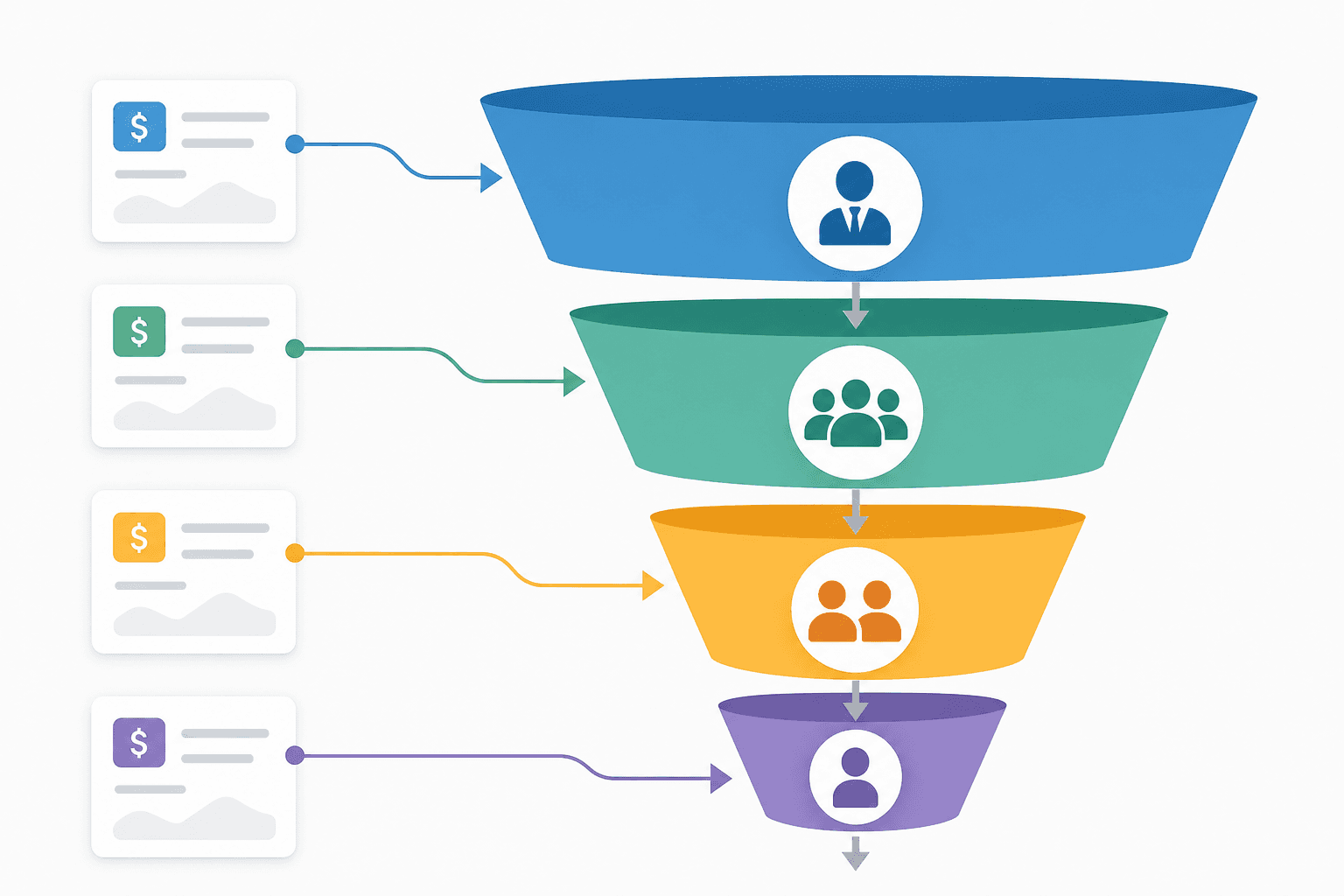
Most deal desk approval policies start as a spreadsheet, a Slack approvals workflow, or a verbal handshake between the CFO and the VP of Sales. That works until it doesn't. Then a rep submits a 40% discount on a multi-year deal an hour before quarter close, and nobody can agree on who has the authority to approve it.
The real problem with approval policies isn't that teams lack rules. It's that the rules live in people's heads, and the workflow doesn't enforce them consistently. A deal desk workflow that scales needs policies baked into the routing logic itself, not bolted on after the fact.
What Approval Tiers Actually Look Like in Practice
Deal desks commonly use tiered approval structures, each triggered by a specific condition, not by whoever is available.
Tier 1 handles standard discounts within rep authority, typically below an internally defined threshold, and routes automatically without requiring a manager touchpoint.
Tier 2 catches deals that cross a discount threshold, include non-standard payment terms, or fall outside the approved product bundle, routing to a deal desk manager or finance reviewer.
Tier 3 escalates to VP or C-suite for deals above a defined ARR ceiling, deals with custom SLA commitments, or contracts that introduce legal exposure requiring redline review.
Tier 4 is reserved for strategic accounts, partner-involved deals, or anything that touches regulatory compliance and requires legal sign-off alongside executive approval.
The tier structure isn't complicated. What breaks down is the policy enforcement: who decides which tier applies, and how does the system know before a human has to intervene?
Building the Logic Into the Workflow
Contract review automation changes the enforcement model. Instead of a rep selecting an approval path, or worse, guessing, the workflow reads the deal attributes and routes accordingly.
A properly configured deal desk approval and policy layer will check discount depth against the current price book, flag payment terms that deviate from standard net-30, identify contract language that triggers legal review, and confirm whether the account falls inside an existing framework agreement before assigning an approver.
That sequence runs before the deal ever lands in a reviewer's queue. The reviewer gets context already attached: what triggered the escalation, what policy applies, and what comparable deals looked like when they closed. That's the difference between a bottleneck and a decision.
Contract Review Without Slowing the Deal
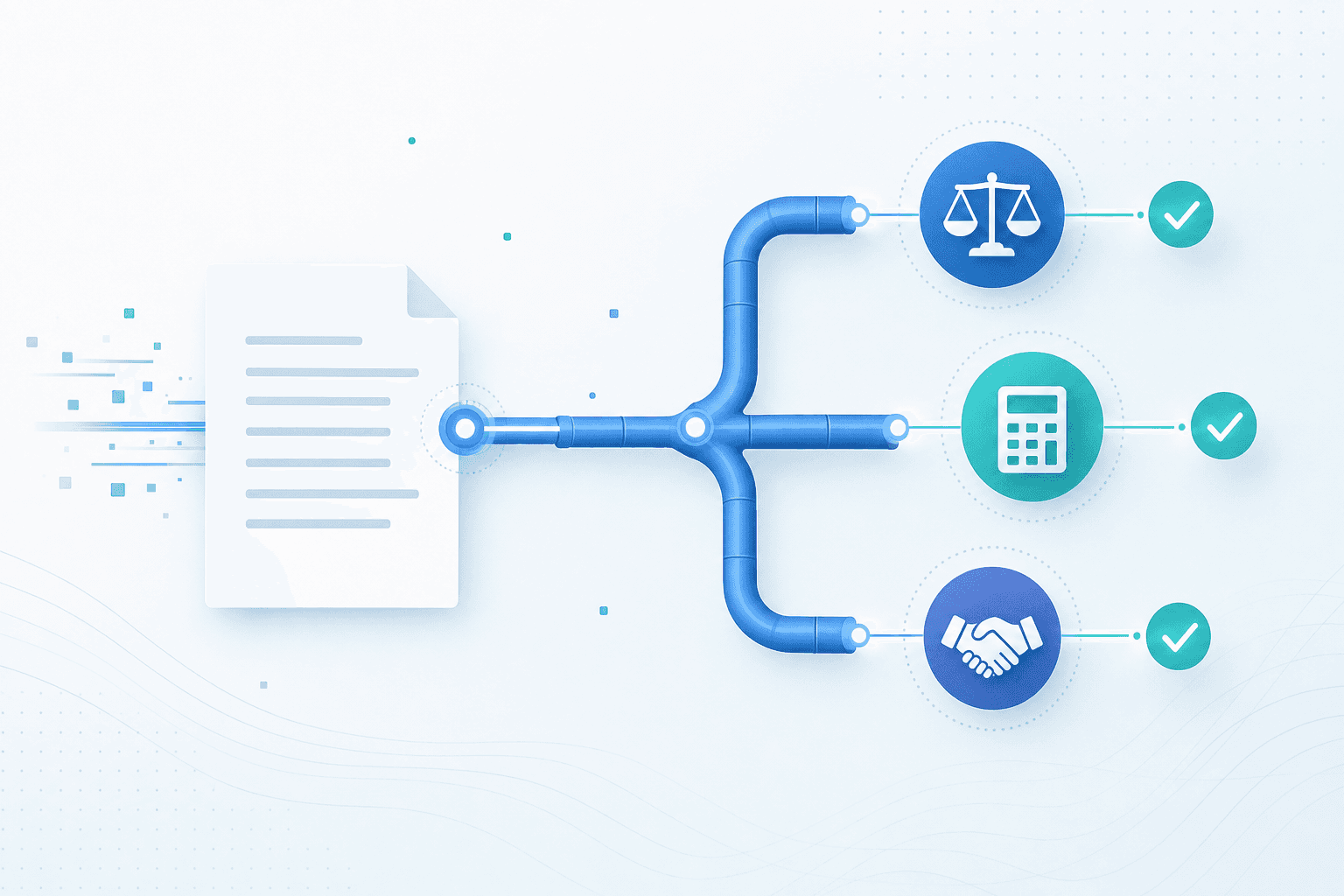
Most deal teams already know where contract review breaks down. Legal gets a redlined document, drops it into a queue, and the deal waits. Meanwhile, the rep has no visibility into where things stand, the reviewer has no context on why certain terms matter for this specific customer, and every clarifying question adds another round-trip email. The real gains in contract review come from eliminating steps entirely, not from accelerating them.
The problem is not that legal is slow. The problem is that the workflow has no shared context layer, so every reviewer starts from scratch, and every question interrupts the wrong person at the wrong time.
A well-built deal desk workflow changes that by treating contract review as a structured handoff, not a document dump.
What a Context-Aware Review Handoff Looks Like
When a contract enters review, the deal desk should automatically surface the deal record alongside it: customer tier, negotiated exceptions already approved, any non-standard terms the rep flagged, and the clause-level risk policies that apply to this deal type. Legal is not hunting through Slack threads or the CRM to reconstruct the deal. That context arrives with the document.
Contract review automation handles the mechanical layer: flagging clauses that fall outside pre-approved policy, tagging terms that require specific approver sign-off, and routing the document to the right reviewer based on deal size and clause type, not by whoever happens to check their inbox first. The reviewer sees exactly where the document deviates from standard and why those deviations matter, before they read a single line. AI contract review tools have made this mechanical layer considerably faster to deploy and maintain.
That scoped handoff does two things at once: it cuts the time legal spends reconstructing context, and it keeps the review focused on the decisions that actually need human judgment.
The Context Problem: What Approvers Actually Need to Say Yes
Approvals stall when the person reviewing a deal has to go hunting for the information they need to make a decision. The contract lands in their inbox, but the pricing rationale, the discount authorization, the customer segment context, and the deviation history all live somewhere else. So the approver either waits, asks, or guesses.
That information gap is where most deal desk workflow breakdowns actually originate. Not in the approval step itself, but in the back-and-forth that precedes it.
Good deal desk approval and policy execution depends on context traveling with the deal, not after it.
Building the Deal Desk Tech Stack
The tools your deal desk runs on matter as much as the policies it enforces. A well-designed tech stack removes the friction between a rep submitting a request and legal, finance, or RevOps getting the right context to act on it.
Most deal desk setups today layer across three categories of tooling.
A CRM like Salesforce serves as the record of truth for deal terms, discount history, and opportunity status. Without a live connection here and self-service CRM access, approvers are working from screenshots and Slack summaries instead of actual deal data.
A contract or document tool handles redlines, clause libraries, and signature workflows. This is where contract review automation does its heaviest lifting, catching non-standard terms before they reach legal and flagging deviations from approved playbooks.
A request automation platform ties approval logic to the right people at the right time. This is where deal desk approval and policy rules get encoded: who signs off on what discount tier, what triggers an executive review, and what can auto-approve based on predefined criteria.
The gap most teams hit is not missing tools. It is that these three layers do not talk to each other cleanly. A rep closes a custom payment term in the CRM, but the approval request that lands in Slack carries none of that context. The approver has to go find it, which is where deals slow down and where the deal desk workflow breaks.
Measuring Deal Desk Performance
Two categories of metrics tell the full story of deal desk performance. Speed metrics show how fast the process moves; effectiveness metrics show whether it produces the right outcomes. Tracking only one category leaves you optimizing the wrong thing, regardless of which IT workflow automation tools you run.
Metric | Category | What It Reveals |
|---|---|---|
Approval cycle time | Speed | Time from submission to final sign-off |
Contract turnaround time | Output quality | Time from document send to fully executed |
Deal velocity | Output quality | Opportunity creation to close |
Average discount depth | Effectiveness | Whether margin is being protected at the desk |
Win rate: desk vs. non-desk deals | Effectiveness | Whether desk involvement tracks with closed revenue |
Keep in mind that aggregate cycle time is useful, but splitting it by stage tells you where to act. The three stages worth isolating are intake-to-scoring, scoring-to-routing, and routing-to-decision. Each one can sit stalled for different reasons, and the fix for each is different.
Most teams assume legal review is the slow part. Often the delay lives earlier, in the handoff between intake and routing, before a reviewer has even opened the file.
Common Deal Desk Mistakes and How to Avoid Them
Even well-intentioned deal desk programs run into the same set of problems repeatedly. Knowing where things break down is half the battle.
Approval chains that don't reflect actual authority: Many teams route deals through the same approval sequence regardless of deal size, risk profile, or customer type. A $5,000 renewal goes through the same three-step chain as a $500,000 enterprise expansion, slowing both down unnecessarily.
Context that lives outside the system: When the approver has to chase down the original proposal, the customer's contract history, and the relevant pricing exception policy before making a decision, you've already lost time. Approval without context isn't really approval.
No clear ownership at handoff points: Deal desk workflows frequently break at the seams between sales, legal, and finance. When each team thinks the next one is responsible, deals stall.
Policy updates that never reach the workflow: Discount thresholds change, deal structures evolve, and compliance requirements shift. Deal reassignment without tickets becomes nearly impossible when approval logic hasn't kept pace. But the approval logic in most deal desk processes is updated manually, if at all, which means deals get approved under outdated rules or get caught in unnecessary escalations.
Treating every exception the same way: Not all non-standard deals carry the same risk. A custom payment term is a different conversation than a liability cap waiver. Workflows that lump all exceptions into a single escalation path create bottlenecks that contract review automation could otherwise route intelligently based on the nature of the deviation.
How Ravenna's RevOps Agent Handles Deal Desk Workflow Automation
Ravenna's RevOps Agent sits inside the deal desk workflow from the moment a rep flags a non-standard request in Slack. It reads the deal context, checks it against your approval policies, routes the request to the right stakeholder, and posts the decision back in the same thread, with a full audit trail attached.
The workflow runs like this: a rep submits a deal for review. The RevOps Agent pulls the relevant opportunity data, classifies the request type, identifies which approval tier applies, and notifies the right approver with the context already assembled. No separate form. No chasing down the policy doc. No waiting for someone to forward the thread.
Where this matters most is in the cases that typically stall, non-standard discounts, multi-year payment structures, or contracts that touch legal and finance simultaneously. The RevOps Agent handles parallel routing across those stakeholders and holds the full decision thread in one place, so approvers are never working from incomplete information, a core capability worth reviewing against any agentic service desk checklist.
Approval routing based on deal value, discount depth, or contract type, pulled directly from your existing policy configuration
Parallel notifications to legal, finance, and sales leadership when a deal requires sign-off from multiple teams
A complete, timestamped record of who approved what and when, written back automatically so your CRM stays current without manual updates
The result is a deal desk approval process that runs at the speed of the rep's request, not at the speed of whoever happens to check their inbox first.
Final Thoughts on Fixing Your Deal Desk Workflow and Approval Process
The request model breaks down not because your team is slow, but because context doesn't travel with the deal. Approval logic that lives in spreadsheets and Slack messages works until it doesn't, and it usually stops working at exactly the wrong moment. Building policy into the routing, automating contract review, and giving approvers the context they need upfront changes the picture entirely. Connect with us if you want to see how Ravenna's RevOps Agent runs this end-to-end inside Slack.
FAQ
What's the difference between a deal desk workflow built on a request model versus one with approval logic embedded?
A request model requires someone to manually pull deal context, check policy, and decide who needs to sign off, adding correction loops before any approval work starts. An embedded model reads deal attributes automatically, checks them against current policy, and routes to the right approver with context already attached, so reviewers make decisions instead of doing research first.
How do you structure deal desk approval tiers so they scale without over-routing every deal?
Build tiers around specific deal attributes, not rep seniority or availability. Most teams need three to four levels: auto-approve standard discounts below a defined threshold, route mid-range exceptions to a deal desk manager or finance reviewer, escalate high-ARR or custom-SLA deals to VP or C-suite, and reserve a final tier for strategic or compliance-sensitive contracts requiring legal sign-off alongside executive approval.
What context should travel with a contract when it enters legal review?
Legal should receive the customer tier, any negotiated exceptions already approved, non-standard terms the rep flagged, and the clause-level risk policies that apply to this deal type, all alongside the document. Contract review automation handles the mechanical layer: flagging clauses outside pre-approved policy, tagging terms that need specific approver sign-off, and routing based on deal size and clause type, not inbox availability.
Should I use contract review automation to fix a slow deal desk, or does the underlying workflow need to change first?
Contract review automation fixes the symptom without fixing the cause if it is bolted onto a request-and-wait model. The workflow itself needs context built in from intake, not chased down after submission. Once approval logic and context travel with the deal by default, automation handles routing and flagging on top of a process that already works.
How do I measure whether my deal desk approval process is actually performing well?
Track two categories separately: speed metrics like approval cycle time, contract turnaround time, and deal velocity, and effectiveness metrics like average discount depth and win rate on desk-reviewed deals versus non-desk deals. Then split approval cycle time by stage: intake-to-scoring, scoring-to-routing, and routing-to-decision. The delay usually lives in the handoff between intake and routing, not in legal review.