

Deal reassignments are high-frequency and low-complexity, but your current process treats them like custom requests. A rep leaves, a territory realigns, and suddenly you're staring at a dozen reassignment requests that all follow the same manual path: someone messages RevOps, an admin pulls up Salesforce, the opportunity owner gets updated, and three people burn time on what should be instant. A proper self-service deal reassignment workflow breaks that cycle by automating the request intake, validation, approval routing, and CRM update in one clean path that never touches a ticket queue.
TLDR:
Deal reassignments generate ticket volume because most orgs lack a self-service path, burning 3-4 people's time on what should be a 2-minute task.
Self-service reassignment workflows with intake, validation, and automated CRM updates eliminate the manual handoff coordination that creates ticket storms.
Late-stage deals should stay with the original rep during account transfers to preserve buyer relationships and protect pipeline velocity.
Ravenna automates deal reassignment workflows directly in Slack, handling validation, approvals, Salesforce updates, and notifications without tickets.
Why Deal Reassignment Creates Ticket Volume (and Why That Matters)
Every rep departure, team restructuring, or territory realignment triggers the same chain reaction: someone needs to reassign open deals, and nobody has a clean way to do it. The request lands in a ticket queue. An admin pulls the deals manually in Salesforce. The original owner gets looped in. Someone asks about pipeline stage. By the time the transfer is done, you've burned three or four people's time on what should have been a two-minute task.
Account transfer requests are high-frequency. Sales teams restructure regularly, and each change generates a wave of reassignment requests. Without a self-service pattern in place, every one of those requests follows the same manual path through your admin queue.
The downstream effects compound quickly:
Ticket volume spikes during any org change, pulling IT and RevOps away from higher-priority work at exactly the wrong moment.
Deals sit in limbo while awaiting reassignment, creating coverage gaps that can affect close rates on active opportunities.
New owners inherit accounts without context, since the handoff process rarely includes any structured documentation of deal history or next steps.
A proper self-service deal reassignment workflow breaks this cycle by putting the request, the approval, and the CRM update into a single automated path.
The Case for Self-Service Deal Reassignment Workflows
When a rep leaves, gets promoted, or moves to a new territory, the deals they owned don't manage themselves. Someone has to update the opportunity owner in Salesforce, notify the incoming rep, loop in their manager, and make sure nothing falls through the cracks. In most orgs, that process generates a flood of Slack messages, emails, and yes, tickets.
Self-service deal reassignment workflows cut through that by letting managers or ops teams handle account transfers directly, without filing a request and waiting for IT or RevOps to act on it. And, the math adds up fast. Annual sales turnover, and most mid-size to enterprise sales orgs carry a large volume of open opportunities at any given time. Even a modest reassignment backlog creates real drag on revenue cycles.
Self-service deal reassignment workflows cut through that by letting managers or ops teams handle account transfers directly, without filing a request and waiting for IT or RevOps to act on it.
Why the Ticket-Based Model Breaks Down
The traditional model puts IT or RevOps in the middle of every transfer. That made sense when Salesforce access was tightly gated. It no longer reflects how fast sales orgs need to move.
Tickets create lag at exactly the wrong moment, right when a new rep should be building momentum with an inherited account.
Every manual handoff is a chance for the opportunity record to sit in an inconsistent state, with the old owner still showing and no one actively working it.
IT teams get pulled into low-complexity work that ops or frontline managers could resolve in seconds with proper automation.
Self-service patterns fix the bottleneck by moving the action to the person who has the context.
Workflow Aspect | Ticket-Based Reassignment | Self-Service Reassignment |
|---|---|---|
Average Time to Complete | 2-5 business days depending on queue backlog and admin availability | 2-5 minutes from request initiation to CRM update and confirmation |
People Involved | Requester, IT/RevOps admin, outgoing rep, incoming rep, manager (5+ touchpoints) | Requester, incoming rep, automated system notifications (2 touchpoints) |
Validation Process | Manual check by admin after ticket is opened, prone to errors and missed territory rules | Automated validation of opportunity existence, owner status, and territory alignment before any changes execute |
Approval Routing | Email threads or Slack messages to track down manager approval for high-value deals | Role-based approval chains triggered automatically when deal value exceeds defined threshold |
Audit Trail | Scattered across ticket comments, email threads, and manual Salesforce notes | Complete log of request, approval, execution, and notifications stored in single workflow record |
Scalability During Restructuring | Queue overload, 10+ day backlogs during territory realignments or mass departures | Handles bulk reassignments through collection iteration without degrading response time |
What Deal Reassignment Actually Involves (and Where It Breaks)
Most people assume reassigning a deal is a simple CRM update. In practice, it touches far more than a single field change. A proper account transfer workflow typically involves verifying territory or segment ownership rules, confirming the receiving rep has capacity, notifying the outgoing rep and their manager, updating any active sequences or cadences, and logging the change for audit purposes. Miss any one of those steps and you're looking at dropped follow-ups, compensation disputes, or compliance gaps.
Where The Process Falls Apart
The breakdown almost always happens at the handoff coordination layer. Teams rely on a mix of Slack messages, manual Salesforce updates, and back-and-forth emails to get everyone aligned. That means:
The request disappears into someone's DMs and stalls until a manager follows up days later.
The reassign salesforce opportunity update happens, but no one tells the sequences tool, so the old rep's outreach keeps firing.
There's no record of who approved the transfer or when, creating audit headaches down the line.
The result is a ticket storm: one deal reassignment request that spawns four follow-up threads, two manual checklists, and at least one escalation.
Building Reassignment Workflows That Don't Require IT Tickets
When a rep leaves, a territory changes, or a deal changes hands mid-cycle, the last thing your RevOps or sales ops team needs is a queue full of manual reassignment requests. Yet that's exactly what happens when account transfer workflows live inside ticketing systems instead of where the work actually happens.
The good news is that self-service reassignment is achievable without building a custom Salesforce flow from scratch or routing every change through IT.
What a Working Reassignment Pattern Looks Like
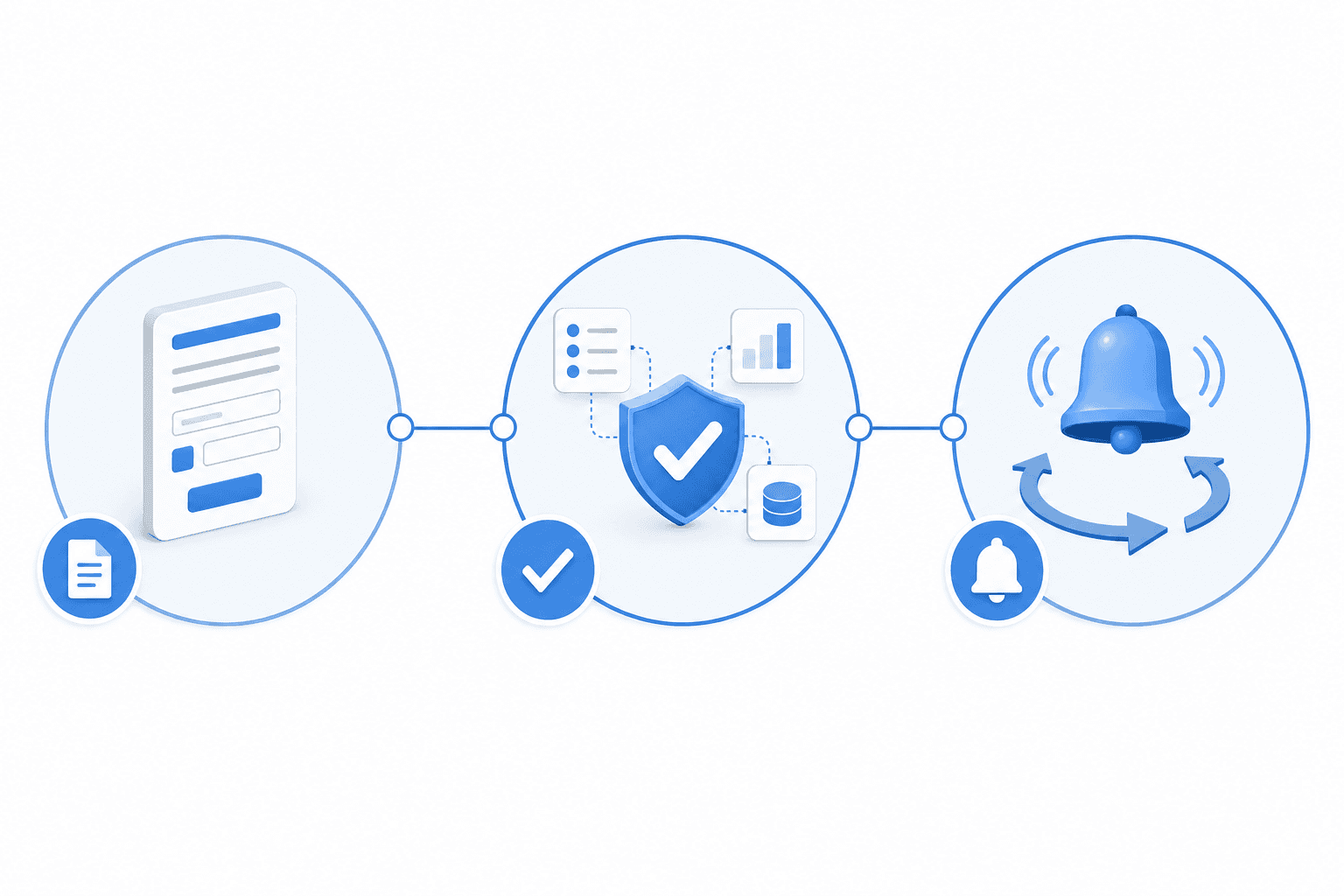
A well-structured deal reassignment self-service workflow typically has three components:
A structured intake that captures the required deal details upfront, including the opportunity ID, the reason for transfer, and the receiving rep, so nothing gets lost in a Slack thread or email chain.
Automated validation that checks CRM data before any changes are written, confirming the opportunity exists, the new owner is active, and the transfer won't break forecast rollups or territory rules.
A confirmation step that notifies both the outgoing and incoming rep, updates the Salesforce opportunity record, and logs the change for audit purposes without anyone touching a ticket.
This pattern keeps ops teams in control of the rules while letting reps and managers handle routine reassign Salesforce opportunity requests on their own.
Territory Reassignment at Scale Without the Chaos
When a rep leaves, a territory gets reshuffled, or an account moves upstream to enterprise, the deals attached to that rep don't wait. Someone needs to own them now. The traditional response is a flurry of Slack messages, a few emails to RevOps, and a ticket that sits in a queue while the deal goes cold.
The better pattern is self-service with guardrails.
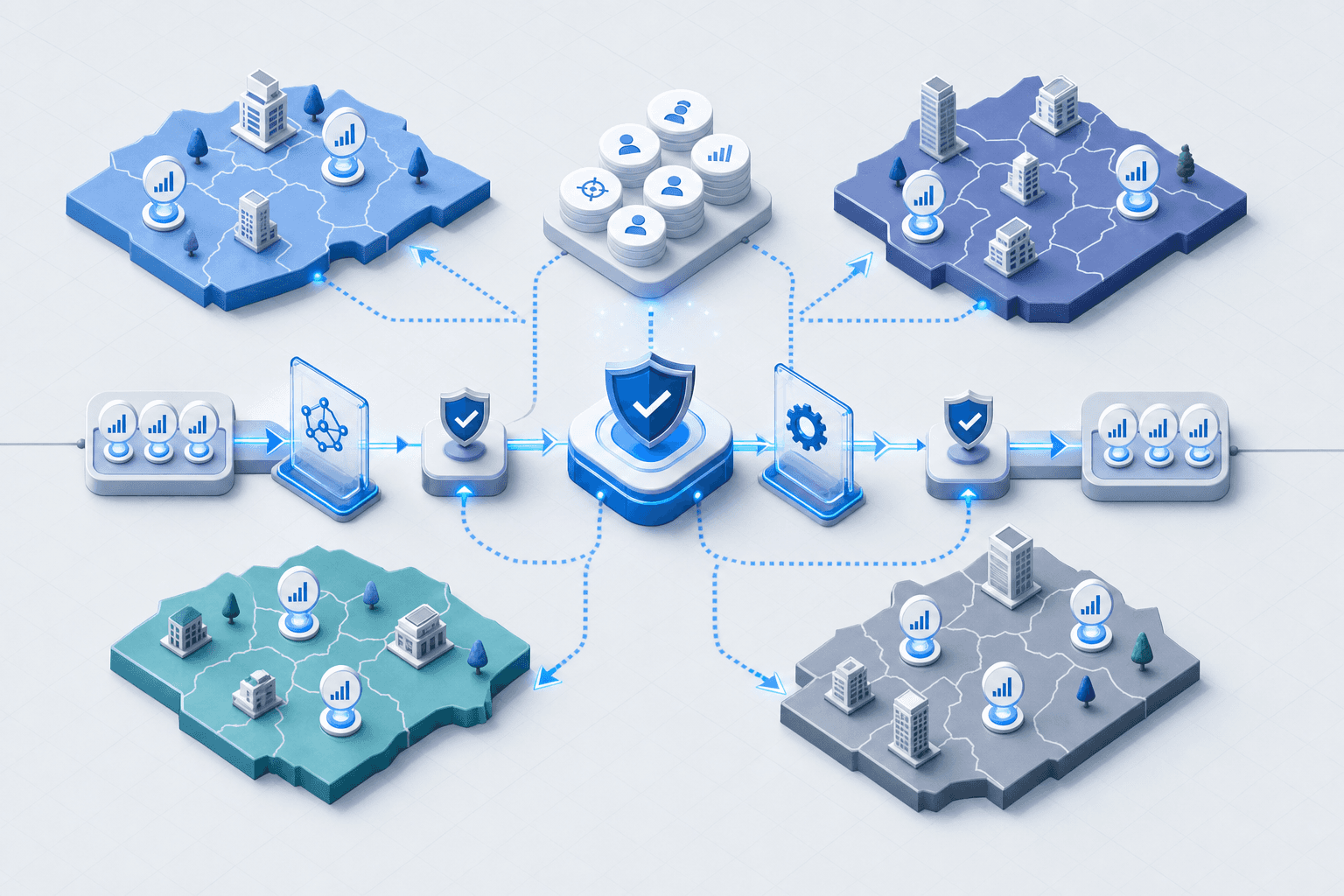
A well-built account transfer workflow lets the right people trigger reassignments directly, without pulling in an admin or opening a ticket. The requester picks the affected opportunities, selects the new owner, and the workflow handles the Salesforce updates, notification routing, and audit trail automatically.
What Good Guardrails Look Like
Not every rep should reassign any deal. Guardrails define who can initiate a transfer, which deal stages qualify, and whether manager approval is required above a certain ARR threshold.
Ownership rules tied to role or territory keep accidental or unauthorized reassignments from slipping through.
ARR thresholds that trigger a one-step approval protect high-value deals without blocking routine transfers.
Automatic confirmation messages sent to both the old and new owner close the loop without anyone chasing status.
When to Retain Ownership During Account Transfers
Not every account transfer should move the open deals along with it. Sometimes the right call is to transfer account ownership while leaving attached opportunities with the original rep. For example, if a rep has worked a deal to Proposal stage or beyond, reassigning it to the new account owner introduces real risk. The incoming rep has no relationship context. The deal slows down. A six-month pipeline investment gets handed to someone starting from scratch.
There are specific situations where retaining original deal ownership makes sense:
Late-stage opportunities where the original rep has active negotiation history and the buyer relationship is tied to that individual
Deals above a value threshold where the rep relationship is what drives the close, beyond account-level familiarity
Accounts with a committed close date inside the current quarter, where any ownership disruption could jeopardize timing
Standard CRM tools treat account and opportunity ownership as linked. They do not natively handle the split between who owns the account and who owns the deal. Conditional logic in your account transfer workflow fills that gap, holding late-stage deals in place while account ownership transfers around them without disrupting what is already working.
Ravenna's Workflow Automation for Deal and Account Transfers
Ravenna's workflow automation platform treats deal reassignment as a workflow problem, not a ticketing problem. The Visual Workflow Builder lets RevOps teams construct self-service reassignment flows directly, without writing code or routing every change through IT.
Managers or ops teams submit requests through conversational forms in Slack or structured intake forms. Ravenna collects the opportunity ID, transfer reason, and receiving rep through natural conversation, then executes the full process automatically: validating CRM data, routing for approval above an ARR threshold, updating the Salesforce record, notifying both parties, and logging the change for audit purposes.
For territory-wide reassignments, Ravenna's collection iteration capability handles bulk deal transfers in a single workflow run instead of processing each opportunity individually.
Approval chains are role-based, not tied to individual names. The workflow holds even when personnel change, and every execution is logged without anyone opening a ticket.
Conditional logic covers the tricky scenarios too. In split ownership situations where account ownership transfers but late-stage deals stay with the original rep, the rules live in the workflow itself. No one has to remember the exception, look up a policy doc, or chase down a manager for clarification. The logic executes consistently every time.
Final Thoughts on Getting Deal Transfers Out of the Ticket Queue
Your sales org moves too fast to wait on manual reassignments. Self-service account transfer workflows let the right people trigger deal changes directly, with validation and approvals built in so nothing breaks. Your team gets clean handoffs, your admins get their time back, and your CRM stays accurate without the ticket storm.
FAQ
Can I build deal reassignment workflows without writing custom Salesforce code?
Yes. Workflow automation platforms like Ravenna let you build self-service reassignment flows using visual builders, no code required. You define the intake form, approval logic, and CRM updates through drag-and-drop actions, and the workflow handles validation, notifications, and audit logging automatically.
What's the fastest way to handle bulk territory reassignments without manual tickets?
Use collection iteration in a workflow automation platform to process multiple opportunity transfers in a single run. The workflow loops through the deal list, applies your ownership rules and approval thresholds, updates each Salesforce record, and notifies all parties without requiring IT to touch individual tickets or manual CRM updates.
Should I transfer opportunity ownership when an account changes hands?
Not always. If a deal is past Proposal stage or above your ARR threshold, keeping it with the original rep protects the buyer relationship and close timeline. Your account transfer workflow should include conditional logic that separates account ownership from opportunity ownership based on deal stage and value, instead of forcing both to move together.
How do I prevent unauthorized deal reassignments while keeping the process self-service?
Build guardrails into the workflow itself: restrict who can initiate transfers based on role or territory, require manager approval above specific deal values, and validate that the new owner is active and territory-aligned before writing any CRM changes. Role-based approval chains stay intact even when personnel change, so the rules execute consistently without manual oversight.
When does it make sense to automate the reassign Salesforce opportunity process instead of using tickets?
When your sales org is restructuring regularly, handling rep turnover above 20% annually, or processing more than 10 reassignment requests per month. At that volume, ticket-based workflows create lag exactly when new reps need momentum with inherited accounts, and every manual handoff risks dropped follow-ups or audit gaps that self-service automation prevents.