⋅
⋅

THE SLACK-NATIVE AGENTIC SERVICE DESK
Workflow automation that finishes the work, not just the tickets.
Every service desk assumed you’d eventually log into a portal. Ravenna’s Agents grants access, resets the password, and runs the onboarding right inside Slack, across Okta, Jamf, BambooHR, and more.
Every service desk assumed you’d eventually log into a portal. Ravenna’s Agents grants access, resets the password, and runs the onboarding right inside Slack, across Okta, Jamf, BambooHR, and more.
See it resolve a live request on your own stack.
See it resolve a live request on your own stack.


Loved by employees at:




















Common roadblocks Freshservice users run into
While Freshservice is great at what it does, what it does doesn’t meet the modern requirements. Here’s a quick snapshot of the problems that most Freshservice users face.

The Slack integration sends notifications. It doesn't execute work.
Freshservice's Slack app sends ticket alerts and lets employees create tickets with slash commands. But triage, assignment, resolution, and reporting all still happen in the portal. Most requests typically happen in Slack, and the portal is where those requests go to wait.
The Slack integration sends notifications. It doesn't execute work.
Freshservice's Slack app sends ticket alerts and lets employees create tickets with slash commands. But triage, assignment, resolution, and reporting all still happen in the portal. Most requests typically happen in Slack, and the portal is where those requests go to wait.

AI suggests replies. It doesn't take action.
Freddy AI categorizes tickets, suggests responses, and deflects simple questions. It's helpful. But when a request requires provisioning access in Okta or updating a record in your HRIS, someone on your team still has to do it manually.
AI suggests replies. It doesn't take action.
Freddy AI categorizes tickets, suggests responses, and deflects simple questions. It's helpful. But when a request requires provisioning access in Okta or updating a record in your HRIS, someone on your team still has to do it manually.

Workflows have one owner. And one point of failure.
Users also say the rule logic takes "a lot of iterations," custom fields are hard to report on, and there's usually exactly one person who can change anything safely. When that person is out, the workflow waits. When they leave, the knowledge walks out with them.
Workflows have one owner. And one point of failure.
Users also say the rule logic takes "a lot of iterations," custom fields are hard to report on, and there's usually exactly one person who can change anything safely. When that person is out, the workflow waits. When they leave, the knowledge walks out with them.

The portal was the right answer
to a question nobody asks anymore
The portal was the right answer to a question nobody asks anymore

Freshservice was designed for a world where IT was a department you visited. The portal was the front door: you went there, picked a category, filled in the form, and got a ticket number. For organizations with dedicated service desk staff and mature ITIL habits, that front door still holds up.
At a Slack-first company, that front door just gets skipped. When someone needs a new laptop, needs access to a tool, or forgets their password, they open Slack, because Slack is already open, and message whoever helped them last time. That message never becomes a ticket. An approver leaves the company and workflows keep routing to them. A license sits unused for months because nobody's running a usage report. Your metrics say volume is manageable. Your IT team's DMs say otherwise.
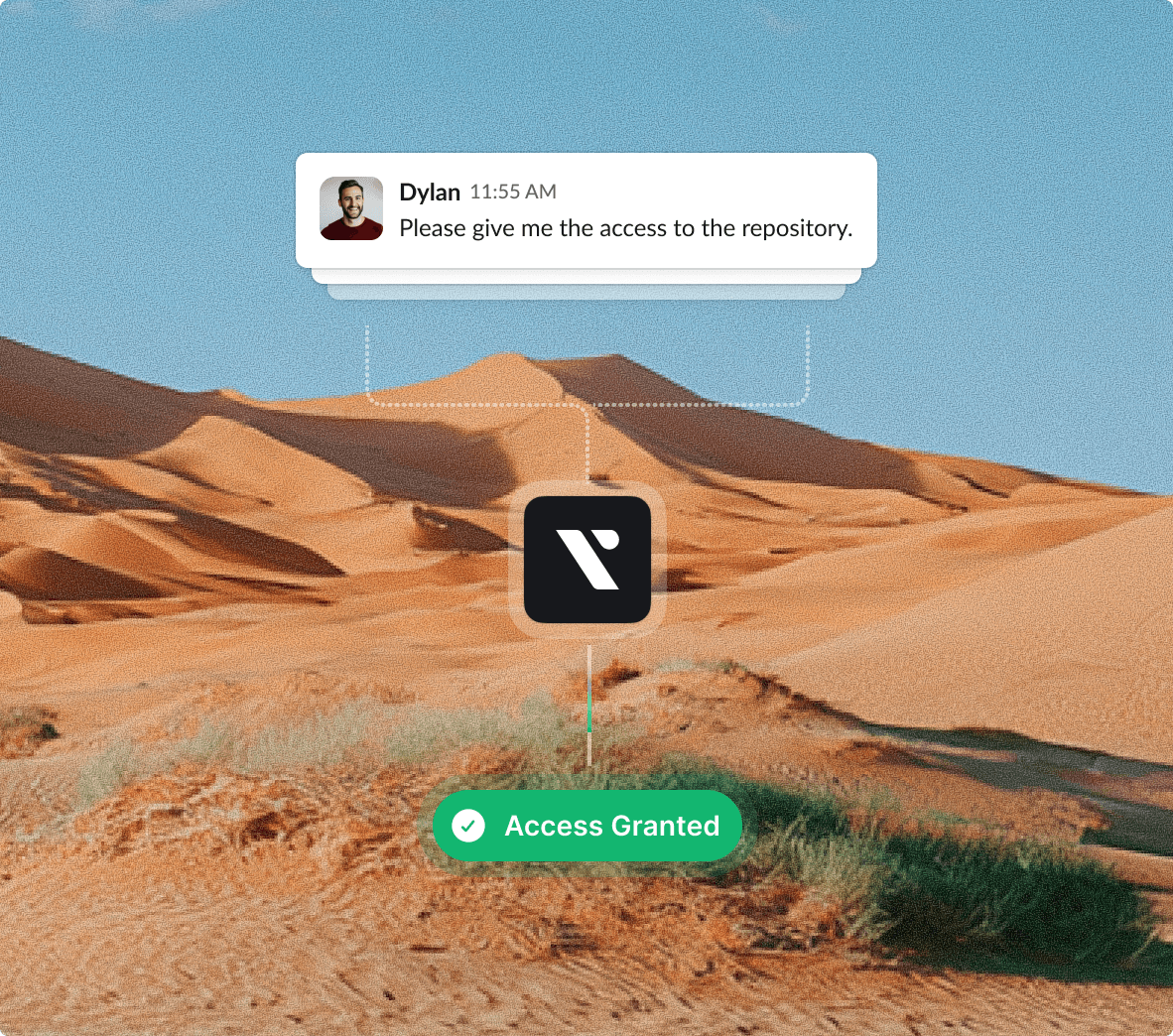
Ravenna makes the Slack message the ticket. Clarifying questions arrive as a threaded reply, the approver taps a button, provisioning runs against your identity provider in the background, and the confirmation shows up in the same thread without any additional process to adapt.

Freshservice was designed for a world where IT was a department you visited. The portal was the front door: you went there, picked a category, filled in the form, and got a ticket number. For organizations with dedicated service desk staff and mature ITIL habits, that front door still holds up. At a Slack-first company, that front door just gets skipped. When someone needs a new laptop, needs access to a tool, or forgets their password, they open Slack, because Slack is already open, and message whoever helped them last time. That message never becomes a ticket. An approver leaves the company and workflows keep routing to them. A license sits unused for months because nobody's running a usage report. Your metrics say volume is manageable. Your IT team's DMs say otherwise.
Ravenna makes the Slack message the ticket. Clarifying questions arrive as a threaded reply, the approver taps a button, provisioning runs against your identity provider in the background, and the confirmation shows up in the same thread without any additional process to adapt.
Freshservice was designed for a world where IT was a department you visited. The portal was the front door: you went there, picked a category, filled in the form, and got a ticket number. For organizations with dedicated service desk staff and mature ITIL habits, that front door still holds up.
At a Slack-first company, that front door just gets skipped. When someone needs a new laptop, needs access to a tool, or forgets their password, they open Slack, because Slack is already open, and message whoever helped them last time. That message never becomes a ticket. An approver leaves the company and workflows keep routing to them. A license sits unused for months because nobody's running a usage report. Your metrics say volume is manageable. Your IT team's DMs say otherwise.
Ravenna makes the Slack message the ticket. Clarifying questions arrive as a threaded reply, the approver taps a button, provisioning runs against your identity provider in the background, and the confirmation shows up in the same thread without any additional process to adapt.

How Ravenna makes the support experience better
Three things JSM and other tools can’t do
Ravenna doesn’t deflect,
it actually resolves the ticket.
01
Requests resolve in the thread
An employee DMs Ravenna asking for Notion access. The IT Agent reads the message, checks their team and role against your HRIS, picks the right Notion group, pings the approver with an inline Yes/No, provisions the seat in Okta, and confirms, all in one thread, usually before the employee has switched tabs. The same request in Freshservice becomes a ticket in a queue, and the queue is where tickets go to die.
Requests resolve in the thread
Agents that do the work
Workflows you can actually read

01
Requests resolve in the thread
An employee DMs Ravenna asking for Notion access. The IT Agent reads the message, checks their team and role against your HRIS, picks the right Notion group, pings the approver with an inline Yes/No, provisions the seat in Okta, and confirms, all in one thread, usually before the employee has switched tabs. The same request in Freshservice becomes a ticket in a queue, and the queue is where tickets go to die.
Requests resolve in the thread
Agents that do the work
Workflows you can actually read
01
Requests resolve in the thread
An employee DMs Ravenna asking for Notion access. The IT Agent reads the message, checks their team and role against your HRIS, picks the right Notion group, pings the approver with an inline Yes/No, provisions the seat in Okta, and confirms, all in one thread, usually before the employee has switched tabs. The same request in Freshservice becomes a ticket in a queue, and the queue is where tickets go to die.
Requests resolve in the thread
Agents that do the work
Workflows you can actually read
You won't lose what you've built
What moving to
Ravenna actually looks like
What moving to Ravenna actually looks like
Moving to Ravenna takes days, not weeks. That's not a slogan; it's a consequence of architecture. We never ask you to model your service catalog in ITIL before the first request can flow, so the setup work is configuration, not a migration project.
Moving to Ravenna takes days, not weeks. That's not a slogan; it's a consequence of architecture. We never ask you to model your service catalog in ITIL before the first request can flow, so the setup work is configuration, not a migration project.
What comes across:
Categories and request types, usually a 1:1 mapping
Approval chains, converted to inline Slack approvals
SLAs, tracked in Ravenna's analytics from day one
Knowledge base content imported, or connected live to Notion, Confluence, Google Docs, or your Freshservice KB export
Historical ticket data, exported and kept for audit
InteGRATIONs
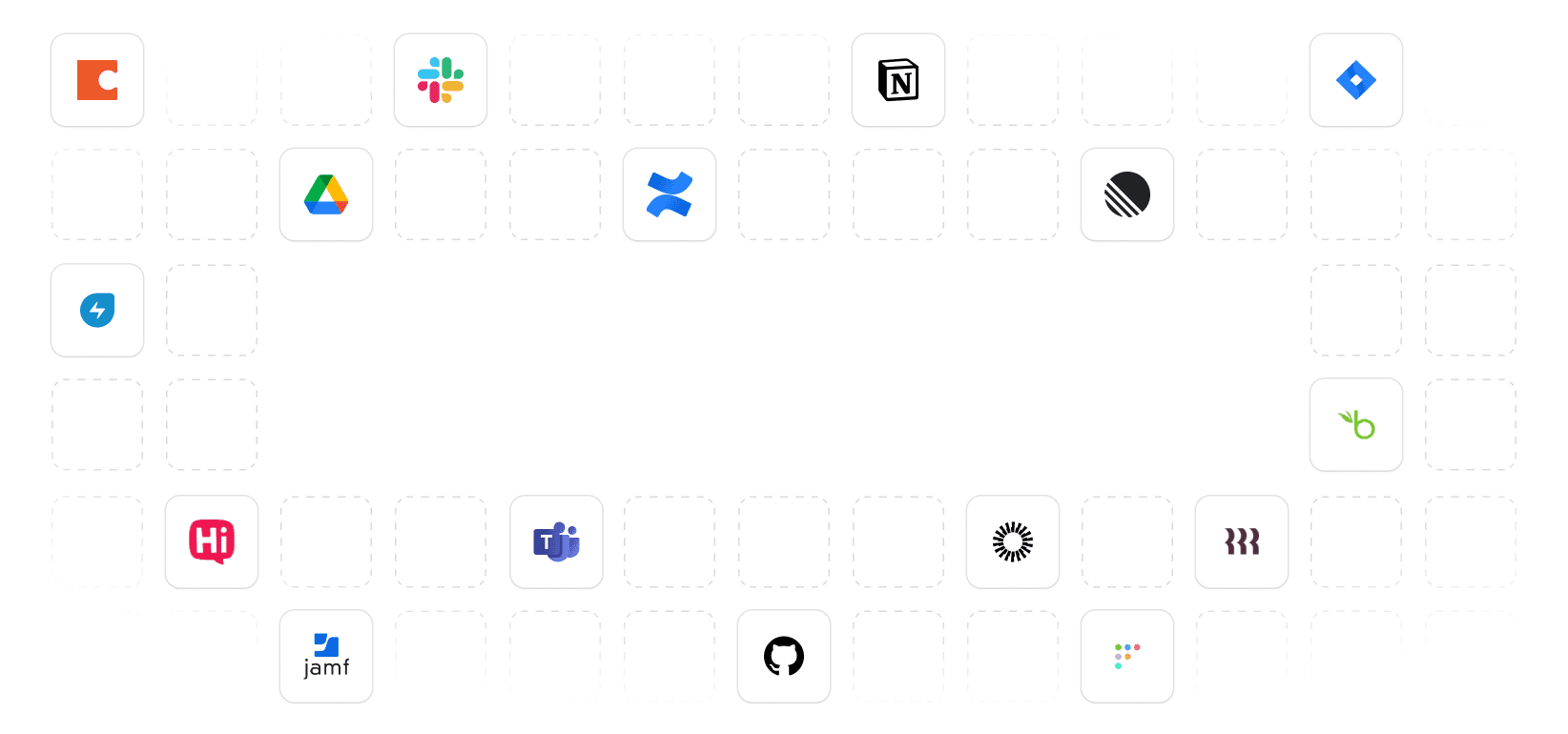
Integrated with the tools you already use
Pull data and automate workflows across your entire stack
InteGRATIONs
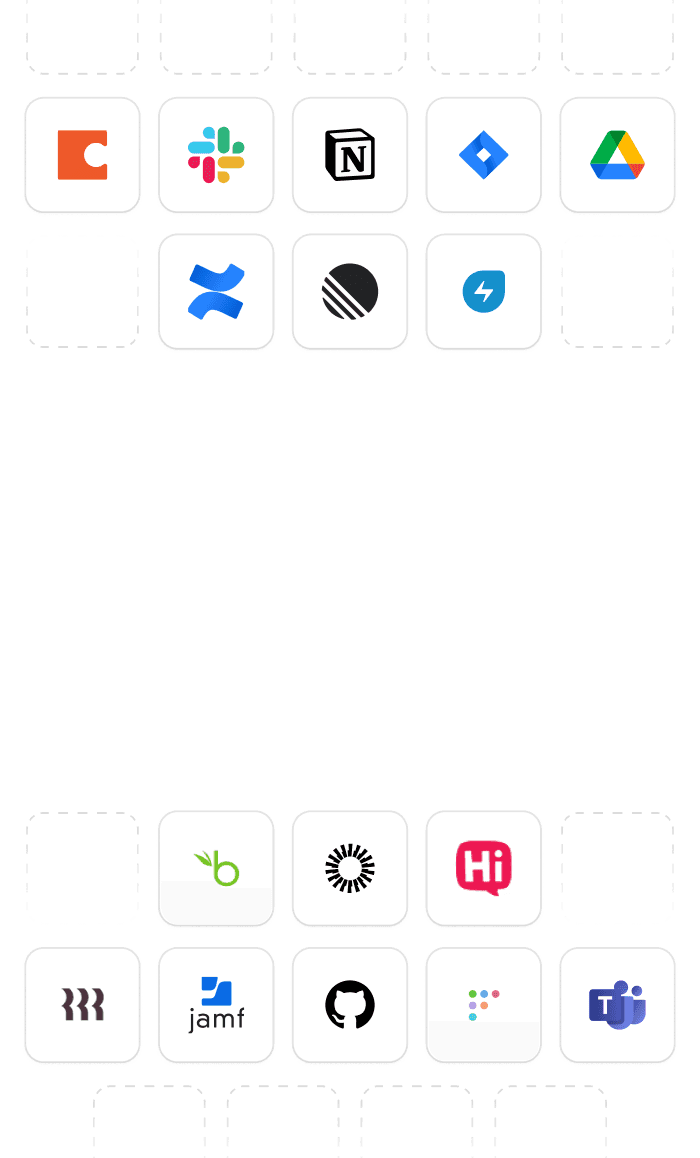
Integrated with the tools you already use
Pull data and automate workflows across your entire stack
Built for enterprise,
secure by design
Built for enterprise,
secure by design
From request to resolution, give your teams full context, automated workflows, and AI assistance, all within Slack.
From request to resolution, give your teams full context, automated workflows, and AI assistance, all within Slack.

SOC2

HIPAA

GDPR
FAQ
Can Ravenna do IT asset management the way Freshservice does?
Not the way Freshservice does it, no — their ITAM module is a full inventory system with discovery agents and lifecycle tracking, and we're not trying to rebuild that. Customers who switch keep asset data in a system of record like Jamf or Rippling and let Ravenna run the workflows around it: the request, the approval, the assignment, the return.
Can Ravenna do IT asset management the way Freshservice does?
Not the way Freshservice does it, no — their ITAM module is a full inventory system with discovery agents and lifecycle tracking, and we're not trying to rebuild that. Customers who switch keep asset data in a system of record like Jamf or Rippling and let Ravenna run the workflows around it: the request, the approval, the assignment, the return.
What happens to our knowledge base articles?
They come with you. Import them or connect the source directly — the Agents use that content for resolution, and the analytics will tell you, sometimes uncomfortably, which articles actually pull weight.
What happens to our knowledge base articles?
They come with you. Import them or connect the source directly — the Agents use that content for resolution, and the analytics will tell you, sometimes uncomfortably, which articles actually pull weight.
Does Ravenna work in Microsoft Teams, or just Slack?
Both. We natively support Microsoft Teams as well as Slack.
Does Ravenna work in Microsoft Teams, or just Slack?
Both. We natively support Microsoft Teams as well as Slack.
How does Ravenna handle change management?
As a workflow: request, approval chain, execution, notification, same interface as everything else. If your environment needs formal CAB processes and full ITIL change categorization — regulated industries, mostly — Freshservice's change module goes deeper, and we'd rather tell you that here than have you find out in month two.
How does Ravenna handle change management?
As a workflow: request, approval chain, execution, notification, same interface as everything else. If your environment needs formal CAB processes and full ITIL change categorization — regulated industries, mostly — Freshservice's change module goes deeper, and we'd rather tell you that here than have you find out in month two.
What does implementation look like?
A typical setup runs under a week. Connect your tools, we bring your history over, and the AI starts resolving on day one.
What does implementation look like?
A typical setup runs under a week. Connect your tools, we bring your history over, and the AI starts resolving on day one.
Watch it close a real ticket.
Watch it close
a real ticket.
Fifteen minutes on your own Slack and your own stack. We'll run a live request from message to resolution. If it doesn't do what we just said, you've lost fifteen minutes.



Ravenna Software, Inc., 2026
Ravenna Software, Inc., 2026
Ravenna Software, Inc., 2026
Ravenna Software, Inc., 2026