
BMC Software Reviews, Pricing, and Alternatives (2025)
You've probably spent months looking at BMC Software only to find the same frustrating reality that countless IT teams face: enterprise pricing that breaks budgets, complex implementations that drag on forever, and user interfaces that feel stuck in the past.
The good news is that modern teams no longer have to choose between powerful ITSM features and actually getting work done well. That's because there are enterprise ITSM alternatives that deliver the functionality you need without the headaches, offering AI-powered automation and smooth integration right where your team already works.
TLDR:
BMC Software costs $30,000+ annually with complex licensing and slow performance issues.
Users report dated interfaces, steep learning curves, and lengthy implementation timelines.
Top alternatives include ServiceNow, Freshservice, and Jira Service Management.
Enterprise pricing makes BMC 18-21% more expensive than comparable ITSM solutions.
What is BMC Software and How Does it Work?
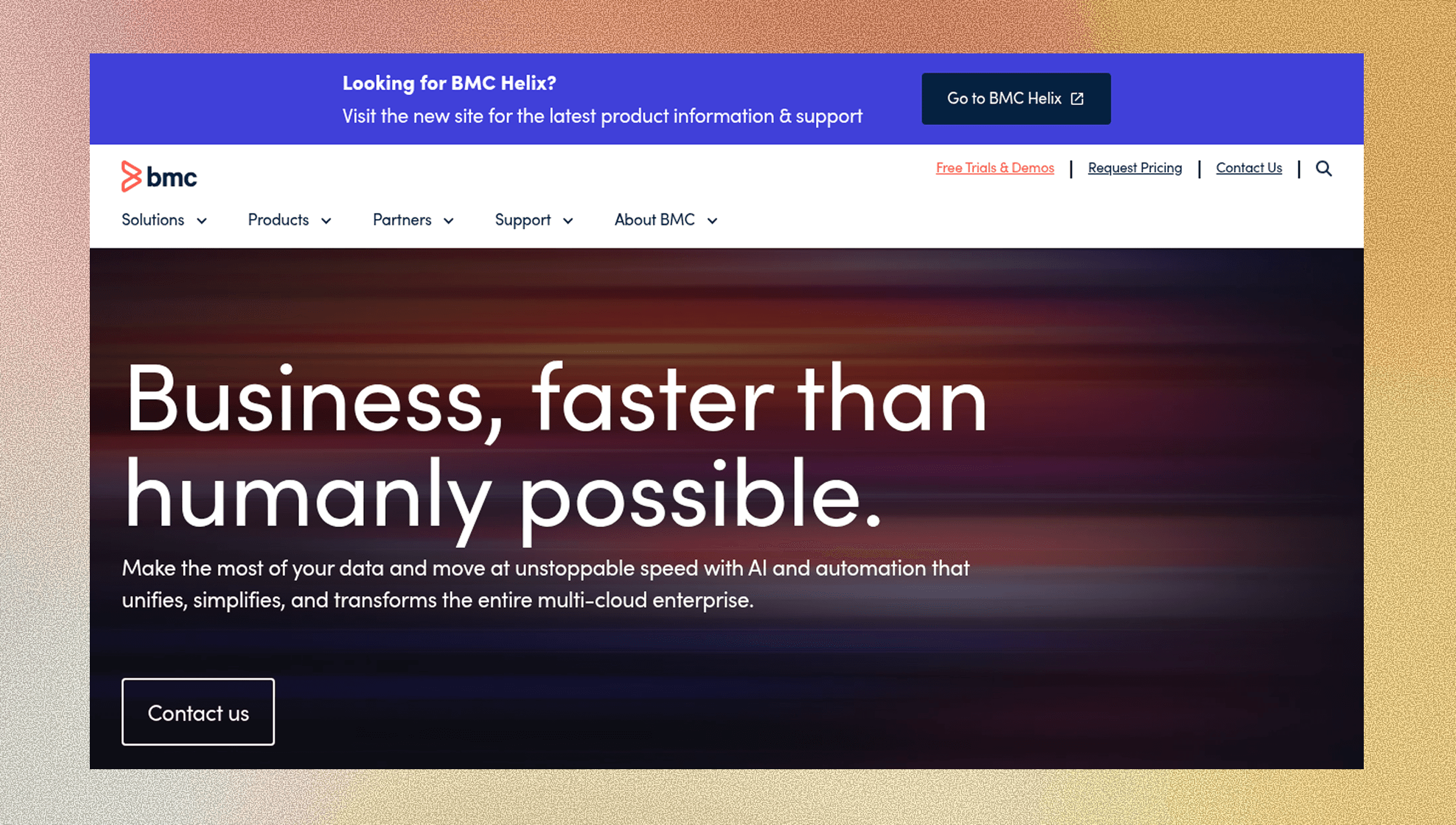
BMC Software delivers enterprise IT service management through BMC Helix ITSM, a complete solution designed for large organizations managing complex IT environments. The system operates as both an on-premise and cloud-based service management hub that handles everything from incident response to asset tracking.
At its core, BMC Helix ITSM functions as a centralized command center for IT operations. When issues arise, the system uses predictive analytics and AI-driven insights to automatically connect incidents in real-time, helping service desk agents identify root causes before problems escalate. This proactive approach means IT teams can often resolve issues before users even notice them. The solution uses a low-code/no-code framework that allows enterprises to customize workflows without extensive programming knowledge. Organizations can build automated processes for common requests like software installations, access provisioning, and hardware deployments.
BMC's approach focuses on complete asset management and service mapping. The system tracks relationships between applications, infrastructure, and business services, creating a detailed view of how IT components interact. When incidents occur, this mapping helps agents understand the full impact and rank responses accordingly. Finally, the solution integrates with existing enterprise tools through APIs and connectors, pulling data from monitoring systems, databases, and third-party applications. This integration creates a unified view of IT operations across the organization.
For organizations reviewing ITSM solutions, BMC represents the traditional enterprise approach with extensive customization options but major implementation complexity.
BMC Software Features
BMC Helix ITSM delivers enterprise-grade service management through several core modules designed for large-scale IT operations. Its strength lies in its complete asset tracking and change collision detection, which prevents many incidents before they occur. The core BMC Helix ITSM modules include:
Incident management
Asset management
Change management
Reporting
Self-service portal
Incident Management
The incident management system automatically connects related issues and provides real-time status tracking across the organization.
Asset Management
The asset management functionality covers the complete IT asset lifecycle from procurement to disposal. Organizations can track hardware, software licenses, and digital assets while maintaining compliance with corporate policies and regulatory requirements.
Change Management
Change management features help IT teams coordinate configuration updates and identify potential conflicts before they impact services. The system provides approval workflows that can be customized for different types of changes, from routine updates to major infrastructure modifications.
Reporting
BMC's reporting engine allows users to create custom dashboards and generate detailed analytics on service performance, agent productivity, and system health. These insights help organizations optimize their IT operations and show value to business stakeholders.
Self-Service Portal
The self-service portal connects with social media channels and offers both virtual and live chat support for end users. This reduces the burden on service desk agents while providing multiple channels for employees to get help.
A Note On Extensibility
Integration features extend across enterprise systems through APIs and pre-built connectors. BMC can pull data from monitoring tools, databases, and business applications to create a unified view.
Takeaway
For teams looking to simplify their IT automation tools or improve internal service desk workflows, BMC provides extensive customization options but requires substantial technical expertise to implement effectively.
BMC Software Key Limitations and Gaps
BMC Helix ITSM struggles with performance issues that become more pronounced as organizations scale. Users frequently report delays in form submission and slow performance when handling large databases, particularly when pulling historical tickets or generating detailed reports.
The user interface presents major usability challenges that impact daily operations. Users may find the interface dated and difficult to use, with search functionality that's particularly frustrating to work with. The service mapping features also fall short of expectations, making it harder for teams to visualize service relationships effectively.
But it's implementation and deployment where we truly see major limitations and gaps. First, BMC's complexity requires extensive training and technical expertise, creating barriers for teams that need quick deployment and user adoption. Second, while the system offers extensive configuration options, the customization process is lengthy and complex. The non-JSON development language makes it particularly challenging for developers to write custom integrations and modifications. Finally, the learning curve for BMC Helix ITSM is steep, requiring major time investment before users become productive.
Many users note that BMC can feel less modern than newer ITSM tools. While it’s built for deep enterprise requirements, its interface and overall experience can come across as traditional, especially when compared to more agile solutions that emphasize usability and rapid deployment.
Best BMC Software Alternatives in October 2025
Choosing the right BMC alternative depends on how well each platform fits modern IT teams’ workflows. To build this list, we focused on factors that directly impact day-to-day operations: how deeply each tool integrates with Slack, the strength of its AI and automation features, time-to-value, overall ITSM lifecycle completeness, and how well it centralizes or surfaces knowledge. Our evaluation includes hands-on testing where possible, as well as product documentation, public demos, and recent customer reviews.
Ravenna
Ravenna stands out as the most effective BMC alternative for teams that need efficient, AI-powered ITSM without the complexity and cost burden. Ravenna operates natively within Slack, eliminating the need for separate portals while providing intelligent request categorization and workflow automation. Unlike BMC's complex customization requirements, Ravenna offers straightforward deployment with immediate value and continuous AI learning from team interactions.
ServiceNow
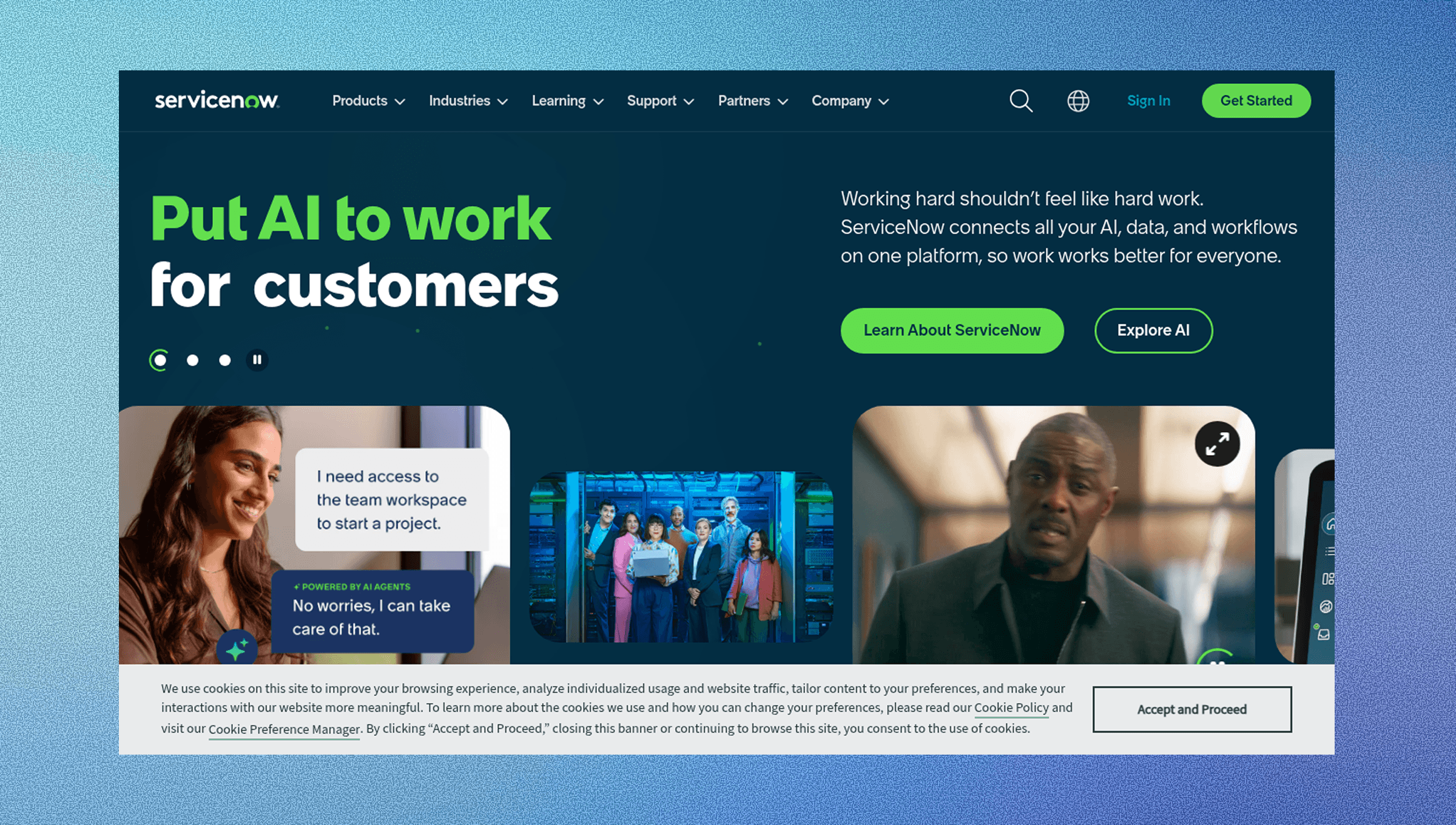
ServiceNow provides complete enterprise service management but requires extensive implementation resources and ongoing maintenance. The system offers powerful automation features but comes with high licensing costs and complexity that can overwhelm mid-sized teams.
Freshservice
Freshservice delivers cloud-based ITSM with a focus on user-friendly interfaces and quick deployment. While more accessible than BMC, it still requires users to work outside their primary communication tools and lacks the deep AI integration that modern teams expect.
Jira Service Management
Atlassian's solution integrates well with development workflows but provides limited Slack functionality compared to native solutions. The comparison between JSM and ServiceNow shows how traditional ITSM tools struggle with modern workplace integration needs.
Teams looking at BMC alternatives should focus on solutions that integrate smoothly with existing workflows instead of requiring separate portals and extensive training.
AI-Powered Alternatives
Solutions like Moveworks and Aisera focus on AI-driven automation but often require complex integrations and substantial upfront investments. For teams looking into Moveworks alternatives, Ravenna provides similar AI features with faster deployment and transparent pricing.
The key differentiator among BMC alternatives is deployment speed and user adoption. While enterprise solutions offer extensive features, teams increasingly need tools that work within existing communication channels and provide immediate value without lengthy implementation cycles.
BMC Pricing
BMC Software operates with enterprise-level pricing that reflects its position as a complete ITSM solution for large organizations. The company doesn't publish standard pricing, requiring potential customers to engage in custom quote processes based on their specific requirements and deployment scale.
Industry analysis reveals that BMC Helix pricing costs approximately $30,000 annually based on recent enterprise deals. For organizations reviewing per-user costs, BMC charges $114.75 per named user monthly for help desk analysts, asset inventory owners, and administrators, while self-service users access the system at no additional charge. In fact, cost concerns dominate user feedback about BMC's pricing structure. Users express frustration with BMC's pricing transparency, citing unclear licensing terms and unpredictable renewal costs as major concerns. Mid-market customers report BMC Helix ITSM costs 21% more than average ITSM tools, while enterprise customers find it 18% more expensive than comparable solutions.
The pricing complexity extends beyond initial costs. Organizations frequently struggle with understanding long-term licensing commitments and how costs scale with user growth or feature additions. This lack of pricing clarity makes it difficult for teams to budget effectively or compare BMC against alternatives. And, the enterprise focus means BMC pricing often exceeds the budget constraints of mid-sized teams who need strong ITSM features without the associated complexity and cost burden of traditional enterprise solutions.
Why Ravenna is the Better ITSM Solution for Modern Teams
Ravenna tackles BMC's core limitations through its Slack-native design and AI-powered automation. While BMC requires extensive customization and training, Ravenna deploys quickly within existing Slack workflows, eliminating the complexity that causes BMC implementations to drag on for months. Ravenna beats BMC across a number of key areas:
Cost: The cost difference is substantial. BMC's enterprise pricing often exceeds $30,000 annually with complex licensing structures, while Ravenna offers transparent, predictable pricing that scales with your team's needs without hidden fees or lengthy contract negotiations.
Performance: This is another key advantage for Ravenna. Where BMC users report slow form submissions and database delays, Ravenna operates smoothly within Slack's responsive interface. Teams can create, track, and resolve tickets without switching between applications or waiting for pages to load.
AI and Automation: Ravenna's AI learns continuously from your team's conversations, automatically improving categorization and routing without requiring manual rule updates or configuration changes. The intelligence natively built into Ravenna goes well beyond BMC's static automation. Ravenna captures knowledge from resolved conversations, automatically creates searchable articles, and provides contextual answers based on your organization's specific processes and documentation.
User Adoption: User adoption happens immediately with Ravenna because your team already knows how to use Slack. BMC's steep learning curve and dated interface create friction that delays productivity and requires extensive training investments.
Integration Complexity: This disappears with Ravenna's approach. While BMC requires complex API configurations and custom development, Ravenna connects directly with your existing knowledge sources like Notion, Confluence, and Google Drive through simple OAuth connections.
For teams looking at ITSM solutions, Ravenna delivers enterprise-grade features through an interface your team already uses, with AI that gets smarter over time and pricing that makes sense for growing organizations.
Final Thoughts on BMC Software and ITSM Alternatives
BMC works for massive enterprises that can handle the complexity and cost, but most teams deserve better. If you're tired of slow performance, confusing interfaces, and enterprise pricing that doesn't fit your budget, Ravenna delivers powerful ITSM features right inside Slack. Your team can start managing tickets intelligently without the headaches that come with traditional solutions. Modern ITSM should work with your workflow, not against it.
FAQs
What is the main difference between BMC Software and modern ITSM alternatives?
BMC Software is a traditional enterprise ITSM solution that requires separate portals, extensive customization, and lengthy implementations, while modern alternatives like Ravenna operate natively within existing workflows like Slack with AI-powered automation and quick deployment.
How much does BMC Software typically cost compared to other ITSM tools?
BMC Software costs approximately $30,000 annually for enterprise deployments and is 18-21% more expensive than comparable ITSM solutions, with complex licensing structures and unclear renewal terms that make budgeting difficult.
Why do users report performance issues with BMC Helix ITSM?
Users frequently complain of slow form submissions, delays when pulling historical tickets, and poor performance with large databases, particularly when generating detailed reports or handling scaled operations.
When should I consider switching from BMC to a different ITSM solution?
Consider switching if your team struggles with BMC's complex interface, experiences slow performance, faces high licensing costs, or needs faster deployment and better integration with modern communication tools like Slack.
Can I get immediate value from ITSM tools without lengthy implementations?
Yes, modern ITSM solutions like Ravenna deploy within existing Slack workflows in minutes instead of months, providing immediate ticket management and AI-powered automation without requiring extensive training or customization.