
If you're researching Ravenna vs Ivanti, chances are you're comparing two approaches to IT service management and wondering whether AI-native ITSM can replace the traditional platform your company has used for years. The short answer is yes, but adoption depends on how your team works. Ivanti makes sense if you have dedicated ITSM platform admins and need strict ITIL compliance. But if your team lives in Slack and you want tickets resolved without portal friction, the comparison shifts.
TLDR:
Ivanti requires separate portals and ITIL expertise; Ravenna runs entirely in Slack.
Ravenna's AI auto-categorizes requests and converts resolutions into knowledge articles.
Teams using AI ITSM cut resolution time from 51 hours to 23 hours on average.
Ravenna deploys in days vs. weeks for Ivanti, with no portal training required.
Ravenna is an AI-native ITSM built for Slack-first teams needing fast deployment.
What is Ivanti Neurons for ITSM?
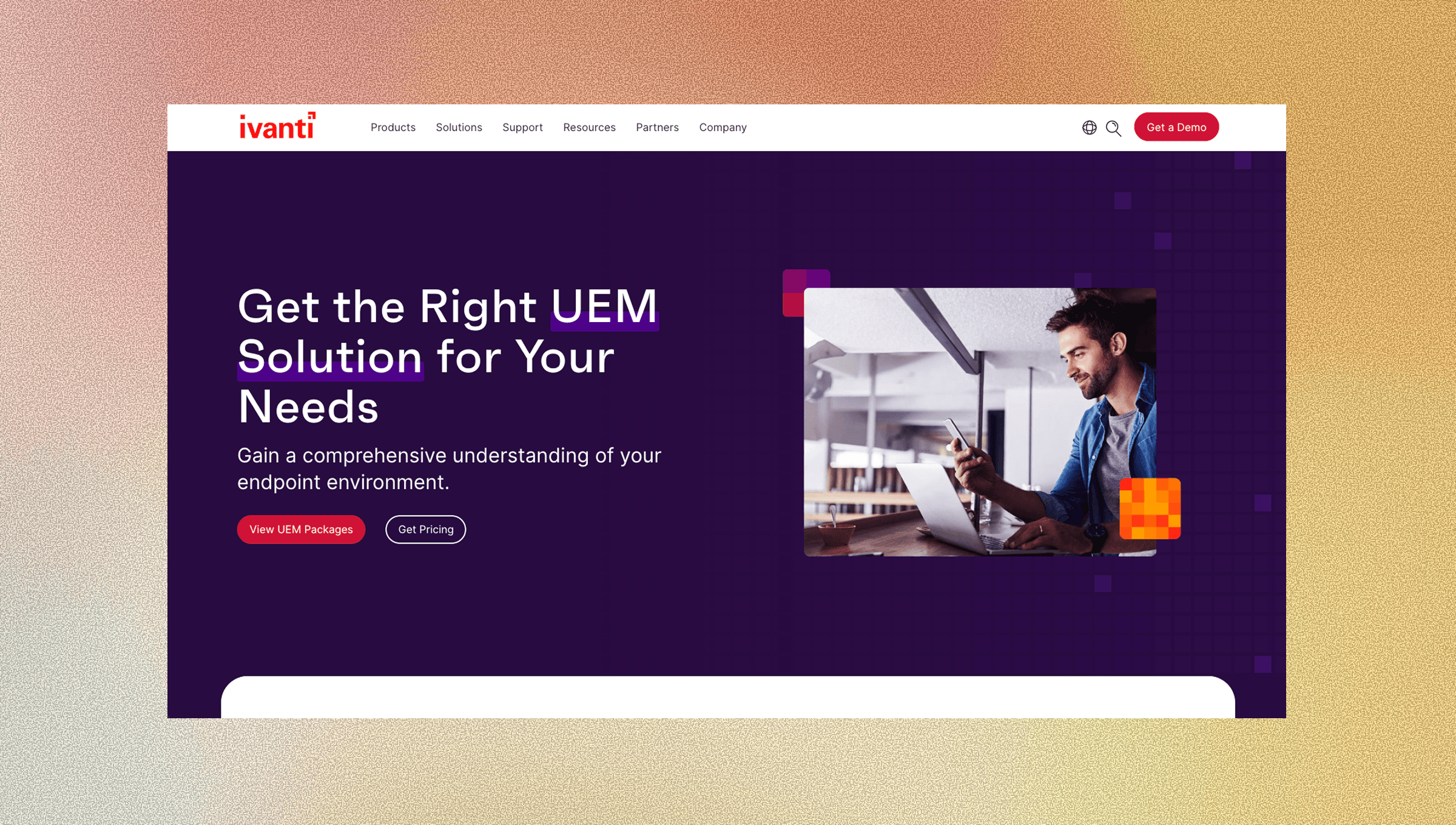
Ivanti Neurons for ITSM is an enterprise service management suite built on ITIL frameworks. The system handles incident tracking, change management, problem resolution, asset management, and the IT asset lifecycle through structured workflows and automation.
Ivanti follows standard ITIL processes for service desk operations, change control, and configuration management, offering advanced functionality for teams that need more structure. The software offers both cloud-hosted and on-premises deployment options.
The product targets mid-to-large enterprises in regulated industries like healthcare, education, and government that require extensive customization, detailed audit trails, and strict ITIL compliance. Implementation requires dedicated IT resources to maintain workflows, user permissions, and integrations, which increases operational overhead.
What is Ravenna?
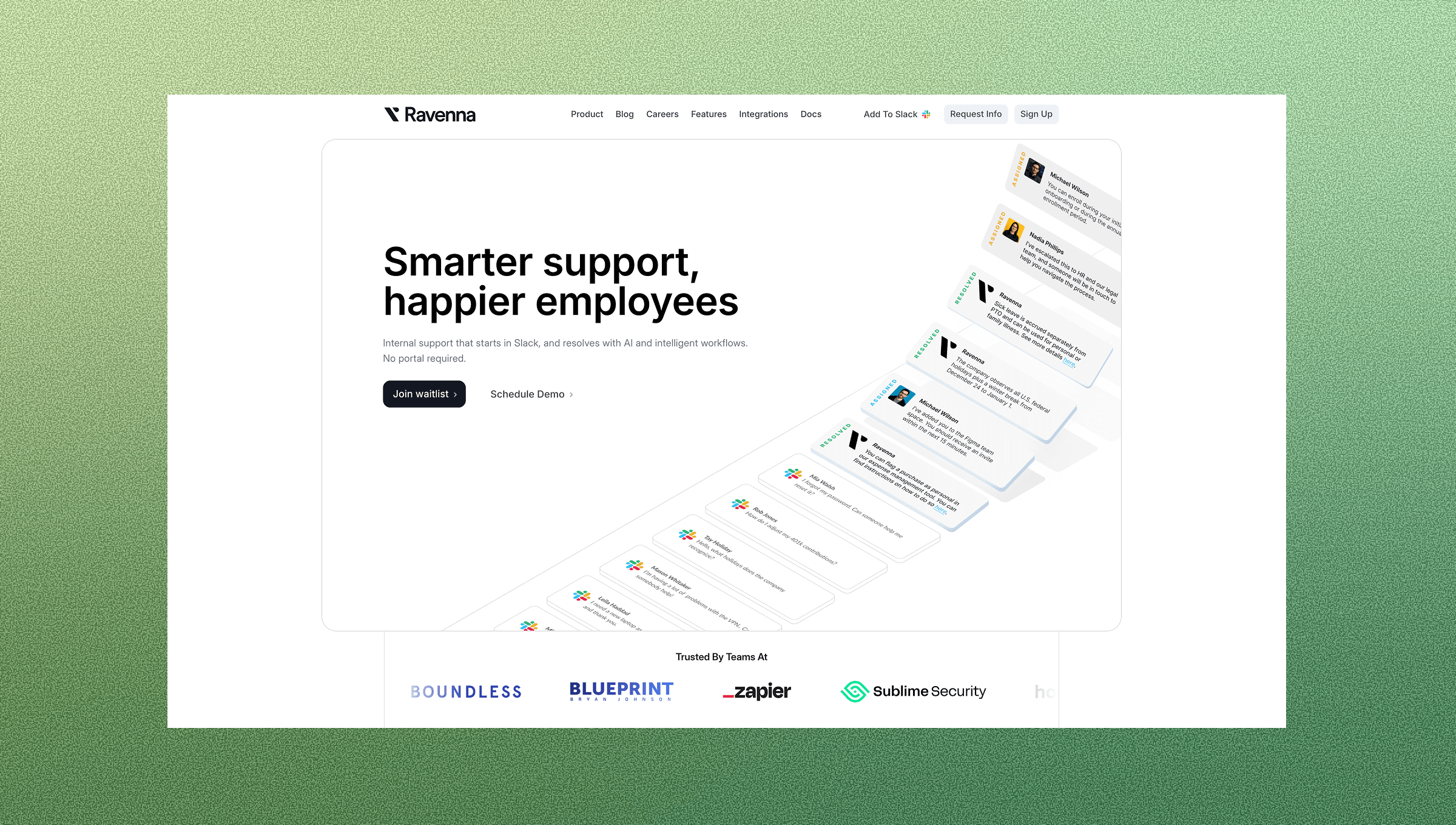
Ravenna is an AI-native Slack IT helpdesk software built directly into Slack. Employees create and manage tickets through Slack messages, DMs, or the app home tab instead of logging into a separate portal. This conversational interface eliminates context switching for teams already working in Slack.
The AI layer categorizes incoming requests, assigns priority, and routes tickets to the right team member. After resolution, conversations convert into searchable knowledge articles that expand your help desk's capabilities over time.
Ravenna connects to knowledge sources like Notion, Confluence, Google Drive, and Coda to help streamline internal support. Employees receive instant AI-powered answers from these sources through Slack's assistant panel or by messaging Ravenna. When the AI can't resolve a question, it creates a ticket automatically.
The tool is designed for Slack-centric IT, HR, and Operations teams that want to centralize requests and automate repetitive workflows without adopting a full ITSM suite.
Deployment and User Experience
Ivanti requires employees to navigate separate web portals or mobile apps to submit and track requests, creating friction for distributed teams used to messaging apps and slowing how IT teams work day-to-day. The interface has a steep learning curve that demands extensive portal training before users can effectively interact with the system. Customization in Ivanti necessitates advanced technical skills or scripting knowledge. APIs can be challenging to implement, sometimes requiring daily data feeds instead of real-time integration. Deployment timelines stretch into weeks or months as IT teams configure workflows, permissions, and integrations.
Ravenna, on the other hand, lets employees create tickets by adding an emoji to any Slack message, using a slash command, or typing a natural language request. The Slack Home tab displays ticket queues, approvals, and AI-powered search without opening a browser. Since your team already uses Slack, there's no separate login or portal training, and deployment completes in days.
AI Capabilities and Automation
Ivanti's AI focuses on predictive analytics and automated routing within traditional ticketing structures, but most capabilities require manual setup. The system can proactively identify issues and suggest resolutions, but these capabilities require manual configuration of workflows and rules. Organizations report that AI-driven insights reduce ticket volume when properly configured, though many teams need expensive consulting services to unlock this functionality.
Ravenna's AI, though, runs continuously without requiring configuration and drives automation across routine tasks. The Request Agent interprets natural language requests, asks clarifying questions, and triggers the appropriate workflow automatically. As tickets are resolved, the system converts conversations into searchable knowledge articles and identifies documentation gaps. The Slack Assistant delivers instant answers from Notion, Confluence, Google Drive, and Coda before tickets are created, deflecting up to 40% of routine requests while learning from each interaction to improve categorization accuracy and response relevance over time.
Knowledge Management and Self-Service
Ivanti offers a service catalog and knowledge base accessible through a bot interface or self-service portal, but content requires manual upkeep and adds workload to knowledge management processes. Knowledge articles require manual creation and maintenance, separate from the ticket resolution process. This depends on staff documenting solutions after solving problems, which creates gaps during busy periods and slows the service desk. The self-service portal requires employees to leave Slack or email to search for answers. This context switch reduces adoption, particularly when documentation is difficult to find or outdated.
Ravenna, in contrast, captures knowledge automatically as your team resolves tickets in Slack. When a conversation contains reusable information, it becomes a searchable article without manual documentation. Employees ask questions in natural language through Slack's assistant panel and receive answers from Confluence, Notion, Google Drive, and Coda without opening a browser. The AI recommends solutions based on role and context, turning each resolution into institutional knowledge that deflects future requests.
Workflow Automation and Integration
Ivanti Neurons iPaaS provides over 1,000 pre-built connectors for applications like Jira, Microsoft Teams, and Salesforce. Integrating and optimizing less common third-party apps often requires middleware or custom scripting. The no-code workflow builder handles ticket routing and approval chains, but building these workflows requires familiarity with ITIL concepts and Ivanti's business objects.
Ravenna's drag-and-drop workflow builder, though, connects ticket triggers to actions like sending Slack messages, updating tickets, or managing Okta access. When you connect Okta or Google Workspace via OAuth, Ravenna imports applications and user groups automatically, reducing setup time. Approval chains run in Slack with automated notifications, so employees work where they already are. Ravenna can act as a standalone ITSM or layer on top of Jira Service Management.
Analytics and Measurable ROI
Ivanti Neurons tracks ticket metrics, SLA compliance, and agent workload, but extracting insights often requires configuration. Reports require configuration and ITSM expertise to extract actionable insights. Smaller teams often need dedicated analytics resources or consulting support to translate the data into decisions.
Ravenna provides pre-built dashboards that measure tickets, agent workload, response times, assignment times, resolution times, request patterns, SLA compliance, and satisfaction scores without configuration. You can build custom dashboards with filtering and aggregation to track metrics specific to your team's goals. The intelligence layer automatically surfaces analytics for knowledge coverage, self-service success, topic clustering, and ROI metrics.
Organizations adopting AI in ITSM saw average resolution time drop from 51 hours to 23 hours, a 54.3% reduction. Ravenna's analytics surface clear deflection rates, automation impact, and time saved across your support operations. This makes proving ROI straightforward, with concrete metrics that show how conversational AI and workflow automation reduce costs and improve employee experience.
Our Ivanti review blog explores Ivanti pricing, alternative ITSM tools, and more in detail.
Why Ravenna is the Better Choice
Ivanti suits large enterprises with dedicated ITSM administrators, complex ITIL requirements, and resources to configure traditional ticketing systems. Organizations requiring on-premises deployment or strict ITIL compliance may find Ivanti's capabilities align with their needs.
Ravenna fits Slack-first teams needing fast deployment. Employees resolve issues directly in Slack without learning portals or navigating workflows, while AI categorizes requests and deflects tickets automatically.
Final Thoughts on Ravenna and Ivanti Comparison
Both tools handle tickets, but they take fundamentally different approaches. Ravenna versus traditional ITSM means choosing between portal-based workflows and conversational AI that lives in Slack. If your team already communicates there, you can skip the training and deployment headaches. Your service desk becomes a natural part of how people work, not another system to learn.
FAQs
What's the main difference between Ravenna and Ivanti's approach to ITSM?
Ravenna operates entirely within Slack with AI that learns automatically, while Ivanti requires employees to use separate portals and needs manual configuration of workflows and AI features. Ravenna deploys in days versus Ivanti's weeks-to-months timeline.
Can I use Ravenna alongside my existing Jira Service Management setup?
Yes, Ravenna can act as a standalone ITSM or layer on top of existing systems like Jira Service Management. This complementary approach lets you add conversational AI and Slack-native ticketing without replacing your current infrastructure.
How does Ravenna's AI create knowledge articles without manual documentation?
When your team resolves tickets in Slack, Ravenna automatically converts conversations containing reusable information into searchable knowledge articles. This captures institutional knowledge in real-time without requiring staff to document solutions separately after solving problems.
When should I consider switching from Ivanti to Ravenna?
If your team works primarily in Slack, struggles with low portal adoption, or spends a lot of time on manual ticket categorization and knowledge documentation, Ravenna will reduce friction. Organizations needing strict ITIL compliance or on-premises deployment may prefer to stay with Ivanti.