

There's a version of AI service desk software that answers questions, and a version that resolves requests without anyone touching them. Most tools fall somewhere in between, which is where the confusion starts. If you're trying to figure out which category each platform actually belongs to, this is the breakdown that answers it.
TLDR:
Most AI service desk software routes requests to a human queue; agentic platforms execute the resolution without a person in the path.
The right fit depends on your bottleneck: ITIL governance points to ServiceNow or JSM, while autonomous end-to-end resolution points elsewhere.
ServiceNow typically deploys in weeks to months depending on configuration scope; Freshservice and JSM in days for standard setups; ticket-first architecture stays in place regardless of deployment speed.
Ravenna is a Slack and Teams-native workflow automation platform whose IT Agent and PeopleOps Agent execute requests end-to-end across Okta, Google Workspace, and connected systems without creating a ticket.
What Is AI Service Desk Software?
AI service desk software handles employee support requests through AI agents instead of human-staffed queues. The category spans a wide range of capability levels, and that range matters more than the label. At the lower end, most tools answer questions and surface knowledge base articles, but the ticket still lands on someone's plate. At the higher end, agentic service desk platforms classify intent, gather context from connected systems, and execute the resolution without a person in the loop.
How We Ranked AI Service Desk Software
Each tool was assessed on agentic execution depth, deployment speed, integration breadth, and fit transparency. The core question: does the tool close the loop on its own, or does it create a better-organized queue for humans to work through?
Best Overall AI Service Desk Software: Ravenna
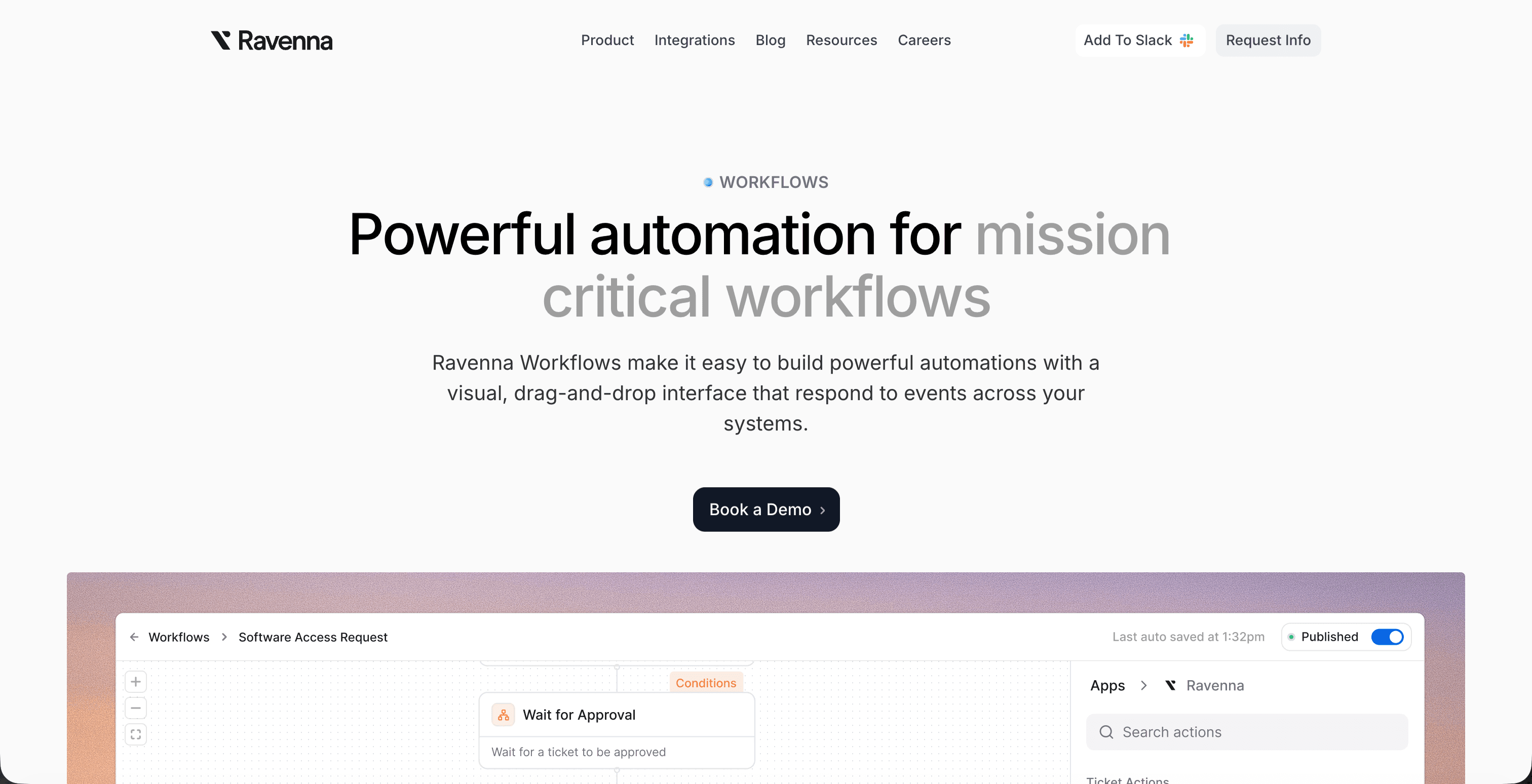
An employee submits a request in Slack. Ravenna's IT Agent reads the intent, checks the relevant system, executes the workflow, and posts confirmation back in the same thread. No queue. No human in the path unless the request warrants one. That's agentic AI for ITSM in practice. Ravenna is a Slack and Teams-native workflow automation platform built for IT, HR, and Operations teams.
Key Features
Slack and Teams-native request intake with no portal required
AI agents that execute workflows end-to-end across Okta, Google Workspace, Jira, and other connected systems
PeopleOps Agent for HR workflows including onboarding, offboarding, and access changes
Knowledge base that syncs with Notion, Confluence, and Google Drive so agents answer from current documentation
Approval Rounds built into the workflow so escalations happen in Slack without breaking the automation chain
Conversation-level audit trails for every action taken by Ravenna Agents
Limitations
Ravenna is purpose-built for Slack-native and Teams-native organizations. Teams that need deep ITIL process compliance or formal change advisory board structures will find a different fit here. This is a targeting decision, not a capability gap: Ravenna is designed to eliminate the manual work inside IT queues, not to govern formal ITIL change processes.
Bottom Line
If your bottleneck is autonomous end-to-end resolution, Ravenna is built for that. The IT Agent handles execution, the PeopleOps Agent handles people workflows, and Approval Rounds manage exceptions. Your team focuses on the work that actually requires them.
ServiceNow ITSM
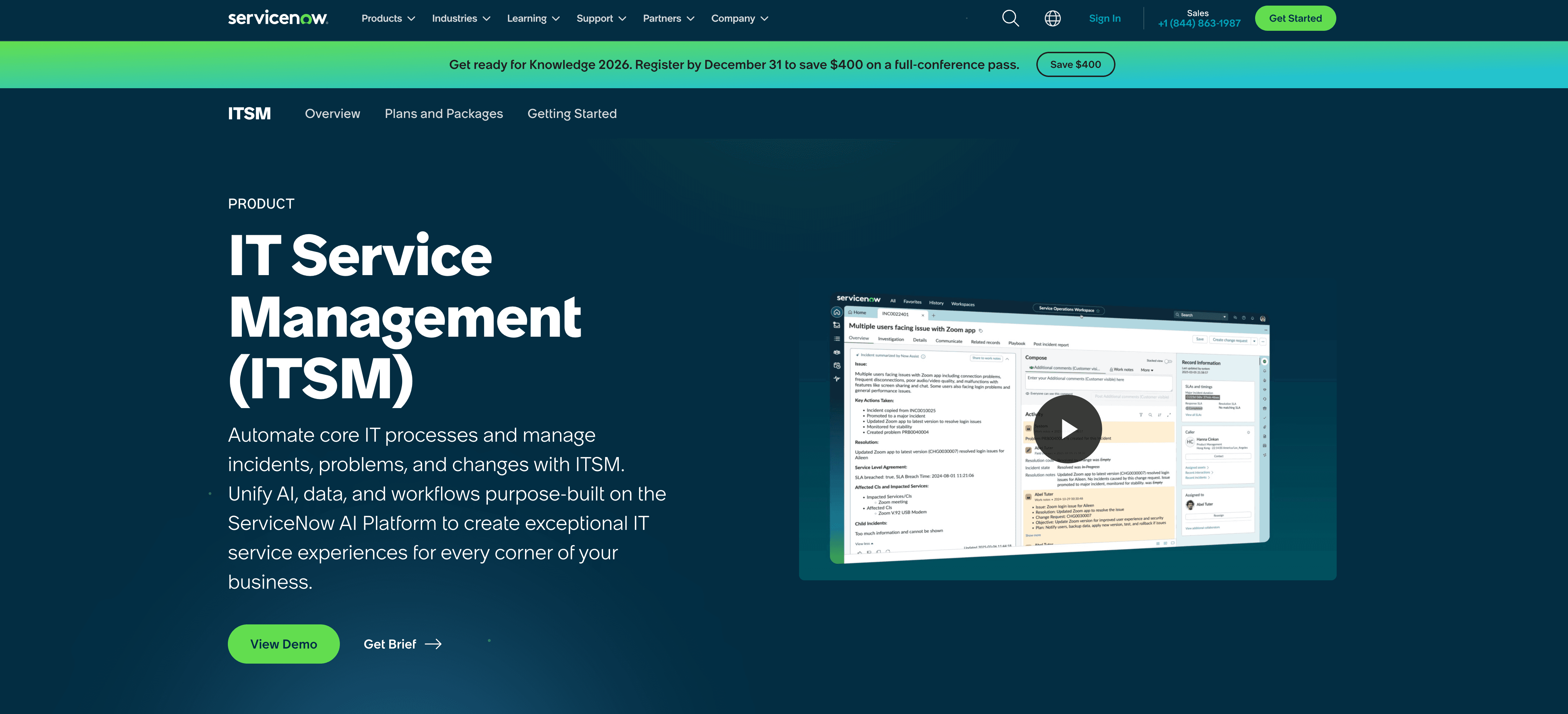
An employee submits a request. ServiceNow creates a record, routes it to a queue, and waits for an agent to act. Every resolution step depends on a person being in the loop. For large enterprises with formal ITIL governance requirements, that model has real merit: ServiceNow's process controls, audit trails, and change management workflows are mature and well-documented.
Key Features
Deep ITIL process governance with mature change management, problem management, and incident tracking workflows
Formal change advisory board support and structured approval chains built for compliance-heavy enterprise environments
Audit trails and compliance controls with a configurable system of record that can reflect complex, multi-department process requirements
AI-assisted classification and routing that reduces manual triage overhead on incoming requests
Broad integration ecosystem across enterprise systems, including HRIS, identity providers, and asset management tools
Limitations
Configuration overhead is real: getting ServiceNow to reflect your actual workflows often takes months. The AI features help with classification and routing, but the resolution path still passes through a human agent. The ticket dependency stays in place regardless of how much automation is layered on top. Licensing complexity also scales quickly without a dedicated admin.
Bottom Line
ServiceNow fits enterprise organizations that need ITIL process governance, formal change advisory board structures, and compliance controls. For teams whose priority is removing manual work from the resolution path, the ticket-first model is a different fit.
Jira Service Management
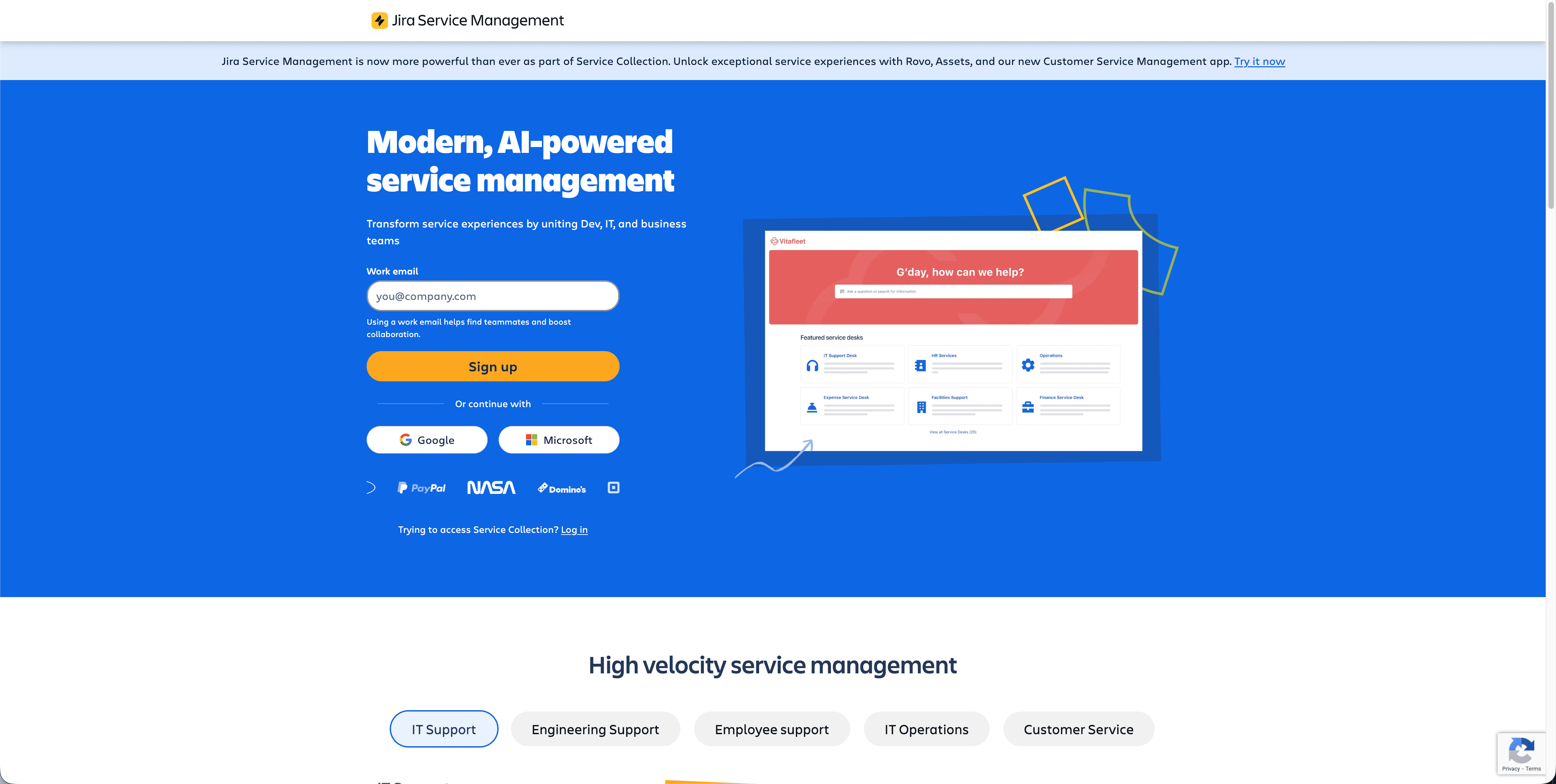
Jira Service Management (JSM) is Atlassian's ITSM offering, built around structured ticketing workflows and deep integration with the broader Atlassian ecosystem. Teams already running Jira Software or Confluence will find JSM familiar territory, and the pricing tiers make it accessible at smaller team sizes. JSM's AI additions help route and suggest, but stop short of executing work autonomously across connected systems.
Key Features
Deep integration with the Atlassian ecosystem, connecting Jira Software, Confluence, and Bitbucket natively for teams already invested in those tools
ITIL-aligned frameworks for change management, problem management, and incident tracking built into the platform
Structured approval chains and audit trails for compliance requirements, with the ticket lifecycle model mapping well to organizations that need formal sign-off processes
AI-assisted classification and knowledge article suggestions that reduce manual triage on incoming requests
Limitations
JSM manages the record; your team still executes the action. Password resets, provisioning, and license assignments all require a human to pick up the ticket and act in a separate system. The AI features help with classification and knowledge suggestions, but they do not close that loop.
Bottom Line
JSM fits organizations that need ITIL process depth or tight Atlassian ecosystem cohesion. Teams focused on autonomous resolution without human touchpoints will find the ticket-first model a different fit.
Freshservice
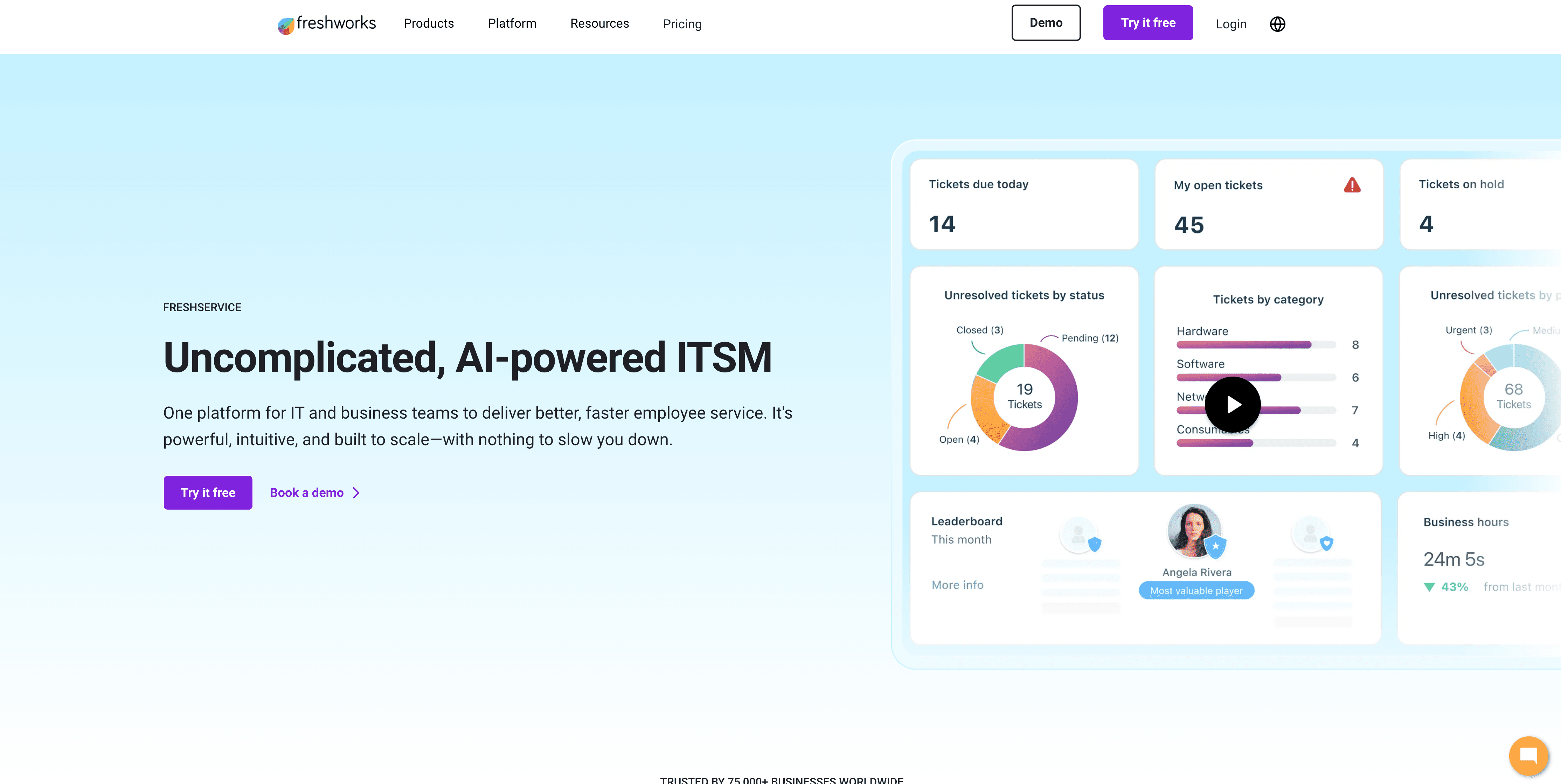
Freshservice is Freshworks' ITSM product, built for mid-market IT teams that want a structured ITSM environment with asset management, change management workflows, and a clean portal experience. The AI layer covers ticket classification, suggested responses, and knowledge article recommendations. The resolution step still depends on a technician acting on the routed ticket.
Key Features
Self-service portal with AI-assisted ticket classification and routing
Built-in asset management, change management, and project tracking
Knowledge base with AI-suggested articles surfaced during ticket creation
Integrations with common SaaS tools including Slack, though Slack functions as a notification channel instead of the primary resolution interface
Freddy AI layer for response suggestions and ticket field auto-population
Limitations
Freshservice's AI handles the intake side: classification, routing, and article suggestions. The work itself still routes to a technician. Password resets, provisioning, and license assignments all require someone to pick up the ticket and act in a separate system. With agentic service management raising the bar, that dependency chain shows up more clearly against what teams can now expect.
Bottom Line
Freshservice fits mid-market IT teams that want a full ITSM suite with asset tracking, change management, and a clean portal, and are comfortable with a technician-in-the-loop model. Teams focused on autonomous resolution will find the architecture routes work back to humans at the step that matters most.
Aisera
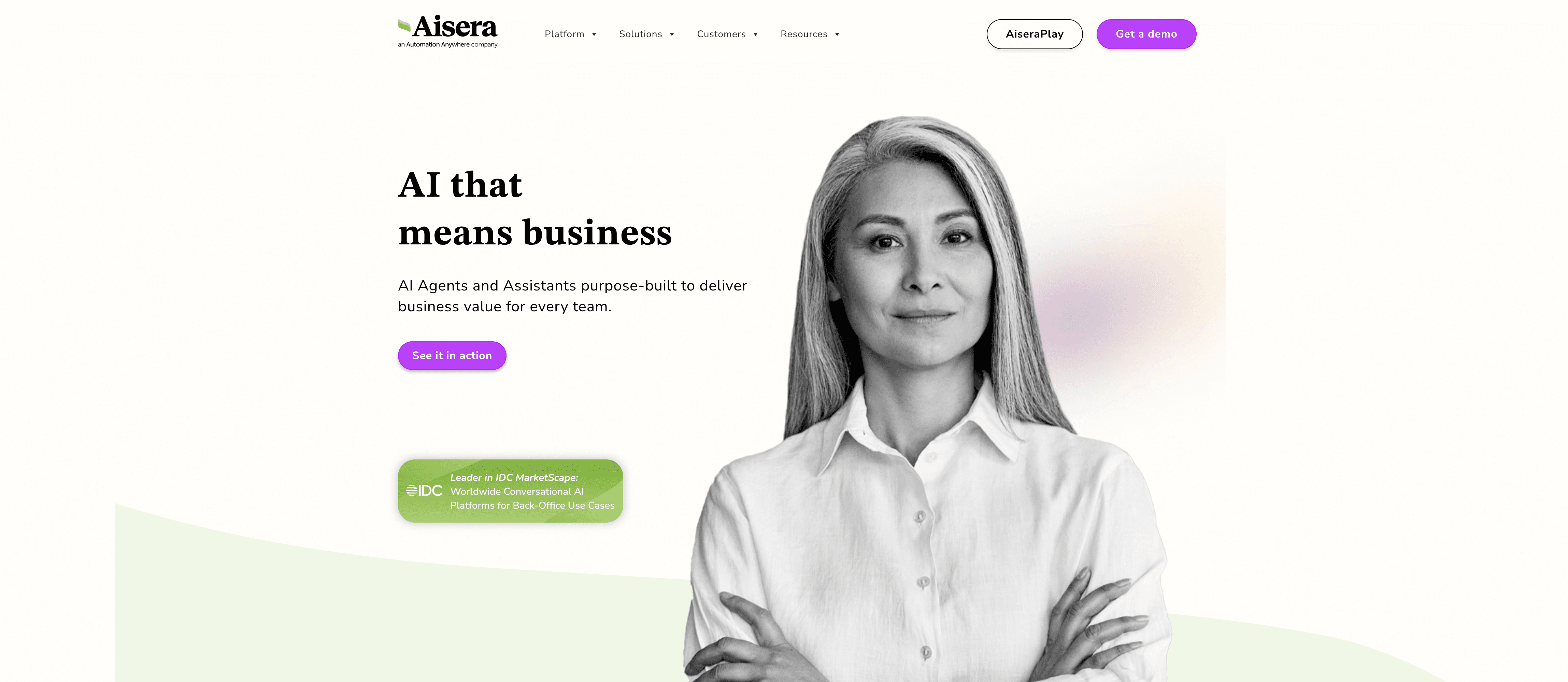
Aisera is an enterprise-focused AI service desk built around a conversational AI layer spanning IT, HR, and finance workflows. An employee submits a request through chat, email, or a web portal. Aisera reads the intent, queries its knowledge graph, and either returns a resolution or routes the request with context attached. Its strength is breadth: IT, HR, and finance requests run through a single interface.
Key Features
Conversational AI that handles requests across IT, HR, and finance through a unified interface, reducing the channel fragmentation that typically forces employees to remember which portal to use for which department.
A knowledge graph that pulls from existing documentation sources and learns from resolved requests, so answers improve over time without requiring manual knowledge-base maintenance.
Workflow automation that can trigger actions in connected systems, covering common IT requests like password resets and access provisioning alongside HR tasks like PTO approvals.
Integrations with major ITSM tools including ServiceNow, Jira, and Zendesk, so Aisera can sit on top of an existing ticketing layer instead of replacing it outright.
Limitations
The depth of autonomous execution varies by request type. Straightforward requests resolve well; complex, multi-system workflows often still require a human to complete the back-end action after Aisera captures and routes the request.
Deployment and configuration at enterprise scale can take weeks, particularly when connecting to multiple systems of record across departments.
Pricing is enterprise-tier and not publicly listed, which makes initial scoping difficult for mid-market teams assessing budget fit before a sales conversation.
Bottom Line
Aisera fits large organizations that need one conversational layer across IT, HR, and finance on top of an existing ITSM platform. Teams whose goal is fully autonomous resolution will find the architecture routes work back to humans more often than they'd prefer.
Feature Comparison Table of AI Service Desk Software
Here's what the five tools look like side by side across the capabilities that matter most for an AI service desk buying decision.
Capability | Ravenna | ServiceNow | Freshservice | Jira Service Management | Aisera |
|---|---|---|---|---|---|
Primary interface | Slack and Teams native | Web portal | Web portal | Web portal | Chat, email, web portal |
Autonomous execution | Yes, end-to-end | Limited, human-in-loop | Limited | Limited | Partial |
Agentic workflow automation | Yes | Configured via workflows | Rule-based | Rule-based | Conversational AI layer |
HRIS and IdP integrations | Native | Available | Available | Available | Available |
Knowledge base sync | Notion, Confluence, Google Drive | Native KB | Native KB | Confluence native | Knowledge graph |
Deployment speed | Minutes | Weeks to months | Days | Days | Days to weeks |
Best fit | SMB to mid-market, Slack/Teams shops | Enterprise, ITIL-heavy orgs | SMB to mid-market | Dev and engineering teams | Large enterprise, multi-dept orgs |
ServiceNow's ITIL governance depth is real; the trade-off is deployment complexity and a ticket-first architecture. Freshservice and JSM fit teams that want structured ticketing without enterprise overhead. Aisera fits large organizations that need one conversational layer across IT, HR, and finance on top of an existing ITSM platform. For a broader look, the workflow automation and service desk platforms comparison guide covers the wider field.
Final Thoughts on AI Service Desk Software Options
Your team's bottleneck is the deciding factor. For formal ITIL governance at enterprise scale, ServiceNow and JSM are built for that. For autonomous end-to-end resolution where the request gets handled without anyone touching it, that's the condition Ravenna's AI agents are designed for. Get in touch to see how it maps to your actual request volume.
FAQ
How do I choose the right AI service desk software from options like Ravenna, ServiceNow, and Freshservice?
Start with one question: does your team need the software to close the loop on its own, or to organize work for humans to act on? For manual execution across systems like Okta, Google Workspace, and your HRIS, look at agentic platforms like Ravenna. For ITIL process governance or tight Atlassian ecosystem cohesion, ServiceNow or Jira Service Management fit those conditions better.
When should a team consider Aisera over Jira Service Management for multi-department support?
Aisera fits large organizations that need one conversational interface across IT, HR, and finance with an existing ITSM back end. Jira Service Management fits better for engineering-heavy teams invested in the Atlassian ecosystem that need structured change management over cross-department conversational intake.
What is the difference between agentic execution and ticket-based routing in AI service desk software?
Ticket-based routing creates a record and waits for a human to act. Agentic execution classifies the request, gathers context from connected systems, and completes the action without a person in the path. A password reset triggers directly in Okta; offboarding suspends accounts and reclaims licenses across every system without a technician touching the ticket.
Which AI service desk tools work best for teams that are not ready to replace their existing ITSM platform?
Aisera sits on top of existing ITSM tools like ServiceNow and Jira, making it a lower-disruption option for large organizations that want conversational AI without replacing their system of record. Ravenna also supports an enhancement-layer model with bidirectional sync to Jira Service Management and Freshservice, so teams can add agentic automation without dismantling existing reporting or compliance workflows.