

Long gone are the days of maintaining knowledge bases by hand. Support teams shouldn’t spend hours writing articles employees never read because they’re buried in portals no one visits. Automated knowledge capture systems learn from your Slack conversations and resolved tickets, building documentation automatically while your team works. How does this work? Simple. When someone asks a question, the AI pulls from your existing docs across Notion, Confluence, or Google Drive and delivers an instant answer. No portal logins, no searching through outdated articles, no waiting for an agent to respond with information that already exists. The system tracks what works, refines answers based on feedback, and keeps expanding its knowledge without manual updates.
TLDR:
AI knowledge systems auto-generate documentation from support conversations vs. manual writing.
Slack-native tools deflect more tickets by answering employees where they already work.
Ravenna combines AI answers, ticketing, and auto knowledge capture in Slack for IT/HR teams.
Legacy systems like ServiceNow require separate portals that reduce self-service adoption.
Best solutions track exact ticket deflection rates and time saved through AI automation.
What Are AI-Powered Knowledge Management Systems?
AI-powered knowledge management systems use machine learning to capture, organize, and surface information while automating workflows for employees, supporting use cases like IT requests, HR questions, and employee onboarding. Knowledge management is now one of the business functions with the highest reported AI adoption, reflecting its role alongside IT and marketing.
These systems automatically learn from support conversations, generate documentation, and deliver contextual answers in real time. For internal teams handling IT, HR, or operations requests, the AI intercepts common inquiries and provides instant answers by referencing existing documentation across tools like Slack, Notion, or Confluence. When employees ask "How do I reset my VPN?" or "What's our expense policy?", the self-service helpdesk in Slack responds immediately, not creating another support ticket. What's more, these AI tools track which answers work, refine responses based on feedback, and continuously expand their knowledge without manual intervention.
On the contrary, traditional knowledge bases are static repositories where someone must write, categorize, and maintain every article. AI-powered systems monitor support interactions, identify knowledge gaps, and suggest or create content based on how your team resolves issues.
How We Ranked AI-Powered Knowledge Management Systems for Internal Support Teams
We assessed these AI-driven systems across six criteria that matter most for internal support teams managing high volumes of employee requests.
First, automated knowledge capture determines how well the system learns from resolved tickets and creates documentation without manual writing. The best solutions generate articles from actual support conversations instead of requiring your team to author everything from scratch.
Second, AI-powered search and retrieval measures how accurately the system finds and delivers relevant answers when employees ask questions. This includes semantic search that understands intent, not simply keyword matching.
Third, integration with existing support workflows looks at whether the system fits into your ticketing process or requires employees to use separate portals. Workflow integration means fewer context switches for both support agents and employees.
Fourth, Slack and collaboration tool integration looks into how naturally the system works within the chat and document tools your team already uses daily. Organizations report higher AI adoption when solutions meet employees where they work.
Fifth, ticket deflection rates show how many inquiries the AI resolves without agent involvement, directly impacting team capacity. Sixth, knowledge article creation automation tracks how quickly the system expands its knowledge base as your organization changes.
Best Overall AI-Powered Knowledge Management System: Ravenna
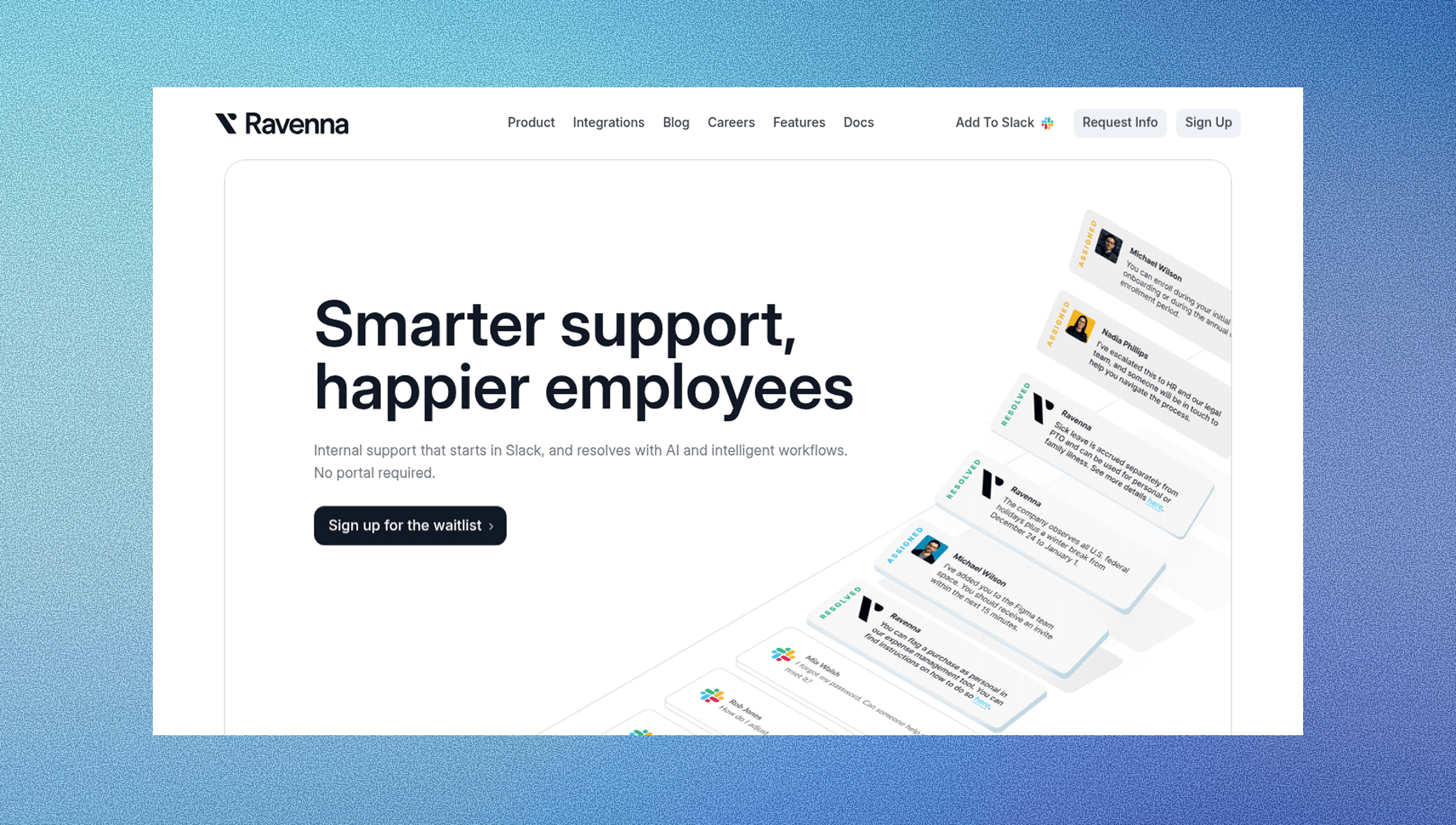
Ravenna is an AI-native workflow automation platform built directly within Slack, combining intelligent knowledge management with end-to-end request automation. The system captures knowledge from conversations and resolved tickets to build an internal knowledge base that expands over time.
Key Capabilities
Ravenna includes a number of AI features for organizations looking for an AI Knowledge Management system:
Slack-first architecture that allows employees to submit requests, receive AI-powered answers, and access knowledge without switching tools, removing portal friction for IT, HR, and operations teams.
Automatic knowledge creation that analyzes resolved issues to generate articles with minimal manual input, keeping documentation current without adding work for support teams.
Deep knowledge integrations that sync content from Notion, Confluence, Google Drive, Microsoft tools, Coda, GitHub, and Slack channels so the AI can reference existing documentation when providing answers.
Transparent AI impact metrics through dashboards that show AI vs. human resolution rates and time saved, providing clear ROI visibility.
Cross-functional support for IT, HR, finance, and operations requests with customizable workflows and approval routing.
Ravenna provides AI-powered knowledge management for Slack-driven organizations without the complexity of traditional multi-tool ITSM stacks.
ServiceNow Knowledge Management
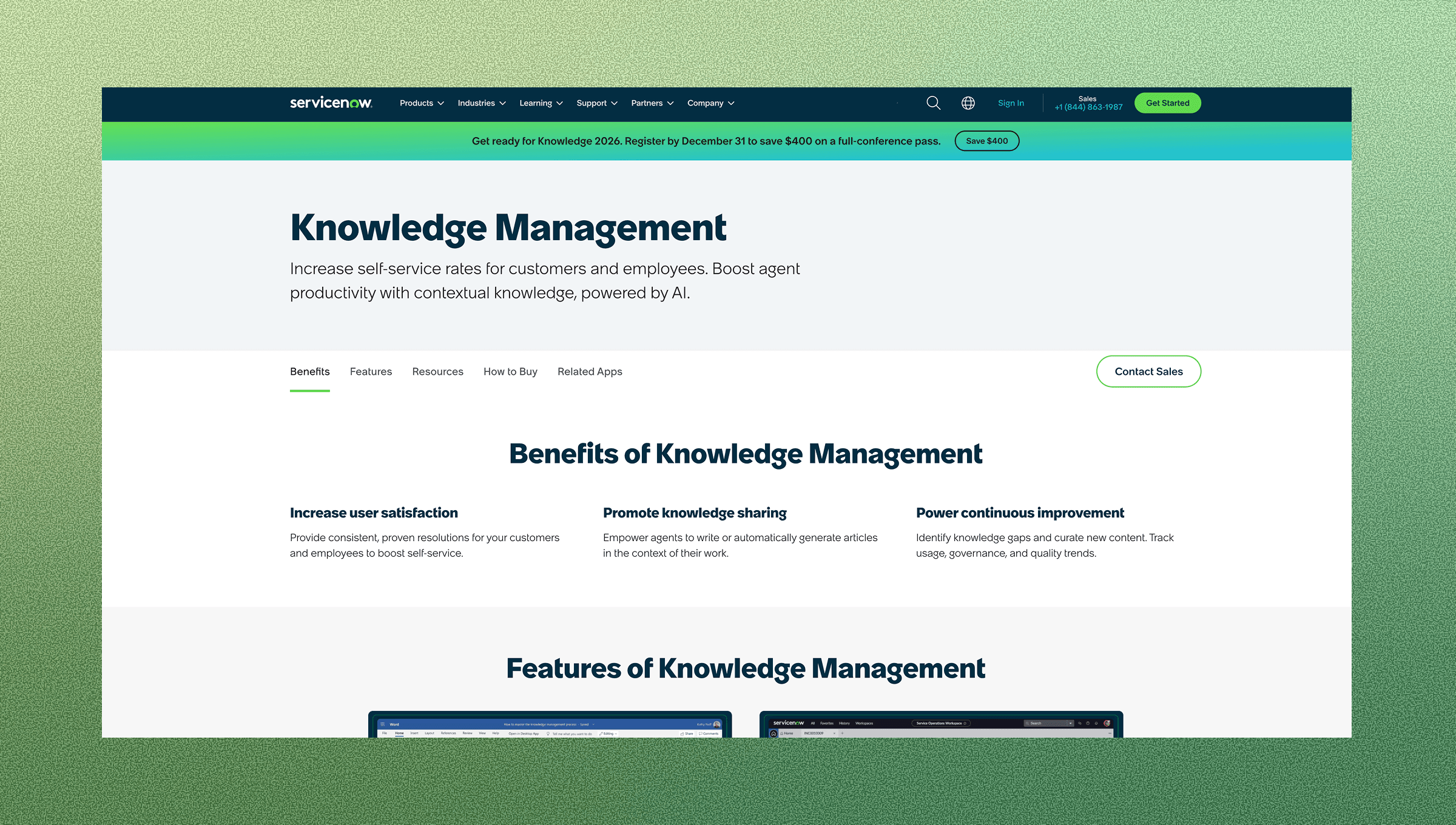
ServiceNow Knowledge Management is an enterprise ITSM software solution component that provides knowledge base functionality as part of its broader knowledge base software ecosystem.
Key Capabilities
ServiceNow Knowledge Management includes a number of capabilities for organizations looking for an AI Knowledge Management system:
Centralized knowledge base with article creation, review, categorization, and approval workflows for maintaining documentation standards
Contextual search capabilities and Microsoft Word Online integration for content authoring
Machine learning to identify knowledge gaps and integration with incident management systems
Analytics dashboards for tracking usage patterns and knowledge base performance metrics
Limitations
The main limitation is that employees must navigate a separate portal outside their daily communication tools like Slack, creating friction that reduces self-service adoption. IT teams manually create and maintain knowledge articles instead of capturing knowledge automatically from resolved conversations.
ServiceNow suits enterprises with dedicated knowledge management teams and complex pricing models, but Ravenna eliminates portal friction by meeting employees where they work while automatically building the knowledge base from real support interactions.
Atlassian Jira Service Management
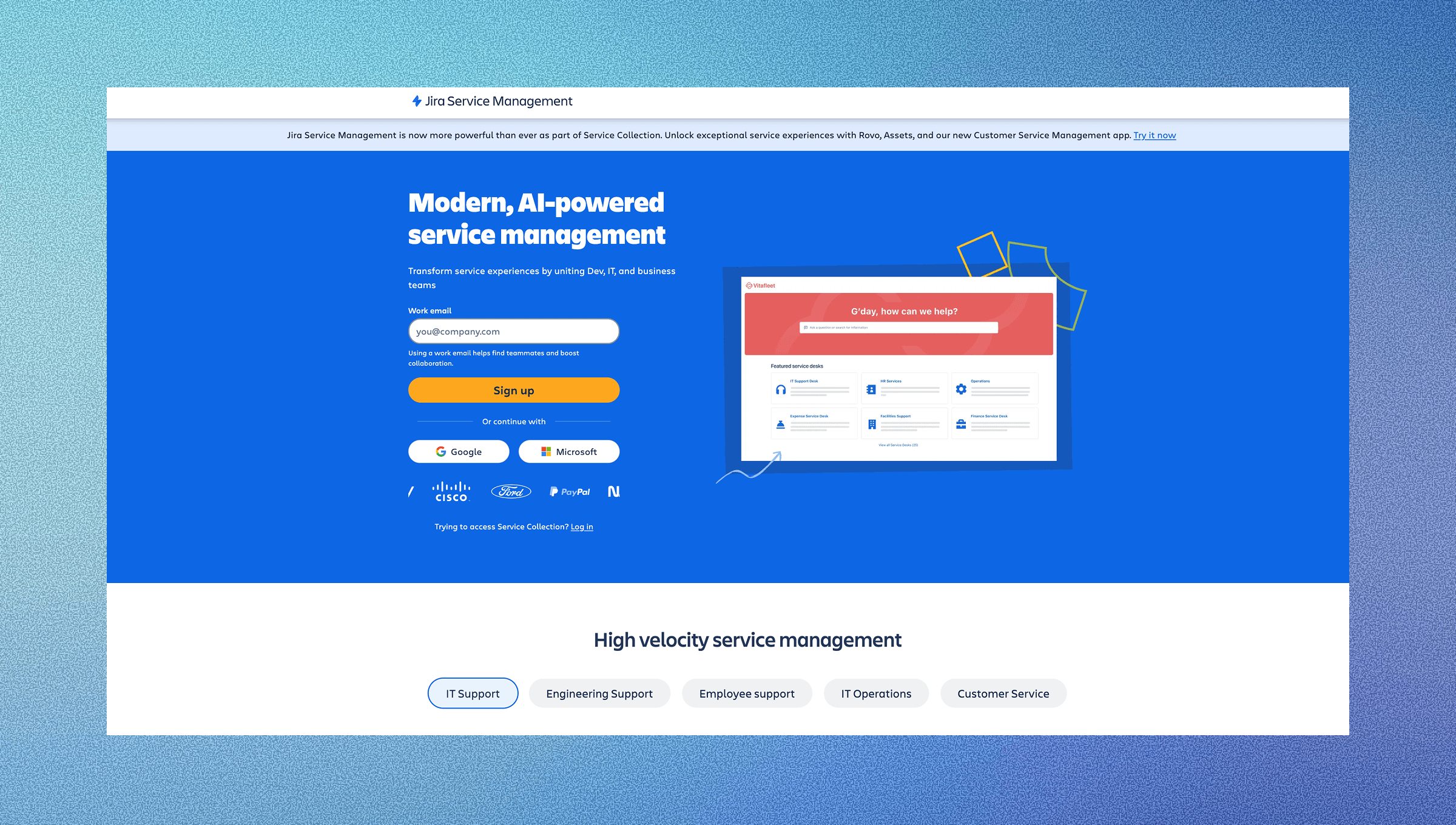
Atlassian Jira Service Management combines ITSM capabilities with knowledge management features powered by Atlassian Intelligence.
Key Capabilities
Atlassian Jira Service Management includes a number of capabilities for organizations looking for an AI Knowledge Management system:
Confluence integration for documentation and knowledge base creation
AI-assisted writing, content summarization, and semantic search capabilities
Self-service portal for internal teams to access knowledge articles
Ticketing and incident management with knowledge article linking
Limitations
The primary limitation is that it does not provide native Slack-based support experiences, requiring employees to switch between multiple tools (Confluence, Jira, Slack) to find answers and create tickets. It also lacks automated knowledge capture that learns from resolved support conversations to build documentation without manual writing.
Jira Service Management works well for teams already using Atlassian's ecosystem who need project management and ITSM capabilities tightly integrated with Confluence-based documentation workflows.
Freshservice
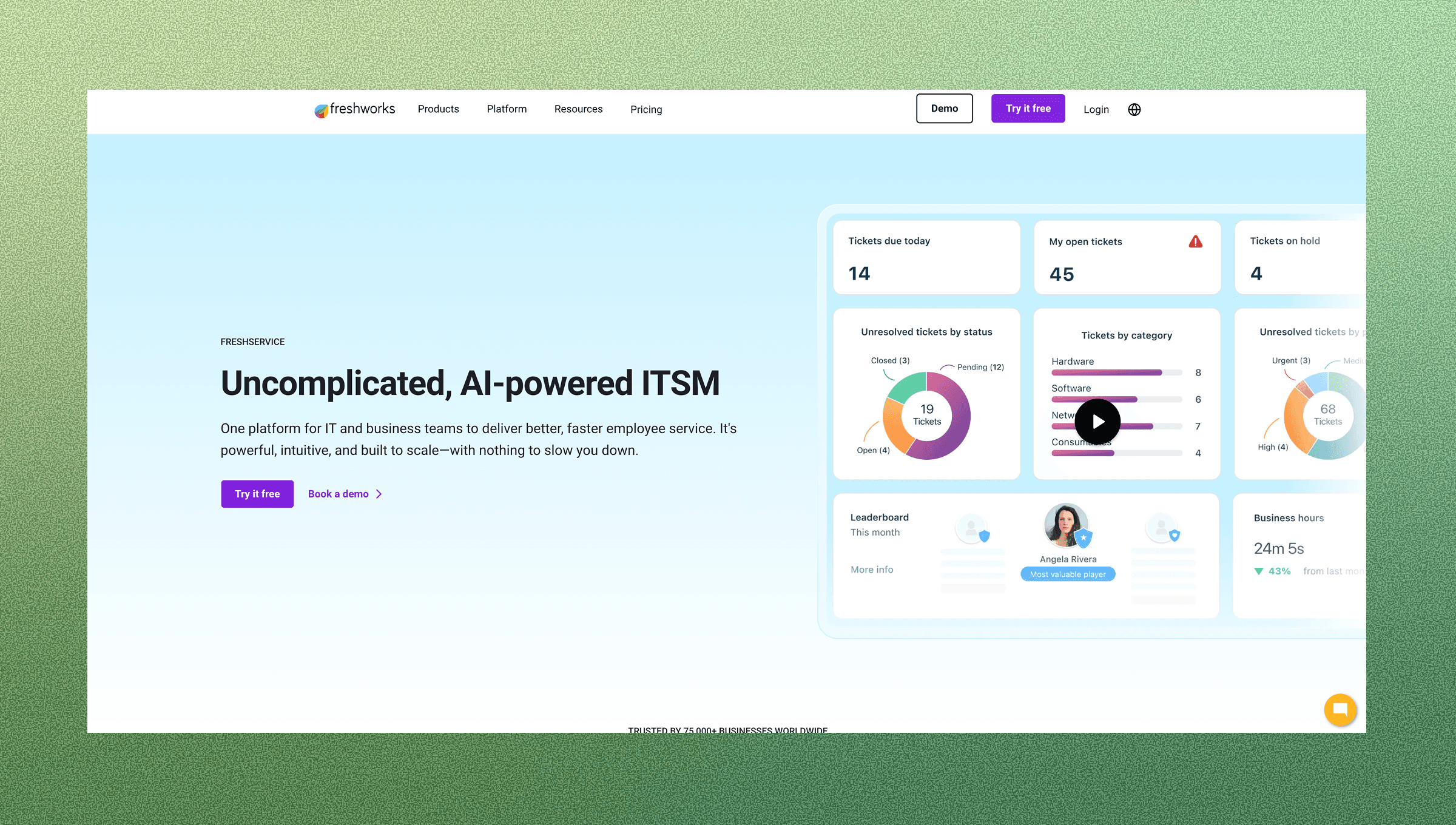
Freshservice is a cloud-based ITSM solution that includes AI-powered knowledge management as part of its service desk capabilities.
Key Capabilities
Freshservice includes a number of capabilities for organizations looking for an AI Knowledge Management system:
Knowledge base with article creation and self-service portal capabilities
AI-powered ticket routing and automated workflow capabilities
Integration with IT asset management and service catalog features
Chatbot tools for answering routine support questions
Limitations
The primary limitation is that it operates through web portals and email instead of embedding directly into collaboration tools like Slack. It also requires manual article authoring instead of automatically extracting knowledge from support conversations to keep documentation current.
Freshservice works well for small to mid-market businesses seeking an accessible ITSM solution with basic AI features and straightforward knowledge management for teams not already committed to Slack-first workflows.
Moveworks
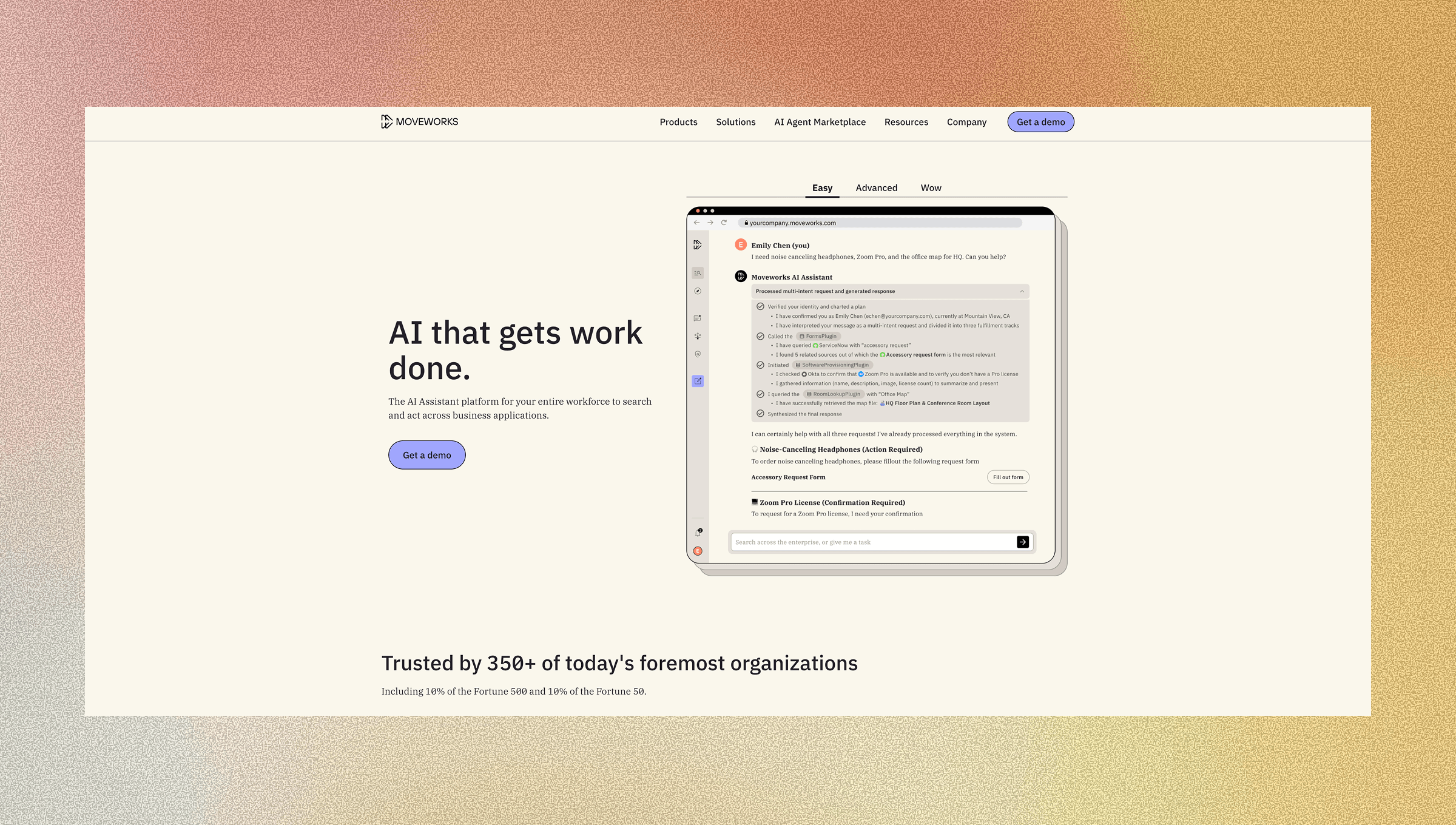
Moveworks is an AI copilot that integrates with existing ITSM tools to automate employee support requests through conversational AI.
Key Capabilities
Moveworks includes a number of capabilities for organizations looking for an AI Knowledge Management system:
Conversational AI assistant that operates within Slack, Teams, and other channels
Integration with enterprise systems to resolve IT and HR support requests
Agentic automation capabilities for building custom AI workflows
Limitations
The primary limitation is that it functions as a chatbot overlay requiring integration with separate ticketing and knowledge management tools instead of providing unified ticket management, and does not automatically create knowledge base articles from resolved issues or offer native ITSM capabilities.
Moveworks works for large enterprises with over $1 billion in revenue that already have incumbent ITSM infrastructure (typically ServiceNow) and want to layer conversational AI capabilities on top to deflect tickets without replacing their ticketing backend.
Feature Comparison Table of AI-Powered Knowledge Management Systems
Feature | Ravenna | ServiceNow | Atlassian JSM | Freshservice | Moveworks |
Slack-native interface | ✓ | ✗ | ✗ | ✗ | ✓ |
Automated knowledge capture from conversations | ✓ | ✗ | ✗ | ✗ | ✗ |
AI-powered instant answers | ✓ | ✓ | ✓ | ✓ | ✓ |
Native ticketing and ITSM | ✓ | ✓ | ✓ | ✓ | ✗ |
Knowledge base integrations | ✓ | ✓ | ✓ | ✓ | ✓ |
Transparent AI impact metrics | ✓ | ✗ | ✗ | ✗ | ✗ |
Cross-departmental support | ✓ | ✓ | ✓ | ✓ | ✓ |
Why Ravenna Is the Best AI-Powered Knowledge Management System for Internal Support Teams
Ravenna tackles a core challenge internal teams face: employees need help where they work, not in a separate portal. The system operates directly in Slack, captures knowledge from resolved tickets, and unifies ticketing with approvals in one system. This removes the portal friction that prevents self-service adoption and eliminates the manual documentation work that keeps teams writing articles instead of solving requests.
The ROI becomes measurable through dashboards that track how many tickets AI assistant resolves and exactly how much time teams save. For IT, HR, and operations teams managing hundreds of weekly employee requests, this combination of frictionless access and automated knowledge capture reduces repetitive questions and speeds resolutions without additional headcount.
Ravenna solves the problem of clunky portals and static knowledge bases requiring constant maintenance by automating workflows end-to-end. For organizations running on Slack that need to scale support without growing team size, it eliminates tool sprawl and manual overhead while turning routine requests into automated workflows.
Final Thoughts on AI Knowledge Management for Internal Teams
Automated knowledge capture changes how internal support teams scale by improving knowledge sharing while removing the manual work of writing and updating articles. When your system learns from actual support conversations in Slack, employees get instant answers without opening tickets or switching tools. You can measure the impact through deflection rates and time saved, making it clear how the AI agents actually improve operational efficiency.
FAQs
What is automated knowledge capture and how does it work?
Automated knowledge capture monitors support conversations and resolved tickets without manual writing via generative AI. The system identifies patterns in how your team solves issues, then creates and optimizes knowledge base articles from those interactions so future employees get instant answers.
How do AI-powered knowledge systems reduce ticket volume?
AI intercepts common questions by searching existing documentation and delivering instant answers before a ticket is created. When employees ask routine questions like password resets or policy clarifications, the system responds immediately from your knowledge base, streamlining your team members’ user experience.
Can AI knowledge management integrate with our existing documentation tools?
Yes, modern AI knowledge systems sync with tools like Notion, Confluence, Google Drive, Coda, and GitHub to reference your existing documentation. AI can pull from multiple sources when answering employee questions without requiring you to migrate or duplicate content.
When should we switch from a traditional knowledge base to an AI-powered system?
Consider switching if your team spends more than 5 hours weekly writing and updating articles manually, or if employees consistently bypass your knowledge base to create tickets for questions already documented. AI systems eliminate both problems by automating documentation and delivering answers where employees actually work.
What's the difference between a Slack-native system and a chatbot integration?
A Slack-native system handles ticketing, knowledge management, and approvals directly within Slack as a unified solution. An AI chatbot integration layers conversational AI over separate ticketing and knowledge tools, requiring multiple systems to work together and often creating gaps in the support experience