

A lot of ITSM tools added AI to their existing ticket workflows and relaunched. The result is faster triage with the same human dependency on the back end. If your bottleneck is the resolution step, not the intake step, you're reading the right list.
TLDR:
AI-native ITSM platforms execute requests end-to-end without a human in the path; AI-augmented tools stop at suggestions.
Your ranking criteria should include autonomous resolution depth, native Slack/Teams execution, and whether a separate system of record is still required.
ServiceNow and Jira Service Management fit teams with deep ITIL governance needs; both hand resolution work back to a human.
Ravenna is a Slack and Teams-native workflow automation platform whose AI agents execute end-to-end across Okta, Google Workspace, and Jira without human touchpoints.
What Are AI-Native ITSM Platforms?
AI-native ITSM platforms are built from the ground up to resolve IT requests autonomously, not simply log them. The distinction matters architecturally: traditional service management tools create a ticket, route it to a queue, and wait for a human to act. Every resolution step depends on someone being in the loop.
AI-native platforms break that dependency chain. An employee submits a request. The system classifies intent, pulls context from connected systems, executes the required action across your stack (they will still loop in a human agent if the task is sensitive and requires human oversight), and posts confirmation back to the employee, without a human touching it. That full cycle, from request to resolution without a handoff, is what "AI-native" actually means in practice.
How This Differs from AI-Augmented ITSM
Most legacy vendors have added AI features to existing ticket-based architectures. That produces a different outcome than building around AI from the start.
AI-augmented tools use AI to suggest responses, auto-categorize tickets, or surface knowledge articles, but the resolution still requires a human to act on those suggestions before anything changes in your systems.
AI-native platforms use AI as the execution layer. The system doesn't hand a suggestion to an agent; it runs the workflow, writes back to Okta or Google Workspace or your HRIS, and closes the loop on its own.
The architectural consequence is who owns the last mile. In augmented systems, a person does. In AI-native systems, the platform does, for every request that falls within its resolution scope.
How We Ranked These Platforms
Every tool on this list was ranked on publicly available information only. Six criteria shaped the order:
Depth of autonomous execution: does the system resolve requests end-to-end, or hand off to a human once intent is classified?
Native Slack or Teams execution vs. portal-based intake, since where work happens determines whether employees actually use the system
Workflow breadth across IT, HR, and Operations, beyond a narrow access-request use case
Deployment speed from installation to live automation
Analytics visibility into AI vs. human resolution rates, beyond ticket throughput alone
Total cost of ownership, including whether a separate ITSM system is still required underneath to function as a system of record
Best Overall: Ravenna
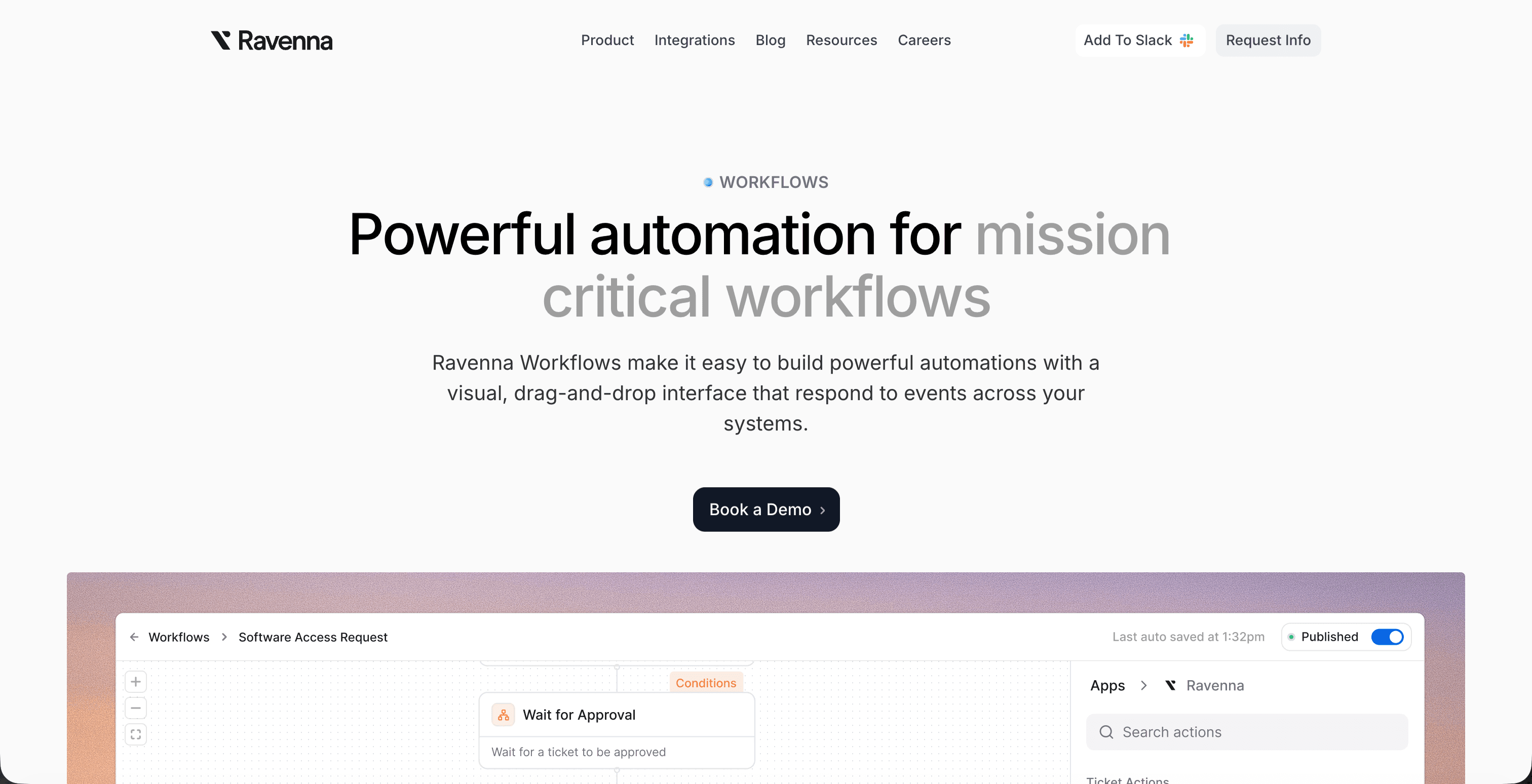
Ravenna is an AI-native workflow automation platform built for IT, HR, and Operations teams working inside Slack and Microsoft Teams. Where most tools in this category route requests to a queue and wait for a human to act, Ravenna's AI agents classify intent, gather context, execute across connected systems, and post confirmation back in the same thread, without a person in the path.
That end-to-end execution is what separates Ravenna from the rest of this list.
How It Works in Practice
An employee messages IT asking for access to a new tool. Ravenna's IT Agent reads the request, checks the requester's role against provisioning policy, triggers the appropriate workflow in Okta or your identity provider, and closes the loop in Slack. All of this happens before an IT analyst has opened a tab. The same cycle applies to onboarding, offboarding, password resets, and license reclamation.
Key Features
Agentic resolution that executes workflows end-to-end across Okta, Google Workspace, Jira, and other connected systems, going beyond routing or suggesting
IT Agent and PeopleOps Agent each scoped to their domain, with Approval Rounds built into the execution path for requests that require sign-off
Native Slack and Microsoft Teams deployment, so employees request help where they already work
Knowledge base that syncs with Notion, Confluence, and Google Drive and surfaces answers at the moment of intent
Limitations
Ravenna is purpose-built for Slack-native and Teams-native organizations. Teams that need deep ITIL process compliance or formal change advisory board structures will find it a different fit than legacy ITSM systems designed around those frameworks.
Bottom Line
If the gap your team feels is autonomous end-to-end resolution, closing the loop without a human in the path, Ravenna is built for that condition.
Try Risotto
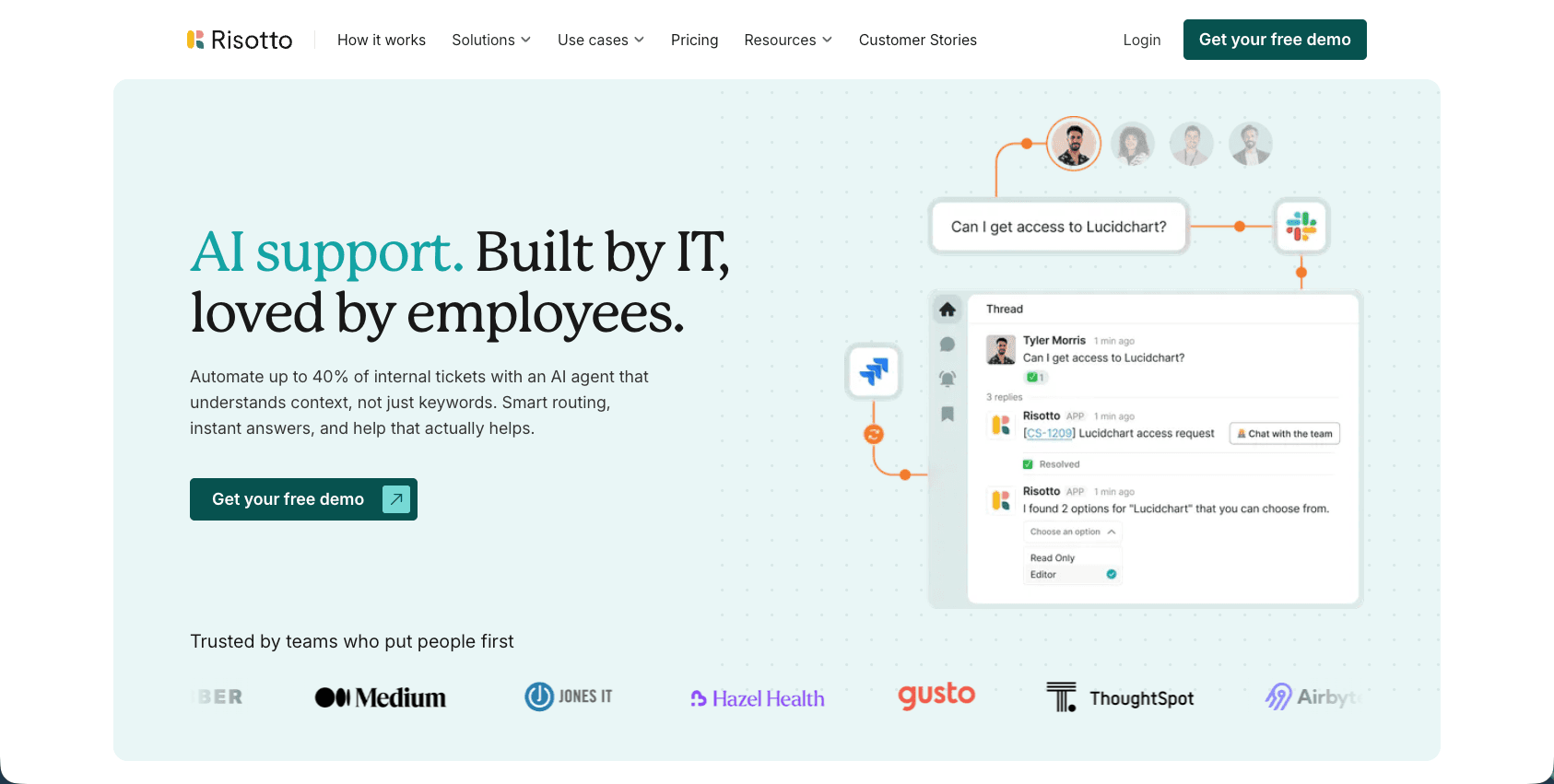
Risotto is a Slack-native help desk that sits inside your existing workspace, so employees never have to open a separate portal. An employee submits a request in Slack, Risotto reads it, classifies the intent, and either surfaces a relevant knowledge base article or routes the request to the right team with context already attached. That cycle is what "conversational AI help desk" means in practice here.
Key Features
Ticket creation and triage happen entirely within Slack, so employees never leave the tool they're already in to submit a request.
Knowledge base search is built into the response flow, so common questions get answered before they reach a human queue.
Routing rules let IT teams define which channels or agents receive which request types, keeping handoffs structured.
Limitations
Risotto handles conversation and routing well, but autonomous execution across back-end systems is limited. A password reset request surfaces a response; the actual reset still requires a human to act.
Organizations that have moved to Microsoft Teams or are considering it will find Risotto's Slack-first architecture a poor fit.
Teams with high request volume across complex, multi-system workflows will outgrow the platform's resolution depth quickly.
Bottom Line
Risotto fits small IT teams that want to consolidate Slack-based request intake and reduce the friction of portal-based ticketing. If the bottleneck is getting requests into the right hands faster, it solves that. If the bottleneck is closing those requests without manual work on the back end, the architecture hands that work back to your team.
Freshservice
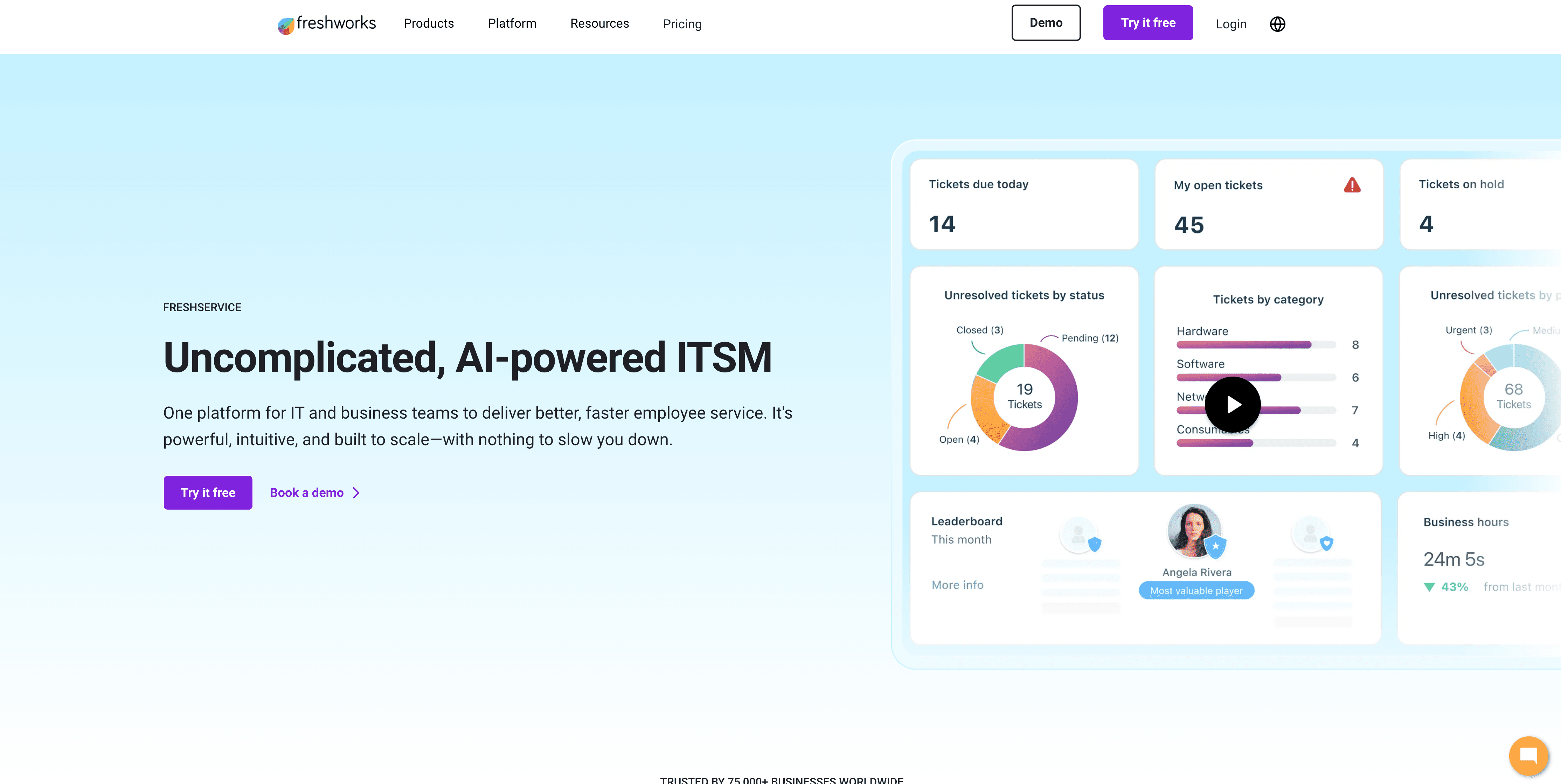
Freshservice is Freshworks' ITSM offering, built around ITIL-aligned service management with a cleaner UI than legacy incumbents like ServiceNow. An IT analyst submits a change request, Freshservice routes it through an approval workflow, logs it against the CMDB, and closes the ticket once the approver signs off. That structured, process-first cycle maps every action to a defined process stage and tracks compliance along the way. For a detailed side-by-side, see the Ravenna vs Freshservice comparison.
Key Features
ITIL process depth (incident, problem, change, and release management) built in out of the box, which matters for organizations running formal CAB processes.
CMDB and asset management capabilities suited for teams that need structured change tracking alongside service request handling.
AI-assisted ticket classification, suggested resolutions, and a virtual agent that handles common requests, reducing manual triage work at the intake layer.
A lighter UI than ServiceNow, with a faster ramp for mid-market IT teams.
Limitations
AI features augment the ticket workflow but don't remove the human-in-the-loop dependency. An agent still needs to read the suggestion, open the target system, and take action.
Slack and Teams integrations function as a notification and submission layer, not a native execution environment; teams that run support in Slack or Teams will find the conversational surface limited.
HR and Operations use cases are secondary and typically require separate implementations beyond the core IT service desk.
Pricing scales with agents and features, which can become a factor as teams grow.
Bottom Line
Freshservice is a well-built ITIL service desk with useful AI triage features. It's the right fit for teams that need structured process governance and solid asset tracking. Teams whose priority is autonomous request resolution without human touchpoints will find the ceiling of what its AI layer can do relatively quickly.
Jira Service Management
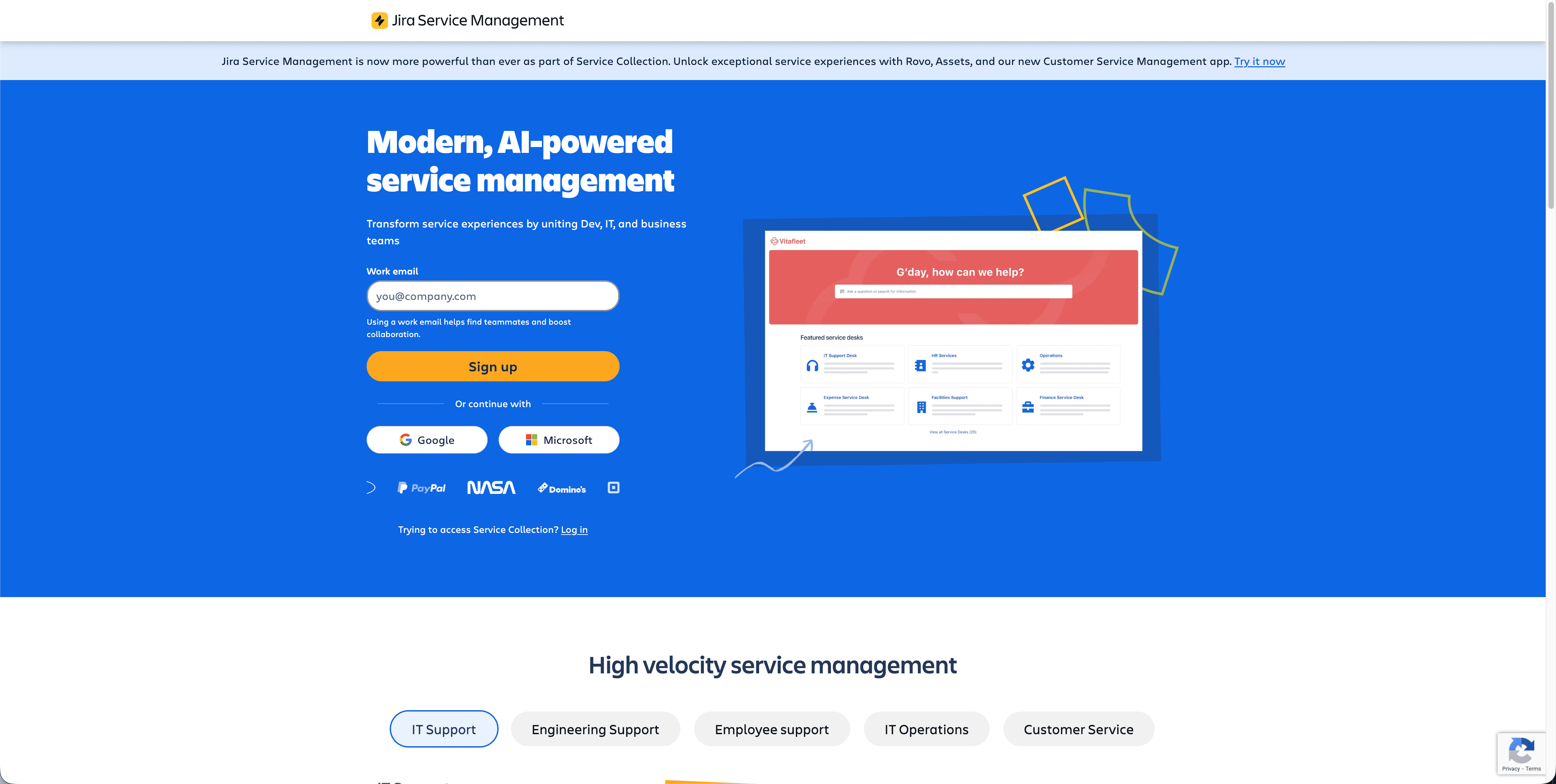
Jira Service Management (JSM) sits in a familiar spot for most IT teams: it's built on the same Atlassian ecosystem many engineering organizations already run for project tracking, which makes it an easy procurement conversation. An employee submits a request through a portal, JSM creates a ticket, routes it to a queue, and waits for an agent to pick it up and act. That dependency chain is what "ticket-centric" means in practice, and it doesn't disappear just because you've added AI features on top. JSM's ITIL-aligned modules cover incident, problem, and change management out of the box, a genuine strength for teams already running formal ITIL processes.
JSM's AI additions help with ticket classification and suggested responses, but the resolution loop still closes through a human. The system surfaces answers; it doesn't execute across your identity provider, SaaS stack, or HR system autonomously.
Key Features
Portal and email-based request intake with configurable forms and SLA tracking built for ITIL-aligned teams
AI-assisted ticket classification that suggests categories and routes requests without manual triage
Native integration with Confluence for knowledge article suggestions surfaced during the request flow
Deep Jira Software interoperability, which matters for teams that need to link IT requests directly to engineering work items
Limitations
Resolution still requires a human to act on the routed ticket; the AI layer advises but does not execute
Slack and Teams integrations exist but function as notification channels, not the primary resolution surface
Configuration depth grows quickly for non-engineering IT teams, and portal adoption tends to lag compared to conversational request surfaces
Bottom Line
JSM is a practical fit for engineering-led organizations already invested in the Atlassian ecosystem that need ITIL-structured request management and tight linkage between IT operations and software development. Teams whose priority is autonomous, end-to-end resolution without a human in the path will find the ticket-first architecture works against that goal.
ServiceNow
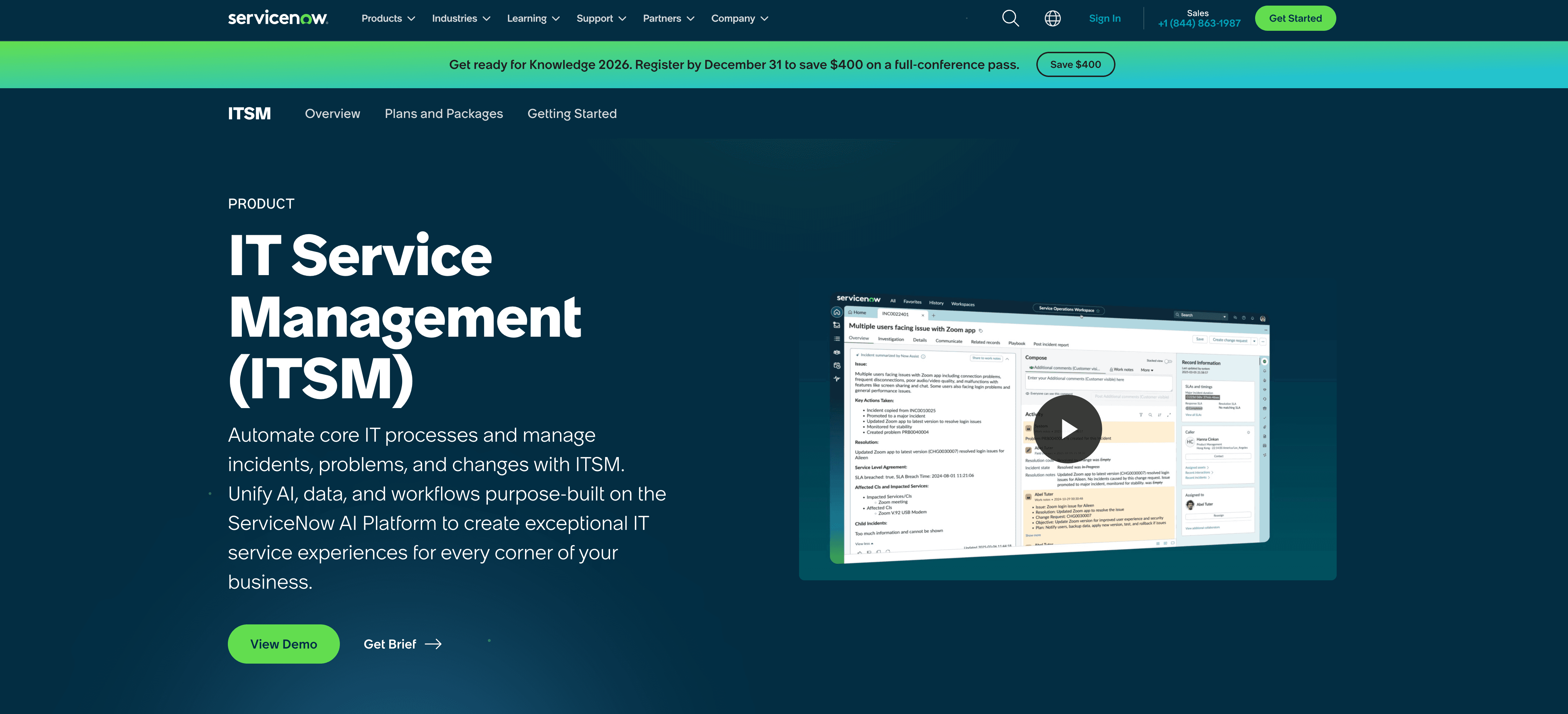
ServiceNow is the category incumbent. An employee submits a request, the system creates a ticket, routes it to a queue, and waits for an agent to pick it up, look up the relevant system, take action, and close it out. That dependency chain (request → queue → human → action) is what "ticket-centric" means in practice. Every resolution step depends on a person being in the loop.
Where It Fits
Enterprises with deep ITIL governance needs will find ServiceNow purpose-built for that environment: change advisory boards, formal approval chains, and audit trails are where it earns its keep.
Teams that need a system of record across complex, multi-department workflows at scale have relied on it for years.
Limitations Worth Noting
Deployment runs in weeks to quarters, with configuration burdens that typically require dedicated admin resources or a consulting engagement.
AI capabilities are layered onto a ticket-first architecture, so autonomous resolution still hands work back to a human at key points.
Pricing and implementation overhead make it a difficult fit for small-to-mid-market IT teams.
Bottom line
ServiceNow is the right call when process governance at enterprise scale is the top requirement. If your bottleneck is eliminating manual work from the resolution path, the ticket-first architecture is a different fit.
Feature Comparison Table of AI-Native ITSM Platforms
The table below maps where each platform's AI automation actually stops, from intent classification through to autonomous resolution, so you can see the architectural differences at a glance instead of hunting through feature documentation.
How AI-Native ITSM Platforms Compare Across Key Capabilities
Capability | Ravenna | Risotto | Freshservice | Jira Service Management | ServiceNow |
|---|---|---|---|---|---|
Deployment environment | Slack and Teams-native | Slack-native | Web portal + integrations | Web portal + integrations | Web portal + integrations |
Core architecture | Agentic execution | Conversational AI help desk | ITIL-aligned ticketing with AI augmentation | Ticket-centric with AI assist | Ticket-centric with AI layer |
Autonomous resolution | End-to-end, no human required | Minimal, routes requests to humans | Partial; escalates to agents | Minimal; routes to queues | Partial; human approvals common |
Workflow automation | Pre-built + customizable, no code | Limited to routing and triage | Rule-based + AI suggestions | Rule-based automation | Extensive but requires configuration |
Knowledge base integration | Syncs with Notion, Confluence, Google Drive | Built into response flow | Native knowledge base | Confluence-native | Native knowledge module |
Onboarding and offboarding | Automated end-to-end across HR, IT, and ops systems | Not a primary use case | Workflow-based, manual steps remain | Project-based, manual coordination | Configurable workflows, implementation-heavy |
Pricing model | Per-seat, transparent | Not publicly listed | Tiered SaaS plans | Tiered SaaS plans | Enterprise contract, opaque |
Setup time | Minutes | Hours to days | Days to weeks | Days to weeks | Weeks to months |
Best fit | SMB to mid-market teams running IT, HR, and ops in Slack or Teams | Small IT teams consolidating Slack-based request intake | Teams needing ITIL governance with AI-assisted triage | Teams already in the Atlassian ecosystem | Large enterprises with deep ITIL governance needs |
A few things worth noting as you read across the rows. Deployment environment is not a cosmetic detail: it determines where requests are filed, where resolutions are confirmed, and whether employees have to leave their communication tool to get help. Platforms built around a web portal require employees to context-switch; Slack and Teams-native platforms intercept the request at the moment it forms.
The autonomous resolution row is where architectural differences surface most clearly. Partial resolution means a human is still in the path for a meaningful share of requests. End-to-end resolution means the system classifies intent, executes across the relevant systems, and confirms completion without waiting on an agent to act.
Why Ravenna Is the Best AI-Native ITSM Platform
Every other tool on this list either augments the ticket workflow or routes requests to a human with better context. Ravenna's AI agents do neither. They execute end-to-end, from intent classification through back-end action, without a person in the resolution path. The Analytics Suite then gives IT leaders a workflow-level view of exactly what Ravenna, a differentiator covered in the best ITSM platforms for IT teams breakdown, so automation ROI is measurable and not simply assumed.
That architecture is purpose-built for Slack-native and Teams-native organizations. Teams that need deep ITIL process compliance or formal change advisory board structures will find a better fit elsewhere on this list.
Final Thoughts on the Best AI-Native ITSM Tools Right Now
Every tool on this list uses AI. The difference is what that AI is actually responsible for finishing. If your team is still closing requests by hand after the ticket is filed, the architecture is the problem, not the volume. Pick the option that matches where you need the automation to stop. And if the answer is "it shouldn't stop until the request is resolved," the Ravenna team is worth a conversation.
FAQ
What does "autonomous resolution" actually mean in practice, and why does it matter when comparing these platforms?
Autonomous resolution means the platform classifies intent, executes across connected systems like Okta or Google Workspace, and posts confirmation back to the employee, without a human acting on the suggestion first. Most platforms on this list handle the routing and triage layer well but hand the last mile back to an agent. Fixify's 2026 IT Help Desk Benchmark Report found that tickets with heavy AI automation resolve in a median of 4.4 hours, compared to 71 hours without automation, a 16x gap that compounds across every request in your queue. Organizations that have moved beyond triage-only automation consistently report faster resolution times across their full request queue.
How do I know if my organization is the right fit for an AI-native ITSM platform versus a traditional option like ServiceNow?
The clearest signal is where manual work accumulates in your current process. If your team spends time acting on tickets after they're filed (provisioning accounts, resetting credentials, processing offboarding steps), an AI-native platform like Ravenna is designed to eliminate that execution layer. If your priority is process governance at enterprise scale with formal change advisory boards, audit trails across complex multi-department workflows, and deep ITIL compliance, ServiceNow is built for that environment and the ticket-first architecture is intentional, not a limitation.