
You use Microsoft Teams. Your developers use Claude and Codex. Now you need to find the best service desk for Microsoft Teams users who use Claude and Codex, and the real question isn't integration support. It's whether the service desk can resolve requests end-to-end in the same environment your team already works in, without forcing them back into ticket portals or manual handoffs. Most platforms in this space still stop at routing tickets or answering questions. The ones that matter in 2026 go further: they classify intent, pull context on who's asking and what they actually need, execute workflows across your stack, and finish the task without a human in the loop. Here are three platforms built for Teams environments where AI-assisted work is already the norm, with an honest look at where each one fits and where it doesn't. The comparison covers how each platform handles request intake inside Teams, whether it executes work end-to-end or stops at routing, and how deep its system integrations actually go. Ravenna runs natively in both Slack and Teams, and is included as the agentic execution benchmark. It shows what autonomous resolution looks like in practice and helps clarify what separates real end-to-end completion from marketed facsimiles. Use the breakdown to self-qualify, not to find a universal winner.
TLDR:
Service desks for Teams users differ by whether they treat Teams as a notification channel or as the primary interface for request intake and resolution.
Agentic resolution is the 2026 dividing line: many tools answer questions or route tickets, while agentic platforms classify intent and finish tasks without human touchpoints.
Claude and Codex are AI models your developers already use, not service desk features; the question is whether your service desk creates friction for teams that rely on AI-assisted development.
Ravenna runs natively in both Slack and Microsoft Teams (Teams support is newly launched), making it a fit for organizations on either platform.

An Important Note on Fit Before We Begin
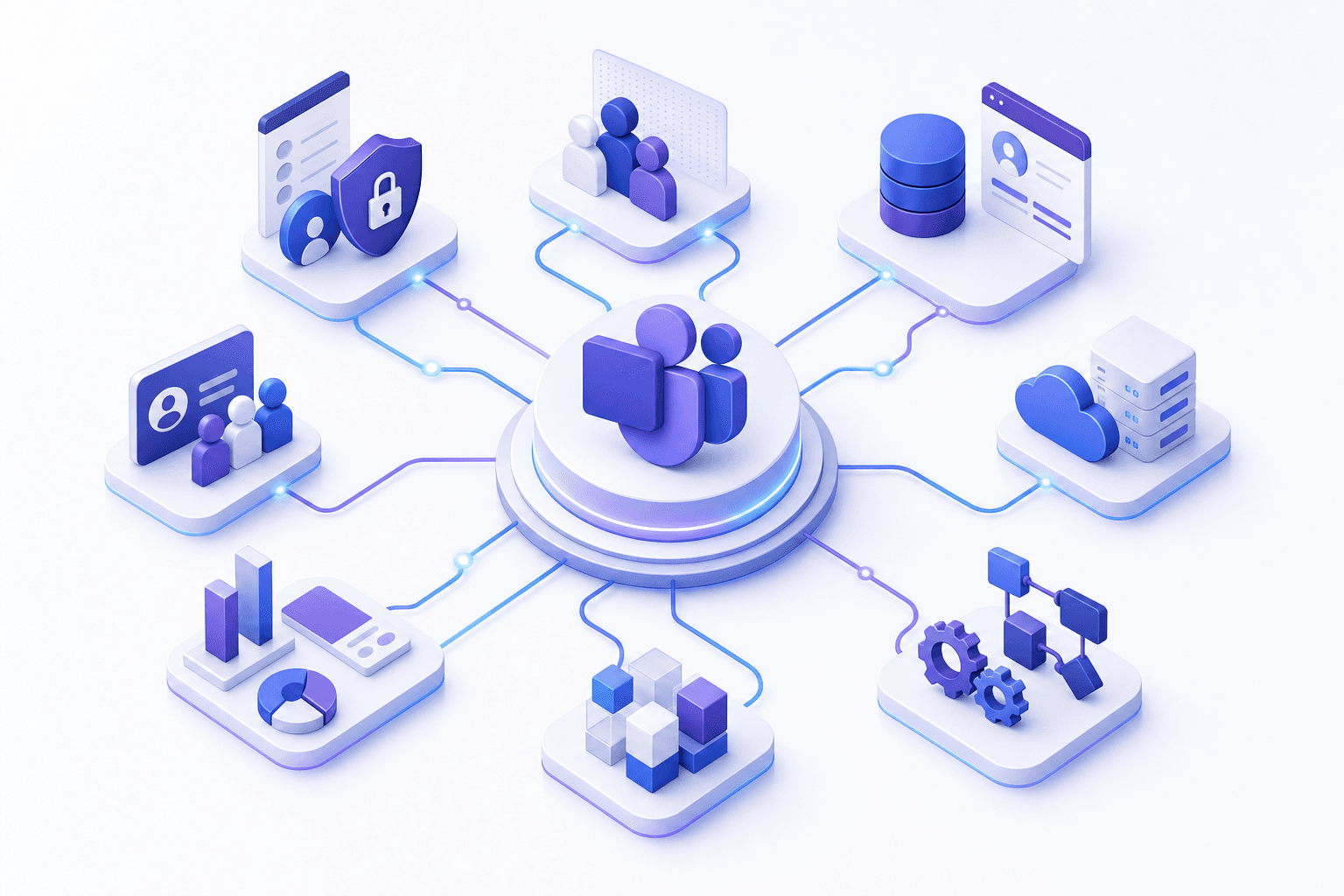
The blog title is specific for a reason. It matches what IT teams are actually searching in mid-2026: which service desk works best when developers lean on Anthropic's Claude for reasoning tasks and OpenAI's Codex for code generation, and the company runs on Teams? The question surfaces because traditional IT service desks create friction when they don't align with how AI helpdesks and AI-assisted teams actually work.
Worth naming upfront: Ravenna is a Slack and Teams-native workflow automation platform. Its AI agents surface in conversation threads in Slack or Teams, execute workflows end-to-end, and handle requests in whichever platform your team already uses. If you're here because your team runs on Teams and relies on Claude and Codex, you're exactly who Ravenna was built for.
The tools below represent the strongest options for Teams-native IT organizations. Each entry names what the platform does well, where it runs into constraints, and who it's built for.
How This Shapes the Comparison
Teams-native IT organizations comparing service desks in 2026 are asking a real question, and they deserve a straight answer. The tools below represent the strongest options for that environment, with an honest read on where each one fits and where it doesn't.
A few things to keep in mind:
Claude and Codex aren't service desk features. They're AI models your developers and analysts already use. The question is whether your service desk can route requests, resolve issues, and execute workflows without creating friction for teams that already have AI-assisted development and reasoning baked into their daily work.
Microsoft Teams as a primary interface narrows the field. Some service desks treat Teams as a notification channel. Others treat it as the actual front door for request intake and resolution. That distinction matters more than any feature checklist.
Agentic resolution is the dividing line in 2026. Many tools in this space still stop at answering questions or routing tickets. The ones worth serious consideration go further: they classify intent, reach into your systems, and finish the task without a human in the loop. The gap shows up in resolution time: according to Fixify's 2026 IT Help Desk Benchmark Report (50,000+ tickets), partially automated tickets that still need human intervention resolved in 49 to 102 hours, while fully automated execution paths resolved in 2.4 to 6.3 hours. That delta compounds across every request in the queue.
The three tools below reflect those criteria. Each entry covers what the platform does well, where it runs into constraints, and who it's actually built for.
Ravenna
An employee types a request in a Teams or Slack thread. Ravenna's IT Agent reads it, classifies the intent, pulls context on who's asking from the HRIS, reaches into the connected system, and executes the workflow end-to-end, then posts the confirmation back in the same thread. A password reset runs directly in Okta. An offboarding request suspends the account, reclaims licenses, and removes group memberships as a single atomic operation. Ravenna is a workflow automation platform built execution-first, so the work finishes without a human picking up a ticket. The fit boundary worth naming: Ravenna is purpose-built for Slack-native and Teams-native organizations, and teams that need deep ITIL process compliance or formal change advisory board structures are a different fit.
Halp
Halp threads ticket submission and status tracking directly into Microsoft Teams, so employees raise and follow requests without leaving the channel they already work in. That makes it a clean fit for Teams-native organizations that want conversational intake over a separate portal. Worth noting: Halp routes tickets to humans after intake. The conversational front door is strong, but the resolution work still falls to whoever picks up the ticket, which is primarily a question of fit rather than capability.
Atomicwork
Atomicwork is built for the Microsoft ecosystem, with native Teams threading and Entra ID (Azure AD) integration, and it answers questions and routes tickets with knowledge base context attached. For organizations standardized on the Microsoft stack, that ecosystem alignment is the draw. The fit consideration: its automation leans toward answering and routing rather than executing multi-step workflows across your stack autonomously, so teams whose priority is eliminating manual execution work will weigh that against the Microsoft-native depth.
Platform | Primary Interface | Best Fit For | Agentic Execution |
|---|---|---|---|
Halp | Native Microsoft Teams integration for ticket submission and status tracking | Teams-native organizations that need ticketing with direct Teams threading | Routes tickets to humans after intake |
Atomicwork | Built for Microsoft ecosystem with native Teams threading and Azure AD integration | Organizations standardized on Microsoft stack including Entra ID | Answers questions and routes tickets with knowledge base integration |
Ravenna | Slack and Teams-native conversational automation with AI agents executing end-to-end in either interface (Teams support newly launched) | Slack-first or Teams-first organizations needing agentic resolution without human touch points | Classifies intent, gathers context, reaches into systems, and finishes tasks autonomously |
Final Thoughts on Finding the Right Service Desk for Teams-Native IT Operations
The service desk space has changed. Platforms that treat Microsoft Teams as an afterthought won't serve organizations where Teams is the primary workspace, and platforms that can't coexist with Claude and Codex workflows will create friction instead of eliminating it. The right service desk for your environment is the one that resolves requests where your team already works, not the one with the longest feature list. For a structured approach to rolling out self-service adoption for IT and HR, see our playbook. If you're comparing options and want to see what agentic resolution looks like in a Teams-first architecture, we'd be glad to walk through it.
FAQ
Which service desk is the best fit if my team runs on Microsoft Teams instead of Slack?
All three platforms covered here work in Microsoft Teams. Halp and Atomicwork are both built for the Microsoft ecosystem. Halp focuses on Teams-native ticketing, while Atomicwork goes deeper with Entra ID and the broader Azure AD stack. Ravenna runs natively in both Slack and Teams, so organizations on either platform get full benefit from its agentic resolution architecture.
How do Claude and Codex factor into choosing a service desk?
Claude and Codex are AI models your developers and analysts already use for reasoning and code generation. They're not service desk features. The real question is whether your service desk can classify intent, reach into your systems, and finish tasks autonomously without creating friction for teams that have AI-assisted workflows baked into their daily work. Look for platforms with agentic execution capabilities (intent classification, context awareness, system integration, and autonomous action) rather than systems that only answer questions or route tickets.
What's the difference between agentic execution and basic AI chatbots in service desks?
Basic AI chatbots answer questions, suggest knowledge base articles, and route tickets to humans. Agentic execution means the system interprets what an employee needs, pulls context on who's asking, reaches into connected systems (Okta, Google Workspace, your HRIS), and completes the task end-to-end without human intervention. Agentic AI workflows let autonomous agents collaborate on complex, multi-step tasks without constant human oversight. Agentic automation trends for 2026 show organizations shifting focus from experimentation to validation and deployment. A password reset request, for example, gets executed directly in your identity provider instead of creating a ticket for someone to handle manually.
Should I prioritize a Teams-native interface over automation capabilities?
That depends on where your team loses the most time. If your priority is eliminating manual work (password resets, software provisioning, off-boarding coordination), focus on platforms with strong workflow automation and system integrations, even if that means using Slack as the interface. If your priority is keeping everything inside Teams and your workflows are simpler, a Teams-native tool with lighter automation may be a better fit.
Does Ravenna work in Microsoft Teams, or is it Slack-only?
Ravenna runs natively in both Slack and Teams. Its AI agents surface in conversation threads, execute workflows end-to-end, and complete requests in whichever interface your team uses. No parallel platforms, no context switching. If your organization runs on Teams, Ravenna treats that as the primary interface, not a notification layer.