
If you're researching Moveworks vs Jira for IT service management, you might have noticed something frustrating. One requires employees to learn a new chat interface and depends on multiple backend integrations, while the other pulls people out of their workflow to submit tickets through a web portal. Both tools were built before teams lived in Slack, and it shows. This comparison looks into how these two ITSM solutions stack up and how Ravenna, a Slack-native workflow automation tool, differs.
TLDR:
Moveworks requires complex integrations with existing systems and now favors ServiceNow after its acquisition.
Jira Service Management demands weeks of upfront configuration and forces employees into a separate web portal.
62% of organizations find integrating AI agents into existing ITSM tools challenging due to technical complexity.
Ravenna runs entirely in Slack, automating end-to-end workflows and managing tasks across your tools without vendor lock-in.
What Moveworks Does and Their Approach
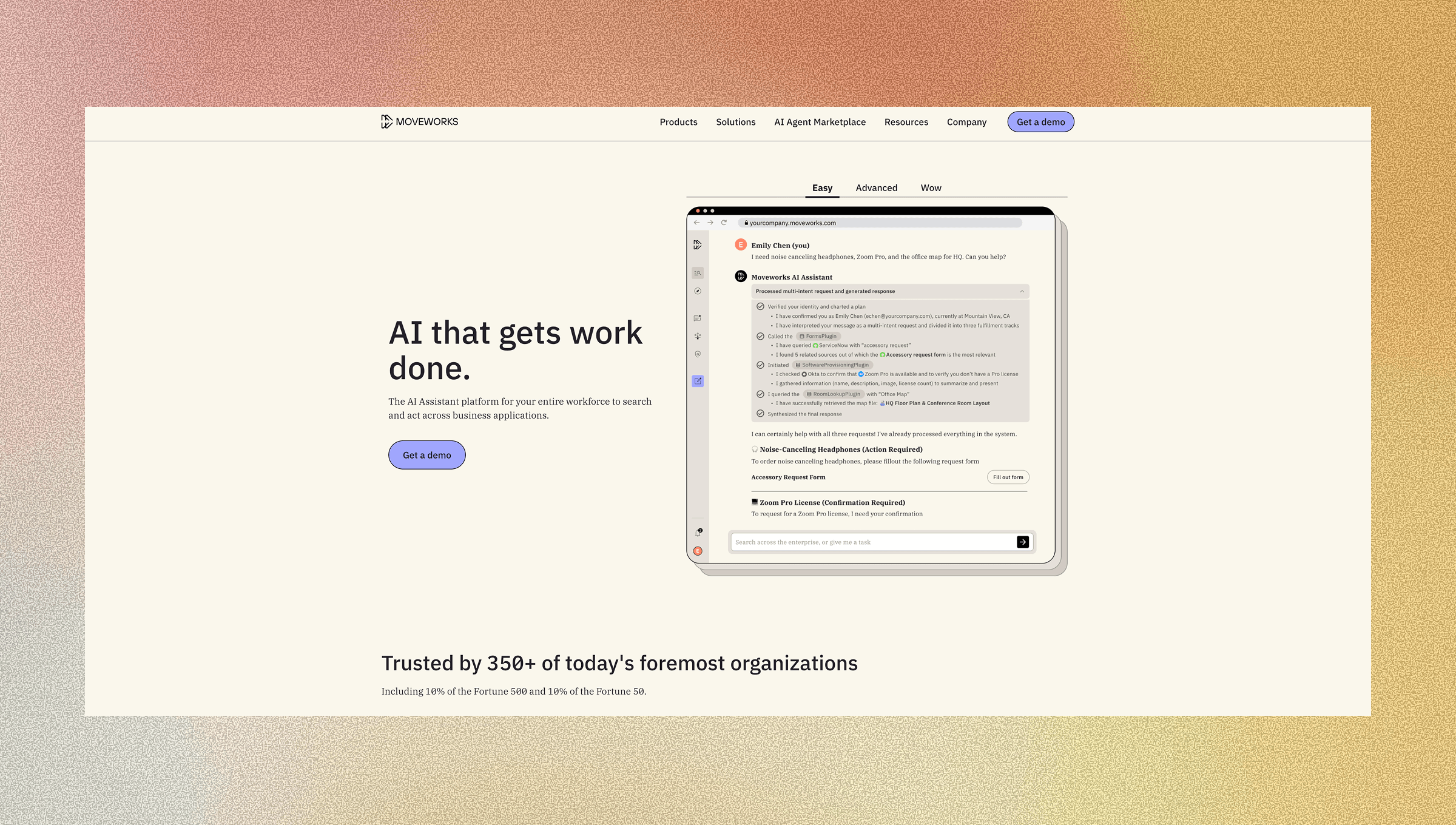
Moveworks operates as an AI assistant layer that sits on top of existing enterprise systems. The company targets large organizations that already have key tech investments and want to add a conversational interface for employees to access support services.
The core pitch is straightforward: instead of forcing employees to visit multiple portals, Moveworks provides a single chat interface where they can ask questions or make requests. The AI agent interprets intent, connects to the correct backend system, and attempts to resolve issues automatically. ServiceNow acquired Moveworks for $2.85 billion, ending its vendor-neutral positioning. Since the acquisition, more teams have searched Moveworks alternatives that remain independent from single-vendor ecosystems.
The tool that once integrated with any ITSM system now favors ServiceNow's ecosystem, potentially deprecating existing integrations.
The Agentic AI Assistant Model
Moveworks positions itself as an “agentic AI assistant” that handles support across IT, HR, finance, and facilities. The system aims to complete multi-step tasks like password resets, software access requests, or expense approvals by managing actions across connected systems. Deployment scenarios often extend beyond IT support into CRM workflows, sales automation, finance operations, and HR service delivery.
What Jira Service Management Does and Their Approach
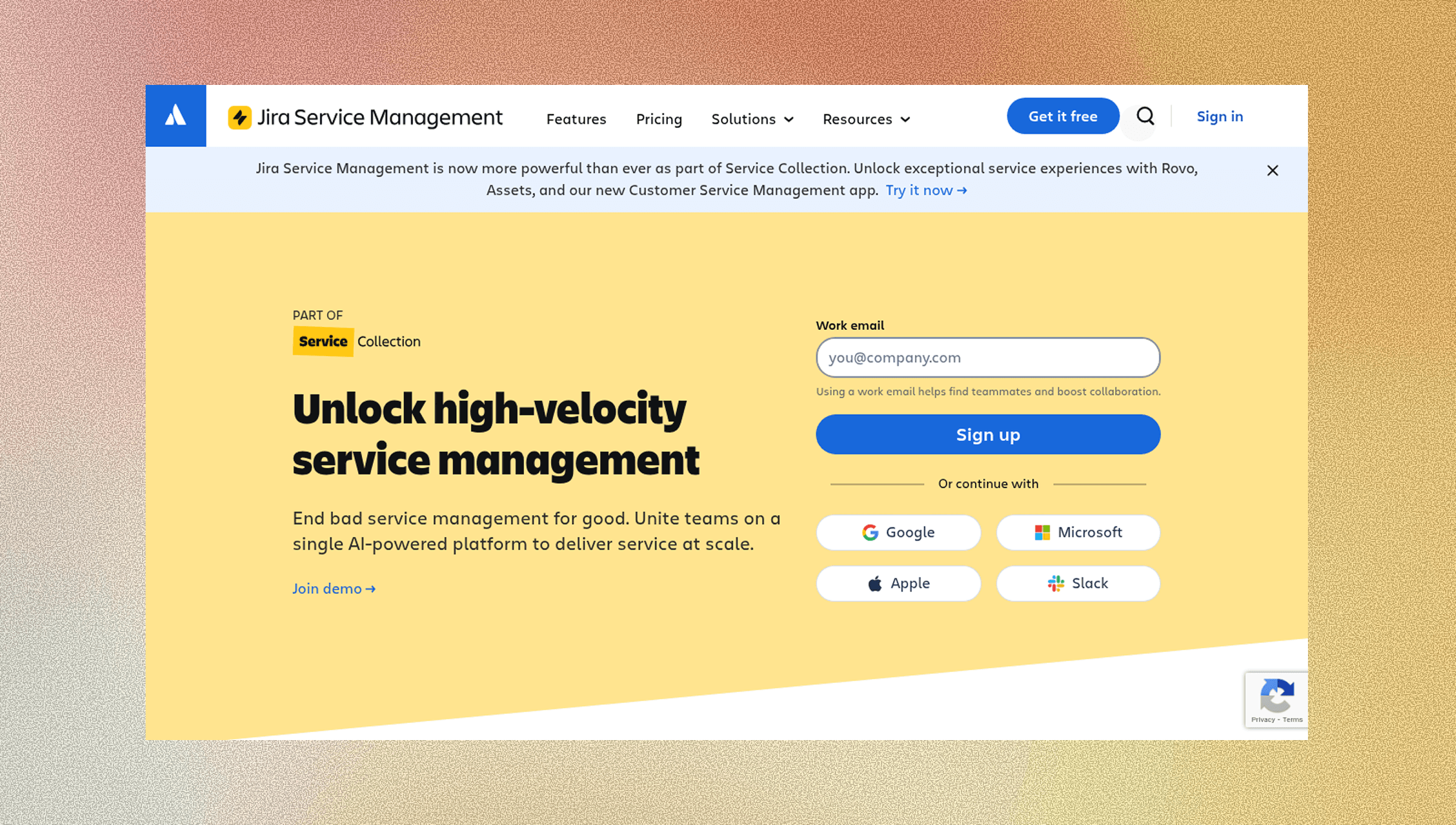
Jira Service Management stems from Atlassian’s ticketing infrastructure, originally launched as Jira Service Desk in 2013 and rebranded in 2020, and continues to focus on structured service desk workflows. The tool follows a traditional ITSM blueprint built around structured workflows and ITIL frameworks. Its suite includes incident, problem, change, release management, and asset tracking, and SLA monitoring. Each capability enforces process governance and maintains audit trails across IT operations.
Portal-First Architecture
Jira Service Management operates through a dedicated web portal where users submit and track requests. Employees manage a separate interface outside their daily workflow to create tickets, check status, or browse the knowledge base. Atlassian added a virtual agent powered by Atlassian Intelligence for Slack and Microsoft Teams, but tickets still route back to the web portal for management and resolution.
Comparing Moveworks with Jira Service Management
We compared these two offerings across three categories:
Integration, configuration, and technical implementation requirements
User experience and workflow impact
AI capabilities and automation limitations
At the end, we look at Ravenna and how a Slack-native ITSM can provide similar benefits without the drawbacks of these incumbent solutions.
Feature | Moveworks | Jira Service Management | Ravenna |
Primary Interface | Dedicated AI chat interface separate from existing communication tools | Web portal requiring context-switching from daily workflow | Native Slack integration - automates workflows where teams already communicate |
Setup Time | Weeks to months for API configurations, permission mappings, and backend integrations | Weeks of upfront configuration for workflows, request types, SLAs, and approval chains | Minutes to connect Slack workspace and knowledge sources |
Integration Complexity | Requires deep integration with identity providers, ITSM systems, knowledge bases, HR systems, and application directories | 40% of organizations report challenges integrating with existing infrastructure | Simple connections to Okta, Notion, Google Drive, Confluence, and Coda |
Ticket Creation | Chat-based requests requiring specific phrasing and learning curve | Form-based submission through separate web portal with steep learning curve for non-technical users | Emoji reaction to any Slack message, DM with assistant, or slash command triggers automated workflow execution |
AI Capabilities | Agentic AI that requires high-quality underlying data; complex tasks still need human intervention | Rule-based automation through Atlassian Rovo requiring manual if-then configuration | AI categorization and routing that learns from Slack conversations and agent resolutions |
Vendor Independence | Acquired by ServiceNow for $2.85B; now favors ServiceNow ecosystem and may deprecate other integrations | Independent but part of Atlassian ecosystem | Vendor-neutral with no lock-in to single ITSM tool |
Knowledge Management | Depends on connected knowledge bases; performance tied to data quality and system integrations | Built-in knowledge base accessed through web portal | Searches connected knowledge from Notion, Google Drive, Confluence, and Coda for instant answers in Slack |
Workflow Automation | Multi-step task orchestration across connected systems when integrations are maintained | ITIL-based workflows for incident, problem, change, and release management | Visual workflow builder with direct identity system integration for access requests and approvals |
Integration, Configuration, and Technical Implementation Requirements
Moveworks requires deep integration with the existing enterprise stack to function. The AI layer depends on connections to identity providers, ITSM systems, knowledge bases, HR systems, and application directories. Each integration requires API configurations, permission mappings, and ongoing maintenance to keep data flowing correctly.
62% of organizations report that integrating AI into existing ITSM tools is challenging. Moveworks amplifies this complexity because the assistant only works when backend systems are fully connected and maintained. If one integration breaks, employees lose access to that capability through the chat interface.
Jira Service Management presents different challenges. The system demands extensive upfront configuration before teams can handle their first ticket. User reviews consistently point out that JSM can be difficult to learn, especially for non-technical employees, and getting the system running often requires some time investment.
Teams often spend weeks defining request types, building workflows, setting up SLAs, configuring approval chains, and customizing forms. Each department may need its own portal with unique configurations, multiplying the setup work.
User Experience and Workflow Impact
Moveworks requires employees to open a dedicated chat interface instead of using their existing communication channels. The system works best when users phrase requests in specific ways, creating a learning curve that slows adoption. When the AI misunderstands intent or lacks the right backend connection, employees can end up stuck between an unresolved chat conversation and no clear escalation path.
Jira Service Management, on the other hand, maintains familiar ticket submission patterns, but the web portal forces context-switching that disrupts workflow and reduces self-service effectiveness. Nearly 40% of organizations report challenges integrating ITSM tools with existing infrastructure, and JSM amplifies this when teams rely on Slack or Microsoft Teams for daily work but must switch to a browser for support issues. Non-technical employees face steep onboarding before they can manage request forms, track ticket status, or understand routing logic.
AI Capabilities and Automation Limitations
While Moveworks advertises Agentic AI, in practice, some complex tasks still require human intervention despite its AI-powered approach. What's more, the performance of the AI agent heavily depends on the underlying data quality (knowledge articles, past tickets, and system integrations). If the data is siloed or outdated, the AI-powered agent's effectiveness will be reduced.
Jira Service Management provides rule-based automation through Atlassian Rovo, which falls short of AI-driven automation in terms of knowledge management, change management, end-user/employee experience, and customer support. These workflows analyze criteria and trigger actions automatically, but each scenario requires manual if-then configuration.
Ravenna's Slack-Native Advantage
We built Ravenna as a Slack-native workflow automation tool that manages end-to-end resolutions across your tools, teams, and systems. Ravenna acts as an intelligent automation layer that executes complex workflows autonomously.
Comparing Ravenna on the three categories we assessed Moveworks and Jira:
Integration, configuration, and implementation requirements. Connect your Slack workspace and link your tools like Okta, BambooHR, and Google Workspace. Ravenna's AI handles workflow orchestration without requiring you to map every possible request type beforehand. The visual workflow builder lets you automate complex processes in minutes, not weeks.
User experience and workflow automation. Employees trigger workflows through natural conversation in Slack an emoji reaction, a DM, or a slash command. Ravenna then manages the entire resolution across your systems. For access requests, Ravenna gathers required information through conversation, executes the provisioning in Okta or Google Workspace, and notifies stakeholders all without human intervention. This augments your IT team, freeing them from repetitive manual work.
AI capabilities and automation limitations. Ravenna's agentic AI manages workflows across your SaaS stack, performing actions like password resets, access provisioning, and onboarding sequences autonomously. When someone asks a question, Ravenna searches connected knowledge from Notion, Google Drive, Confluence, and Coda. For actionable requests, it executes the full workflow. The system learns from each resolution, expanding its automation capabilities over time."
Ready to revolutionize your help desk? Schedule Demo
Final Thoughts on Selecting IT Support Software
Comparing AI ITSM vs traditional ticketing systems reveals a common problem: both approaches ask employees to go somewhere else for help. Moveworks needs deep integrations and a dedicated chat interface, while Jira Service Management requires portal navigation and extensive configuration. Ravenna lives in Slack, where your team already communicates, manages end-to-end workflows and surfaces answers from your knowledge base. Support becomes faster when you automate the entire resolution process augmenting IT teams to focus on strategic work.
FAQs
What's the main difference between Moveworks and Jira Service Management?
Moveworks acts as an AI assistant layer on top of your existing enterprise systems, similar to platforms like Freshservice but with deeper integration requirements, while Jira Service Management is a traditional ITSM tool with a web portal. Moveworks requires deep integrations with backend systems to function, whereas JSM demands extensive upfront configuration of workflows and request types.
How long does it take to deploy each solution?
Jira Service Management typically requires weeks of configuration to define request types, build workflows, and set up SLAs before handling the first ticket. Moveworks needs time to integrate with your enterprise stack through API configurations and permission mappings. Ravenna connects to your Slack workspace and knowledge sources in minutes, letting teams start creating tickets immediately.
Can I use Moveworks without ServiceNow?
ServiceNow acquired Moveworks for $2.85 billion, eliminating its vendor-neutral positioning. The tool now focuses on ServiceNow's ecosystem and may deprecate existing integrations with competing ITSM systems over time.
Why do employees struggle with traditional ITSM portals?
Web portals force context-switching that disrupts workflow, especially for teams that rely on Slack or Microsoft Teams for daily communication. Non-technical employees face steep learning curves figuring out request forms, tracking ticket status, and understanding routing logic in systems like Jira Service Management.
How does Ravenna automate workflows without pre-configured rules?
Ravenna's agentic AI learns from actual conversations and resolutions instead of requiring manual if-then configurations. The tool captures how workflows are executed and resolved, then uses this intelligence to automate similar requests end-to-end. Over time, Ravenna manages increasingly complex workflows across your tools autonomously, augmenting your IT team.